
Alright, so you’re either a landlord who wants to make sure your rental property doesn’t turn into a bonfire, or you’re a tenant who’d prefer not to become a crispy statistic, either way, you’re in the right place.
Fire safety isn’t exactly the sexiest topic, i’ll give you that, it’s not like choosing throw pillows or debating subway tile patterns, but here’s the thing—your choice in decorative candles becomes a lot less important when those candles decide to redecorate your entire living room in shades of ash and charcoal.
Look, whether you own the property or you’re just renting a room in someone’s converted garage, fire safety is one of those things that everyone thinks won’t happen to them until it does, and by then you’re standing outside in your pajamas at 3am watching firefighters do their thing while your neighbor karen films it for her social media.
So let’s talk about the four golden rules that’ll keep everyone safe, keep landlords legally covered, and make sure tenants actually know what to do when things get hot.
4 Golden Rules Of Fire Safety And It Is Helpful For Landlords And Tenants
Here’s the deal—fire safety rules aren’t just random suggestions that someone made up to annoy property owners.
They’re actual legal requirements in most places, and they exist because people kept, you know, dying in preventable fires.
For landlords, this means you’ve got legal responsibilities.
For tenants, this means you’ve got rights. And for both of you, this means you need to actually pay attention because insurance companies are really good at finding reasons not to pay out when your property looks like a barbecue pit.
These four rules aren’t complicated. They’re not expensive. They’re just… necessary.
Install and Maintain Fire Detection Systems
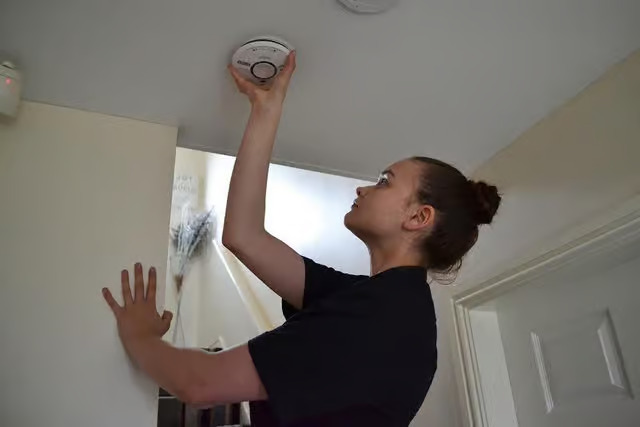
First up, smoke detectors and carbon monoxide detectors, because apparently we need to be reminded that breathing smoke and invisible deadly gases is bad for our health.
Smoke Detectors Are Non-Negotiable
If you’re a landlord and you don’t have working smoke detectors in your rental, congratulations, you’re basically begging for a lawsuit.
Following smoke detector requirements protects landlords from liability while keeping tenants safe, which seems like a pretty good trade-off for the cost of a few battery-powered devices.
Here’s where they need to go—one in every bedroom, because people sleeping through fires is kind of a problem.
One outside each sleeping area, because that hallway between bedrooms counts.
At least one on every level of the home, including basements, because fire doesn’t care about your floor plan.
And yeah, this includes that converted attic space you’re renting out for extra cash.
The Battery Situation
Tenants, here’s your part—when that detector starts chirping at 2am because the battery is dying, don’t just rip it off the ceiling and throw it in a drawer.
I know, i know, it’s annoying. But you know what’s more annoying? Fire.
Change the battery. Buy the 10-year sealed battery ones if you can’t be trusted to remember.
Test them monthly by pressing that little button and making that god-awful noise that makes your dog lose his mind.
Landlords, you need to check these during inspections.
Not just glance at them. Actually test them. Because “but there was a detector on the ceiling” doesn’t hold up well in court when it turns out the detector was installed during the Reagan administration and hasn’t had a working battery since Clinton was in office.
Carbon Monoxide Detectors Matter Too
Carbon monoxide is that fun invisible gas that comes from gas appliances, furnaces, water heaters, and fireplaces.
You can’t smell it. You can’t taste it. You can’t see it.
You just start feeling tired and confused and then you’re dead.
Super fun.
If your rental has any gas appliances, attached garages, or fireplaces, you need CO detectors. Put them near sleeping areas.
Put them on every level. Just put them places where people actually spend time, not tucked away in some closet where they’re useless.
Replacement Isn’t Optional
Smoke detectors don’t last forever, shocking as that may be.
Most need replacing every 10 years.
Check the manufacture date on the back. If it’s older than the tenant’s last three relationships, it’s time for a new one.
An experienced Austin Texas property management team can help landlords check detailed emergency plans to ensure they’re compliant with local laws, because trying to figure out state and local fire codes yourself is about as fun as reading your health insurance policy while getting a root canal.
Ensure Safe Electrical and Heating Practices
Electrical fires are sneaky little things. They start in walls. They smolder.
They wait until you’re sleeping or at work, and then boom, everything you own is toast.
Stop Overloading Outlets
Tenants, I’m talking to you specifically here.
That power strip you’ve got plugged into another power strip that’s plugged into an extension cord running across the room to power your gaming setup, mini-fridge, space heater, and aquarium? That’s not clever cable management. That’s a fire waiting for an audience.
One high-wattage appliance per outlet.
Space heaters get their own dedicated outlet, not sharing with anything else.
If you’re constantly tripping breakers, that’s not a minor inconvenience, that’s your electrical system screaming for help.
Landlord Responsibilities For Electrical Safety
Property owners, you need to make sure the electrical renovation system is actually up to code.
Old knob-and-tube wiring might have character, but it also has a tendency to light things on fire. Aluminum wiring from the 70s? Get that checked by a professional.
Provide enough outlets so tenants aren’t forced to daisy-chain extension cords across the apartment.
If every room only has one outlet, you’re basically encouraging fire hazards.
Panel boxes should be accessible, labeled, and not filled with mystery breakers that nobody knows what they do. “The one that controls something in the kitchen maybe?” is not an acceptable answer.
Space Heater Rules
Space heaters are responsible for a huge percentage of home fires, which makes sense when you consider they’re basically portable fire boxes that people put next to curtains and forget about.
Three-foot clearance. Minimum. Nothing flammable near them.
Not blankets, not curtains, not that pile of laundry you’ve been meaning to fold for three weeks.
Turn them off when you leave the room.
Turn them off when you sleep. Get ones with automatic shut-off features that kill the power if they tip over, because cats exist and cats are chaos agents.
Never, and i mean never, use them to dry clothes.
Your damp jeans do not need to be warmed by a 1500-watt heating element six inches away.
Heating System Maintenance
Landlords need to service furnaces and heating systems annually.
Not every few years when you remember.
Annually. Dirty furnaces work harder, overheat, and can crack heat exchangers, which leads to that carbon monoxide situation we talked about earlier.
Replace filters regularly, either yourself or make it the tenant’s responsibility in the lease, just make sure someone’s actually doing it.
A clogged filter is an efficiency problem and a safety problem.
Keep Fire Escape Routes Clear and Accessible
So you’ve got working detectors, you’ve avoided electrical disasters, great.
Now what happens when there’s actually a fire? How do people get out?
Windows That Actually Open
Tenants, if your bedroom window is painted shut, nailed shut, or blocked by an air conditioning unit that’s been there since 2003, you have a problem.
Second-floor bedrooms especially need working egress windows.
Landlords, check this. Windows need to open from the inside without keys or tools.
If there’s a security bar, it needs a quick-release mechanism that doesn’t require a engineering degree to operate during a panic.
Hallways And Stairs Aren’t Storage
That hallway is not a closet. I don’t care how small your apartment is, you can’t store your bike, holiday decorations, and collection of vintage suitcases in the main exit path.
Stairwells need to stay clear. Completely clear.
Not “mostly clear with just a few boxes.” Not “clear enough to squeeze by.” Actually clear.
For multi-unit buildings, landlords need to enforce this because one hoarder on the second floor can trap everyone above them.
Multiple Exit Routes
Everyone in the building needs to know at least two ways out of every room.
Front door blocked by fire? Where’s exit number two? Maybe it’s a back door.
Maybe it’s a window with a fire escape. Maybe it’s that side door through the garage.
Walk through the property and actually map this out.
Tenants should practice, especially with kids who might panic and hide instead of escape.
Outdoor Meeting Spots
Pick a spot outside where everyone meets after escaping. The mailbox. That big tree across the street. The neighbor’s driveway. Something specific.
Why? Because when your house is burning and you’re standing outside, you need to know if everyone made it out.
“Did sarah get out?” is a much easier question to answer when everyone knows sarah is supposed to be standing by the mailbox.
Practice Fire Prevention and Emergency Preparedness
Detection is great. Escape routes are necessary. But you know what’s even better? Not having a fire in the first place.
Kitchen Fire Prevention
Kitchens are where most home fires start, which makes sense because kitchens are where we literally play with fire to cook food.
Never leave cooking unattended. Not for “just a second.” Not to “run to the bathroom real quick.” Oil fires happen fast. Grease fires happen faster.
Keep flammable stuff away from the stove.
Dish towels, paper towels, that wooden spoon rest, potholders, loose sleeves on your shirt—all of these can ignite faster than you’d think.
Have a lid nearby when cooking with oil.
If the pan catches fire, slide the lid over it and turn off the heat.
Don’t move the pan. Don’t throw water on it. Don’t try to carry it outside. Just cover it and let it suffocate.
Fire Extinguishers
Every rental should have at least one fire extinguisher, preferably in or near the kitchen.
Get an ABC-rated one that handles most common fires—wood, grease, electrical.
Actually learn how to use it before you need it. PASS method—Pull the pin, Aim at the base of the fire, Squeeze the handle, Sweep side to side.
But here’s the thing—extinguishers are for small fires. Like, really small.
If the fire is bigger than a trash can, get out and call 911. You’re not a firefighter. Don’t try to be a hero when you could be a statistic.
Dryer Fires Are Real
Clean the lint trap. Every single time. Not every few loads. Every time.
Once a year, clean out the actual dryer vent that goes outside.
Lint builds up in there and it’s basically tinder waiting for a spark.
Landlords should check that dryer vents actually vent outside, not into the attic or crawl space, because apparently some people thought that was acceptable at some point in history.
Create And Actually Practice An Emergency Plan
Having a plan that lives in your head doesn’t count. Write it down. Share it with everyone in the household. Practice it.
Yes, practice it. Actually do a fire drill.
I know it feels silly when you’re adults without kids, but do it anyway.
Where are the exits? Where’s the meeting spot? Who calls 911? Who grabs the pets if it’s safe to do so? Who makes sure grandma on the third floor gets out?
Practice at night with lights off because fires don’t only happen during convenient daylight hours. Crawling under smoke in the dark is disorienting.
It’s scary. Practicing makes it slightly less so.
For landlords with multiple units, you’ve got even more responsibility here.
Post evacuation plans. Make sure tenants know where fire extinguishers are located.
Conduct building-wide drills if possible, or at least strongly encourage individual unit drills.
Keep Important Documents Ready
Have a grab-bag with copies of important documents, medications, and emergency cash. Keep it somewhere accessible near an exit.
When you’ve got 60 seconds to leave, you don’t want to be searching for your passport and insurance papers.
Candles And Smoking Materials
Candles are nice. They smell good. They’re also open flames that people forget about.
If you use candles, use them on stable surfaces away from anything flammable. Blow them out when you leave the room.
Consider switching to battery-powered ones, which i know isn’t as authentic but also won’t burn your apartment down.
Smoking in bed is still somehow a thing people do. Don’t. Smoking anywhere inside is generally a bad idea from a fire perspective, but especially in bed where you might fall asleep.
Make sure cigarettes are completely out before throwing them away.
Water in the ashtray. Check twice. Smoldering cigarettes in trash cans have started more fires than anyone wants to admit.
Conclusion
Look, fire safety isn’t complicated. It’s just consistent.
Install detectors and actually maintain them.
Don’t overload electrical outlets like you’re trying to power a small city.
Keep exits clear so people can actually escape. Prevent fires before they start and have a plan for when they do anyway.
For landlords, this is your legal obligation, your financial protection, and honestly just the right thing to do for the people living in your property.
For tenants, this is your life, your stuff, and your family’s safety.
Nobody thinks a fire will happen to them until they’re standing outside watching everything they own go up in smoke.
So test those detectors, check those escape routes, and practice that emergency plan, because five minutes of preparation beats a lifetime of regret.
And if you can’t remember everything from this article, just remember this—working smoke detectors, clear exits, and a practiced escape plan will handle about 90% of residential fire safety.
The other 10% is just not doing obviously dangerous stuff like deep-frying a turkey in your living room or using a space heater as a clothing rack.