
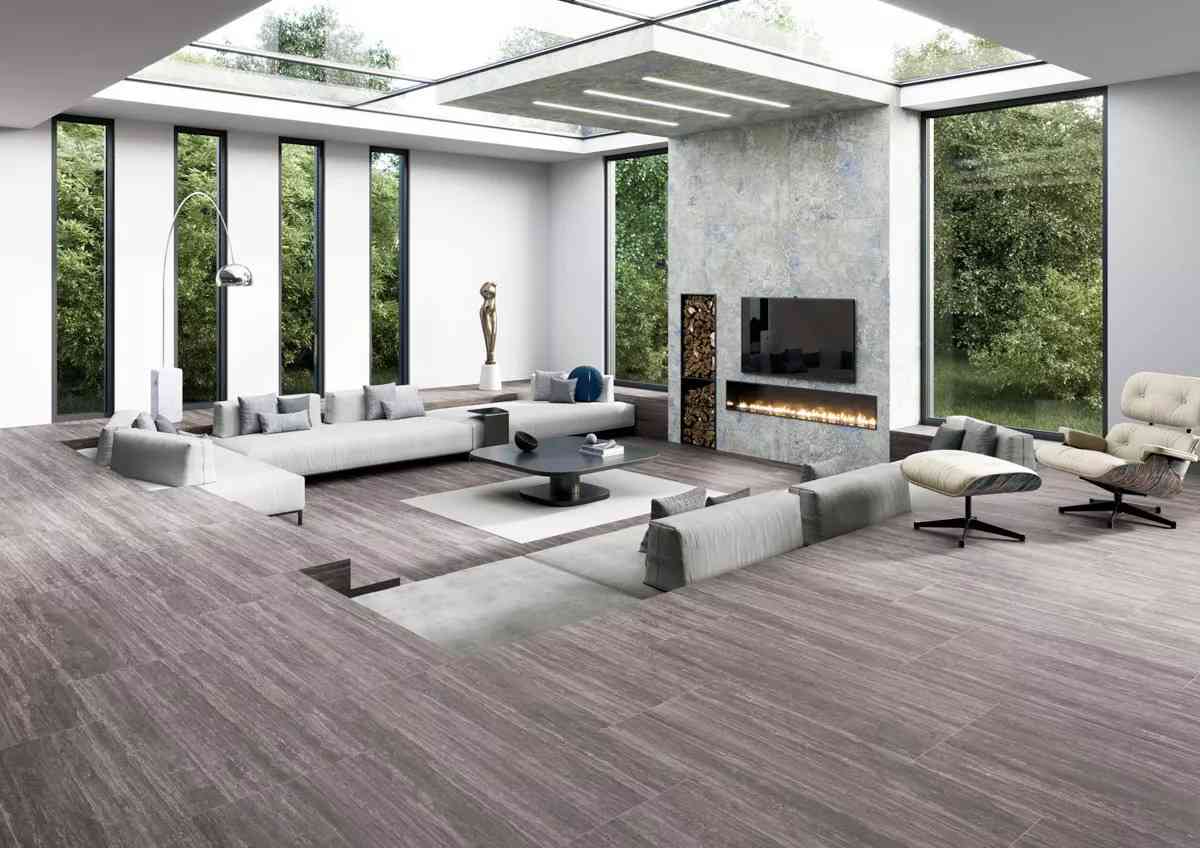
Flooring is a Home’s Foundation
Ok, it’s an exaggeration. Slightly.
Floors support everything that matters in a home, from daily comfort to home resale value.
U.S. homeowners spend $74.6 billion on flooring in 2024 alone, so they get that it matters.
Except when it comes time to choose flooring types…
Here’s the challenge:
Navigating the flooring decision process is a daunting prospect for most people.
Flooring showrooms have endless options; hardwood, laminate, vinyl, tile, carpet, and more.
The good news? Educating yourself on each flooring type’s pros and cons can make it super simple.
In this ultimate guide to home flooring, you’ll learn:
- Why Flooring Choice Matters More Than Most People Realize
- Flooring Options And The Benefits They Offer
- How To Choose The Best Flooring Type For Each Room
- How To Maintain Your Floors (Correctly) For Years To Come
Why Flooring Matters More Than You Think
Your flooring choice is a home improvement project that impacts multiple factors, all at once:
Durability, maintenance, comfort, home resale value… professional home flooring services help homeowners make sense of it all.
Working with flooring installation experts means you get quality installation that lasts decades. To learn more about professional options, consider reaching out to experienced specialists.
Put another way:
Imagine a kitchen with the wrong type of flooring.
Spills happen constantly. Dropped dishes, foot traffic, wet floors… When things break down, the flooring takes a beating.
But the right flooring stands up to whatever you throw at it, throughout the whole house. Each room has unique demands and requirements that some flooring types fulfill better than others.
Flooring Options (Plus The Benefits They Offer)
Let’s take a closer look at each flooring type on the market. Every option has tradeoffs that affect different situations in different ways.
Hardwood Flooring
Hardwood floors continue to set the standard for home flooring in America.
There’s a reason it’s considered the gold standard; nothing ages better with time than hardwood floors.
According to recent research, nearly 75% of U.S. homes were built before 2000.
That’s an untold number of homes nationwide that could benefit from new flooring and hardwood is at the top of the list.
The perks of hardwood flooring:
- Remarkable durability with proper care and maintenance
- Drastically increases home resale value
- Can be refinished many times over its lifetime
- Compatible with virtually any interior design style
The negative? Hardwood is more costly than most other flooring types. Upfront installation costs are higher. It also requires protection against moisture and humidity.
Luxury Vinyl Plank (LVP)
Luxury vinyl flooring has surged in popularity recently.
It offers a convincing look of hardwood or stone at a fraction of the price. Luxury vinyl has also vastly improved in water resistance over time.
LVP is a great flooring type for busy families with children and pets. Scratches, spills, stains, and foot traffic all stand up to luxury vinyl without a problem.
Thanks to modern manufacturing, luxury vinyl floors are almost indistinguishable from the real thing.
Reasons LVP is so popular:
- Waterproof construction tolerates any kind of mess
- Budget-friendly when compared to natural stone and hardwood
- Easier to install than many other types (some is DIY friendly)
- Minimal maintenance requirements
Ceramic and Porcelain Tile
Tile is a mainstay in bathrooms, kitchens, and entryways for a reason. It’s hard to beat for moisture and waterproofing. Plus, it comes in endless design options.
Porcelain tile is even better than ceramic with increased density and durability. Both can provide decades of service with minimal maintenance.
The downside with tile is comfort. It’s hard and cold underfoot, which can be uncomfortable for extended periods of standing.
Laminate Flooring
Laminate flooring has evolved a lot in the past decade. You can get very realistic-looking textures and patterns now, with high-end laminate products.
The laminate is multiple layers topped with a photographic image of the material of your choice. Wood is the most common, of course. Laminate can also imitate stone and tile convincingly.
Best uses for laminate:
- Budget-friendly renovations on a dime
- Rental properties that need updates
- Rooms with average foot traffic
- Projects that can be DIY’ed by the homeowner
Carpet
Carpet is all about warmth and comfort.
Hard surfaces simply can’t match it. Bedrooms and living rooms are where carpet brings the most value.
Carpet does require maintenance and upkeep.
Vacuum regularly and have it professionally cleaned to keep it fresh. Carpeting also doesn’t work in moisture-prone rooms.
How To Choose The Best Flooring Type For Each Room
Each room has a unique function in the home, and that should drive every flooring decision.
One flooring type that works perfectly in one room will not work nearly as well in another.
Kitchen Flooring
Kitchens require water-resistant and easy-to-clean flooring types.
Tile, luxury vinyl, and sealed hardwood are all good options.
Carpet? Nope. Kitchens are the most spill-prone room in any home and carpet is not the right solution for that situation.
Bathroom Flooring
Moisture resistance is an absolute must for bathroom flooring.
Porcelain tile is the number one option in bathrooms, closely followed by luxury vinyl.
Hardwood can work in powder rooms with a sealant but full bathrooms with showers need waterproof floors.
Living Room Flooring
Living rooms are the most versatile area of the home for flooring.
Hardwood, laminate, luxury vinyl, and carpet all work great depending on your style.
Consider foot traffic and lifestyle factors.
Families with young children and pets will want scratch-resistant flooring options, for example.
Bedroom Flooring
Comfort is the top priority in bedrooms.
Carpet provides warmth for bare feet on chilly mornings. Hardwood floors paired with area rugs are a stylish alternative.
Maintenance Tips That Actually Work
The right maintenance can vastly prolong the lifespan of your flooring. Each type has a different care and cleaning regimen.
For hardwood:
- Put furniture pads under all furniture legs
- Wipe spills immediately to avoid staining
- Avoid overuse of water when cleaning
- Refinish floors every 7-10 years as needed
For vinyl and laminate:
- Sweep or vacuum regularly
- Mop with a damp cloth and approved cleaner
- Use doormats to trap dirt and debris
- Avoid abrasive scrubbers and tools
For tile:
- Seal grout lines annually
- Clean with pH-neutral cleaners and solutions
- Repair cracked tiles immediately
- Use non-abrasive mops and cloths
For carpet:
- Vacuum at least twice weekly
- Hire professional carpet cleaning yearly
- Treat stains immediately with the right solution
- Rotate furniture to prevent uneven wear
Wrapping Things Up
Selecting the right flooring type for your home elevates the whole space. Each offers pros and cons, but they all serve different needs, budgets, and styles.
The biggest takeaway:
Room function is the most important factor when selecting a flooring type.
Room function then cascades into maintenance requirements, budget, and interior design style.
Following this method will automatically disqualify certain options while prioritizing those that work best.
The flooring industry is constantly innovating and improving materials and technologies. Keeping up with the latest options empowers homeowners to make the best decisions for their families.
Recap:
- Match flooring type to room function first
- Consider long-term maintenance needs
- Calculate total cost including installation
- Durability is critical for high-traffic areas
- Work with a professional installation team
Finding the right flooring types for your home is a research and planning project.
However, the resulting benefits of comfort, style, and home value are well worth the effort.