
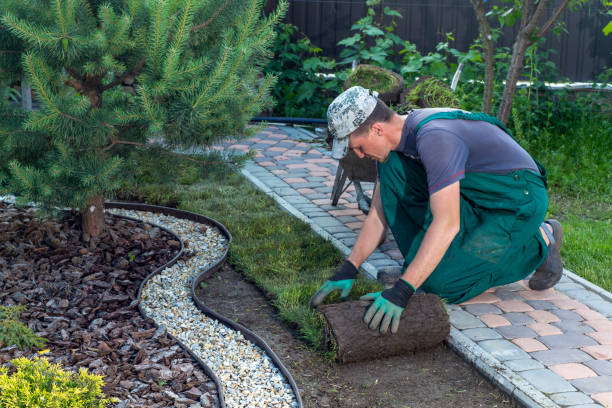
So I’ll be honest with you—when I first moved into my house three years ago, I had this vision.
You know the one. Beautiful green lawn, flowers blooming everywhere, maybe some nice garden lighting at night. The whole picture-perfect yard thing.
What I didn’t account for? How much time it actually takes.
Between work, family, and just trying to have a weekend that doesn’t involve being on my hands and knees pulling weeds, I was drowning.
My yard looked sad. I looked tired. Something had to change.
That’s when I started looking into automation.
Not the crazy futuristic stuff, just practical ways to take some of the daily grind off my plate. And honestly, it changed everything for me.
I’m not saying you need to turn your yard into some high-tech science experiment. But if you’re like me and you love having a nice outdoor space without spending every spare hour maintaining it, automating a few key things might be exactly what you need.
Today I’m walking you through five ways I automated my yard maintenance.
These aren’t theoretical ideas—I’ve actually tested all of this in my own space.
Some worked better than I expected.
One or two took some tweaking. But all of them gave me back my weekends, and that’s worth talking about.
How To Automate Your Yard Maintenance?
Look, automation sounds expensive and complicated. I get it. I thought the same thing.
But here’s what I figured out pretty quickly.
You don’t have to automate everything at once.
Start with the thing that annoys you most. For me, that was watering.
For you, it might be mowing. The point is to make your life easier, not to install every smart gadget on the market.
The five areas I focused on were irrigation, mowing, soil monitoring, lighting, and fertilizing. Each one solves a specific problem.
Each one saves time. And when you put them together, you end up with a yard that kind of takes care of itself while you’re doing literally anything else.
Let me break down what actually works.
Install an Automated Irrigation System
This was my first step. Had to be.
I was spending 20 to 30 minutes every evening dragging hoses around, moving sprinklers, trying to remember which section I watered yesterday. And I was still managing to kill half my plants because I’d either forget about them or drown them.
Automated irrigation changed that immediately.
Now, I know what you’re thinking. Isn’t this expensive? Doesn’t it require digging up your whole yard?
Not really. I mean, it can be if you go that route. But there are systems now that are way more accessible than the old-school setups.
I started with a smart timer attached to my existing hose setup.
Cost me about $100. Connected to my phone.
Let me set watering schedules based on the weather forecast.
If rain was coming, it would skip the watering automatically. That alone saved me so much water and so much dead grass from overwatering.
After that worked well for a season, I upgraded to drip irrigation for my garden beds.
This took a weekend to install. I’m not particularly handy—if I can do it, you probably can too.
The drip lines run right to the base of each plant, so there’s no waste. Everything gets exactly what it needs.
The best part? I can control the whole thing from my phone.
Sitting at work and realize it’s going to be 95 degrees today? I can add an extra watering cycle in 30 seconds. Vacation for a week? The system keeps running without me.
I haven’t touched a hose in two years.
My plants look better than they ever did when I was manually watering. That’s a win.
One tip here—get a system with weather-based scheduling.
Mine connects to local weather data and adjusts automatically.
Sounds fancy, but it’s pretty standard now. And it makes a huge difference in not wasting water when nature’s already taking care of it.
Use Robotic Lawn Mowers for Effortless Grass Cutting
Okay, this one felt ridiculous to me at first.
A robot to mow my lawn? Like a Roomba for grass? It sounded like something from a movie, not something a regular person actually uses.
But I was spending every Saturday morning behind a push mower.
In summer heat. With pollen destroying my sinuses. And my lawn still looked uneven because I’d rush through it trying to finish before it got too hot.
So I tried one. And I’m never going back.
Robotic mowers work differently than you’d think.
You’re not watching them like you’d watch someone mow.
You set up a boundary wire around your lawn, program the schedule, and then just let it run. Mine goes out three times a week while I’m at work.
Comes back to its charging station when it’s done.
The cut quality is actually better than when I did it manually. Because it’s cutting frequently, it’s only taking off a tiny bit each time.
That’s healthier for the grass. And since the clippings are so small, they just mulch right back into the lawn. Free fertilizer.
Different models work for different yard sizes.
My yard is about a quarter acre, so I needed something with decent battery life and good navigation.
You can see the different robotic lawn mowers for various yard sizes in the Navimow collection.
I spent time researching what would actually work for my space before buying. Don’t just grab the cheapest one and hope—match it to your yard.
A few things I learned the hard way:
First, the boundary wire setup matters.
Take your time with it. If you rush that part, the mower gets confused and either misses sections or gets stuck.
Second, keep your lawn clear of toys, sticks, that kind of thing.
The mower can handle some obstacles, but it’s not magic. I do a quick five-minute walk around before it runs, just picking up anything that shouldn’t be there.
Third, they’re quieter than you’d expect. Mine runs at like 60 decibels.
I can barely hear it from inside. My neighbors definitely don’t complain like they used to when I was out there with my gas mower at 8 a.m. on Saturday.
Is it weird at first watching a robot mow your lawn? Yes. Does it work? Also yes.
Automate Soil Monitoring With Smart Sensors
This is the one I didn’t think I needed. Turns out I was wrong.
I’ve always just kind of guessed at what my plants needed.
Does the soil look dry? Water it. Plants looking yellow? Maybe fertilizer? It was all guesswork.
Smart soil sensors take the guessing out.
You stick them in the ground near your plants, and they measure moisture levels, nutrient content, pH, even light exposure and temperature.
The data goes to an app on your phone.
The app tells you exactly what your soil needs. Not what you think it needs. What it actually needs.
I put three sensors in different areas—one in my vegetable garden, one in the flower beds, one in the lawn. The information was eye-opening.
My vegetable garden? Bone dry, way more than I realized.
I thought I was watering enough. I wasn’t. Once I adjusted based on what the sensor was telling me, my tomato yield literally doubled.
My flower beds? Actually getting too much water.
The soil was staying too wet, which explained why some of my plants were getting root rot.
I dialed back the irrigation schedule in that zone, and the problem solved itself.
The lawn sensor showed me that one area near the fence was getting way less light than I thought.
I was trying to grow sun-loving grass there and wondering why it looked terrible. Now I know to use a shade-tolerant variety there instead.
These sensors aren’t super expensive. Mine were about $40 each.
They last a full season before the battery needs replacing. And the information they provide is legitimately useful, not just tech for tech’s sake.
You don’t need one for every plant. I’d say start with one in the area that gives you the most trouble. See what you learn.
Adjust based on real data instead of hunches. Your plants will thank you.
Set Up App-Controlled Garden Lighting
Lighting was never on my radar until I realized how much it changes the whole feel of the outdoor space.
I installed smart outdoor lights about a year ago.
Mostly because I kept forgetting to turn the porch light on before it got dark, and I was tired of fumbling with keys in the dark.
But once I had them, I started using them for way more than that.
App-controlled lights let you program when they turn on and off. Sounds basic, but it’s incredibly useful. Mine turn on automatically at sunset. Turn off at 11 p.m. I never think about it.
I also have them set up on different zones.
Pathway lights, garden accent lights, patio lights.
I can control each zone separately.
Sometimes I just want the pathway lit. Sometimes I want the whole backyard bright for a dinner outside.
The app lets me adjust brightness too.
Full brightness for when we’re actually using the space. Dim for just ambient lighting when we’re inside but want to see the yard.
Motion sensors are part of the setup near the driveway and back gate.
Those lights kick on automatically if anyone walks by. Security benefit without having floodlights on all night.
And here’s the part that surprised me—lighting actually makes me enjoy the yard more. I used to think of it as a daytime-only space.
Now I’ll sit out there at night just because it looks nice.
The lights highlight the plants I spent time on. Makes the whole space feel intentional.
Installation wasn’t bad. I’m not an electrician, but most smart outdoor lights are designed for regular people to install.
LED bulbs last forever, so I’m not replacing them constantly. And they’re energy-efficient enough that my electric bill didn’t jump.
If you’re only going to do one thing with lighting, start with pathway lights on a schedule.
Safety first, ambiance second. Everything else is extra.
Use Smart Fertilizer and Pest Control Systems
This is probably the most advanced of the five, but it’s also the one that’s saved me the most frustration.
I used to fertilize on a random schedule.
Whenever I remembered, basically.
Sometimes that meant twice in one month.
Sometimes I’d go three months without doing it. My plants were confused. I was confused.
Smart fertilizer systems attach to your irrigation setup.
They automatically inject the right amount of fertilizer into the water at scheduled intervals.
You refill the container, program the schedule, and forget about it.
I set mine to fertilize once every two weeks during growing season.
The system measures how much water is flowing through and doses the fertilizer proportionally. So if it’s a shorter watering cycle, less fertilizer goes out.
Longer cycle, more fertilizer. It’s all balanced automatically.
My lawn has never looked better. Consistent feeding makes a massive difference compared to my old random method.
Pest control can work the same way.
Some systems let you add pest control solutions to the automated schedule. I’ll admit, I’m more careful here.
I don’t spray chemicals unless I actually have a pest problem.
But when I do need to treat something, being able to target specific zones through the irrigation system is way more precise than me wandering around with a spray bottle.
The other part of pest control is monitoring.
I have a couple motion-activated cameras pointed at problem areas.
When I see deer or rabbits getting into the garden, I know to adjust my fencing or use deterrents. The cameras just help me know what I’m dealing with instead of guessing.
Are smart fertilizer systems necessary? No. But if you’re already automating irrigation, adding this component isn’t much more work. And the consistency really does make a difference in how your plants perform.
Conclusion
So here’s where I landed after two years of gradually automating my yard.
I spend maybe two hours a month on maintenance now.
Down from what used to be eight to ten hours.
That’s six to eight hours every month that I’m doing something else.
Reading. Cooking. Sitting in my automated yard enjoying it instead of working in it.
My water bill went down because smart irrigation wastes less.
My plants look healthier because they’re getting consistent care.
My lawn is actually even now because the robot mower doesn’t get tired and sloppy by the back corner like I did.
And I’m not stressed about it anymore. That’s the real benefit.
I used to feel guilty every weekend when I didn’t mow or water or fertilize.
Now those things happen automatically, and I feel good about how my yard looks.
You don’t need to do all five of these at once.
Start with whatever part of yard work you hate most.
For me, that was watering. Maybe for you it’s mowing, or remembering to fertilize. Pick one. Get it automated. See how it goes.
Then add another piece when you’re ready.
Automation isn’t about being lazy.
I still spend time in my yard—planting new things, pruning, adjusting layouts. But I’m doing the creative stuff now.
The stuff I actually enjoy. The repetitive maintenance runs itself.
That’s the whole point.
Take the tedious parts off your plate so you can focus on the parts that make you want a yard in the first place.
If you’re tired of spending every weekend maintaining instead of enjoying, automation might be exactly what you need.
Start small. Build from there. Your future self will thank you.