
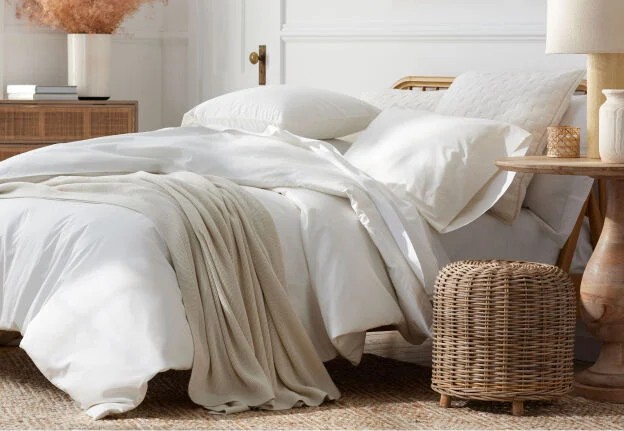
Picture this. It’s 2 AM, you’ve kicked off your covers for the third time tonight, and you’re lying there wondering why your bed feels like a sauna. Been there? If you’re someone who wakes up sweaty or spends half the night adjusting blankets, your bedding might be working against you.
I’m here to talk about something that changed my perspective on sleep comfort entirely: linen quilt covers. Not the scratchy, stiff kind your grandmother had stored in the linen closet.
The real deal, proper linen that actually helps you sleep cooler.
This article explores why linen quilt covers are ideal for hot sleepers, how they compare to other fabrics, and why they are particularly well-suited to Australian conditions.
Before you think I’m just pushing another bedding trend, hear me out.
There’s actual science behind why linen works for people who sleep hot. And I’ve spent years reviewing bedroom textiles, so I know what I’m talking about.
Kind of comes with the territory when you’re writing about interior design and home comfort for over a decade.
Understanding the Needs of Hot Sleepers
Here’s the thing about sleeping hot. It’s not just uncomfortable, it genuinely messes with your sleep quality.
Your body temperature drops naturally when you’re trying to fall asleep. That’s normal biology. But when your bedding traps heat and moisture, it fights against this natural process.
You end up in this frustrating cycle where you’re too warm to stay asleep but too tired to fully wake up.
Hot sleepers need bedding that works with their body, not against it.
That means fabric that breathes, releases heat instead of holding it, and handles moisture without feeling damp or clammy. Sounds like a tall order, right?
Most conventional bedding materials fail at least one of these requirements.
Cotton blends trap heat. Polyester is basically sleeping under plastic wrap. Even high-thread-count Egyptian cotton, while luxurious, can feel stuffy on warm nights.
The Australian climate makes this worse.
Summers here are brutal, and even milder seasons can bring unexpectedly warm nights.
You need bedding that can handle temperature swings without turning your bed into a heat trap.
That’s where linen enters the picture.
What Is Linen Fabric?
Quick textile lesson, I promise this won’t be boring.
Linen comes from the flax plant. It’s one of the oldest fabrics humans have used, going back thousands of years.
Ancient Egyptians wrapped their mummies in it, if that tells you anything about its durability.
The fibers are hollow. This matters more than you’d think.
Those hollow fibers create tiny air channels throughout the fabric, which is partly why linen behaves so differently from other materials.
Flax plants grow best in cooler climates, mostly Europe.
Belgium, France, and the Netherlands produce some of the finest linen in the world. The growing conditions affect the fiber quality, which then affects how the finished fabric performs.
Manufacturing linen takes longer than cotton.
The flax has to be harvested, then there’s this process called retting where they break down the plant material to get at the fibers.
It’s labor-intensive, which is why real linen costs more than cotton or synthetic alternatives.
But here’s what you get for that investment: a fabric that actually improves with age and use. Linen doesn’t pill or wear out quickly.
It gets softer every time you wash it while maintaining its structural integrity. That stiff feeling new linen has? Goes away after a few washes, leaving behind fabric that’s both strong and incredibly soft.
The natural texture of linen also means it doesn’t cling to your skin when you’re sweating.
There’s always a bit of air between you and the fabric, even when you’re lying directly on it.
Natural Breathability of Linen Quilt Covers
Let’s talk about why linen breathes better than pretty much everything else.
Those hollow fibers I mentioned? They allow air to move through the fabric freely.
Not just across the surface, but actually through the material itself. It’s like having built-in ventilation.
Cotton breathes too, sure. But linen’s fiber structure is more open, more porous.
Air circulates more efficiently, which means heat doesn’t get trapped between your body and the quilt cover.
I tested this once with a simple experiment. Held different fabrics over a steaming cup of coffee to see how quickly steam passed through.
Linen won by a mile. The steam moved through almost immediately, while cotton held it back longer, and polyester basically blocked it completely.
That same principle applies when you’re sleeping. Your body generates heat and releases moisture throughout the night.
Linen allows both to escape rather than accumulating under your covers.
The weave matters here too.
Linen bedding typically uses a looser weave than cotton percale or sateen. This isn’t a defect or lower quality, it’s actually what you want.
That looser weave enhances airflow without compromising durability.
Temperature regulation happens naturally.
When you’re hot, linen wicks that heat away from your body. When you cool down, it doesn’t continue cooling you unnecessarily.
The fabric responds to your body temperature rather than imposing its own temperature on you.
Moisture-Wicking Properties That Keep You Dry
Sweating at night is normal. Everyone does it to some degree. The question is what happens to that moisture.
Linen can absorb up to 20% of its weight in moisture before it starts feeling damp to the touch. That’s remarkable.
Cotton absorbs moisture too, but it feels wet much sooner, and it holds onto that moisture longer.
The way linen releases moisture is even more important than how it absorbs it.
The fabric doesn’t just soak up sweat and sit there feeling clammy.
It pulls moisture away from your skin and then allows it to evaporate into the air.
This keeps you feeling dry even when you’re sweating.
The moisture moves through the fabric and dissipates rather than pooling against your body or creating damp spots on your bedding.
I used to wake up with a damp pillowcase and sweaty sheets when I used cotton bedding during summer.
Switched to linen, that problem basically disappeared. Same sleeping environment, same body, different results.
Linen also dries faster than cotton after washing.
This isn’t just convenient for laundry day, it also means the fabric doesn’t hold onto moisture during use. Quick-drying properties translate directly to better comfort when you’re sleeping.
Bacteria and odors thrive in damp environments.
Since linen stays drier, it naturally resists that musty smell that bedding can develop, especially in humid conditions.
You can go longer between washes without your bed starting to smell off, though of course you should still maintain good hygiene practices.
Temperature Regulation Across Seasons
Here’s something that surprised me about linen: it works year-round.
You’d think a fabric that keeps you cool in summer would leave you freezing in winter.
Not the case. Linen adapts to ambient temperature and your body temperature in ways that feel almost intelligent.
During hot months, linen’s breathability and moisture-wicking properties keep you cool.
We’ve covered that. But in cooler weather, those hollow fibers trap small amounts of warm air close to your body, providing light insulation without overheating you.
It’s not going to replace a heavy duvet in the middle of winter. But a linen quilt cover over appropriate bedding layers works beautifully across temperature ranges that would make other fabrics uncomfortable.
Australian seasons can be unpredictable.
You might have a warm afternoon that drops to a cool night, or unseasonably hot days in what should be mild weather.
Linen handles these variations without needing to completely change your bedding setup.
I keep my linen quilt covers on the bed year-round, just adjusting what’s inside them.
Summer months, a light cotton blanket underneath.
Winter, a warmer insert. The linen exterior works either way because it regulates rather than dictates temperature.
This adaptability also means linen works well in homes without perfect climate control.
Not everyone has air conditioning, and even those who do might not run it all night. Linen gives you more flexibility in how you manage bedroom temperature.
The fabric responds to humidity too.
High humidity makes sleeping hot worse because sweat doesn’t evaporate efficiently from your skin.
Linen’s moisture-wicking properties become even more valuable in humid conditions, pulling that moisture away where it can dissipate.
Lightweight Comfort Without Trapping Heat
Weight matters more than you might think when it comes to bedding.
Heavy quilt covers feel substantial, sure. But they also trap heat and can feel oppressive when you’re already sleeping warm.
You want coverage without that weighted-down feeling.
Linen provides this perfectly. The fabric has body and structure, it doesn’t feel flimsy or cheap. But it’s naturally lightweight compared to denser materials.
You get the comfort of being covered without the heat retention of heavier bedding.
This lightness also makes it easier to adjust your covers during the night.
When you’re half-asleep and too warm, you can kick off a linen quilt easily, then pull it back when you cool down.
Heavier bedding requires more effort to maneuver, which can wake you up more fully.
The drape of linen is different too.
It falls naturally rather than laying flat or bunching up.
This creates small air pockets between you and the fabric even when you’re covered, maintaining that crucial airflow.
Some people worry that lightweight means fragile. Not with linen.
The fabric is incredibly strong despite being light.
Flax fibers are naturally one of the strongest plant fibers, which is why linen lasts for decades with proper care.
You can layer linen too without it becoming too heavy.
A linen quilt cover over a light blanket still weighs less and breathes better than many single-layer cotton alternatives.
This gives you flexibility in adjusting warmth levels while maintaining good temperature regulation.
Hypoallergenic and Skin-Friendly Benefits
Hot sleepers often deal with skin irritation.
Sweating at night combined with certain fabrics can lead to itching, rashes, or just general discomfort.
Linen is naturally hypoallergenic.
The fabric resists bacteria, fungi, and dust mites better than cotton or synthetic materials. This isn’t marketing speak, it’s a property of the flax fibers themselves.
The smooth texture of washed linen is gentle on sensitive skin.
There are no harsh chemicals in natural linen production, especially if you choose organic or Oeko-Tex certified options.
What you’re sleeping on is essentially just processed plant fibers, nothing more.
People with eczema or similar skin conditions often find linen more comfortable than other fabrics.
The combination of breathability, moisture-wicking, and natural fiber content reduces irritation triggers.
The texture does take getting used to if you’re coming from high-thread-count cotton.
New linen has a slightly nubby feel, that characteristic texture that gives it personality.
Some people love it immediately, others need a few nights to adjust. But once it softens up with washing, even texture-sensitive people typically find it comfortable.
Linen doesn’t generate static electricity like synthetic fabrics can.
Small detail, but it matters for comfort.
No shocking yourself when you move around in bed, no fabric clinging to your skin uncomfortably.
The natural temperature regulation also helps skin health.
When your skin stays cooler and drier throughout the night, you’re less likely to experience heat rash or fungal issues that thrive in warm, moist environments.
Choosing the Right Linen Quilt Cover
Not all linen is created equal. Shopping for a linen quilt cover requires knowing what to look for.
First, check the linen content. Pure linen or 100% linen is what you want.
Linen blends with cotton or synthetic fibers won’t give you the same performance.
They might cost less, but you’re compromising the exact properties that make linen valuable for hot sleepers.
Weight specification matters. Linen weight is measured in GSM (grams per square meter). For quilt covers, you’re typically looking at 150-200 GSM for a lighter summer option, or 200-250 GSM for something with more substance that still breathes well.
Heavier than 250 GSM starts feeling more like a blanket than a breathable cover.
Origin can indicate quality. European linen, particularly from France, Belgium, or the Netherlands, generally has longer, finer fibers than linen produced elsewhere.
This affects softness and durability. It’ll cost more, but there’s a reason.
Washing and pre-treatment make a difference in initial feel. Some brands pre-wash their linen to soften it before sale. Others sell it in its natural, stiffer state.
Neither is wrong, but know what you’re getting. If you want immediate softness, look for pre-washed options.
If you don’t mind breaking in your bedding, natural-state linen costs less.
Construction quality shows in the seams and finishing.
Check reviews about whether fitted sheets actually fit mattresses properly, whether stitching holds up to washing, whether zippers or closures (if present) are durable.
Color selection isn’t just aesthetic. Natural, undyed linen has the least processing and often breathes slightly better.
Dyed linen is still excellent, just make sure the brand uses quality dyes that won’t fade excessively or feel different from natural linen.
Size considerations for Australian beds: make sure you’re getting the right dimensions. Some international brands size differently than Australian standards.
A king in the US is different from a king in Australia, annoying but true.
Price is going to reflect quality. Real linen quilt covers typically start around $150-200 for basic options and go up from there.
If something claims to be pure linen but costs $50, be skeptical. It’s either a blend, poor quality, or made with short fibers that won’t perform well.
Return policies matter when buying online.
Linen feels different from cotton or synthetic bedding, and you might need to try it for a few nights to know if it works for you.
Look for brands offering sleep trials or at least reasonable return windows.
Conclusion
If you’re a hot sleeper, linen quilt covers are worth the investment.
Not just because they’re trendy, though they are having a moment. But because the fabric genuinely solves problems that other materials can’t.
The breathability keeps you cooler. The moisture-wicking prevents that clammy feeling.
The temperature regulation works across seasons. The lightweight comfort doesn’t trap heat. And the hypoallergenic properties protect sensitive skin.
Yes, linen costs more upfront than cotton or synthetic alternatives. But it lasts longer, performs better, and actually improves with age rather than deteriorating.
When you calculate cost per year of use, quality linen becomes more reasonable.
The Australian climate makes linen particularly practical here.
Hot summers, unpredictable shoulder seasons, homes without universal climate control. Linen handles all of it better than most alternatives.
If you’ve been suffering through sweaty nights under bedding that doesn’t breathe, maybe it’s time to try something different. Your sleep quality matters.
The right bedding can genuinely transform how well you rest.
Start with one piece if the full investment feels overwhelming.
Try a linen pillowcase first to see how you like the fabric. Or go straight for a quilt cover and experience the difference properly.
Either way, your future well-rested self will probably thank you.