
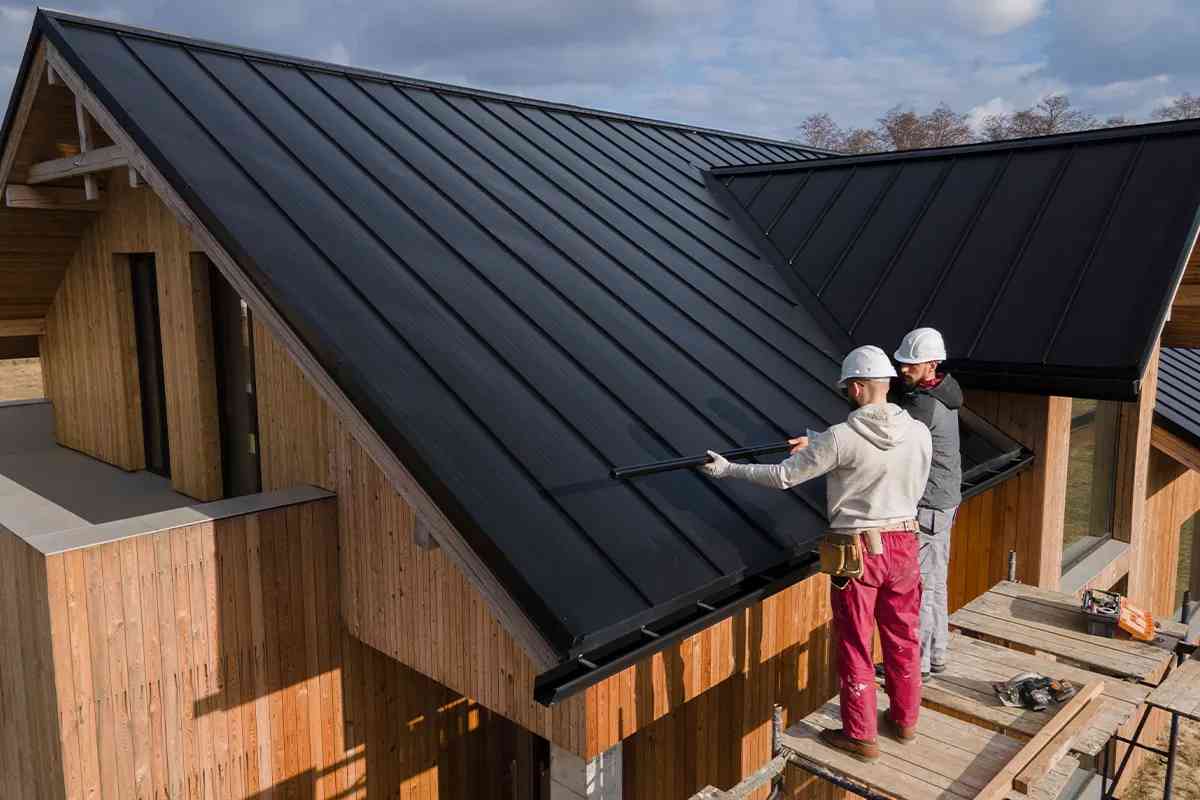
So you’re thinking about putting metal on your roof.
Smart move. But here’s where it gets tricky—there are way too many choices out there, and not all of them are gonna work for your home or your budget.
I’ve been writing about homes and design for over 15 years now, and I can tell you that metal roofing isn’t what it used to be.
It’s not just barns and warehouses anymore.
Homeowners are choosing it because it lasts, it looks great, and when you break down the cost over 40 or 50 years? It actually makes sense.
But picking the right metal roof means knowing what you’re looking at.
The panels, the finishes, the installation—it all matters. And if you pick wrong, you’re stuck with it for decades.
Let’s talk about how to actually choose metal roofing that works for your project.
How To Choose Metal Roofing
Here’s the thing about metal roofs. They’re not all created equal.
You’ve got different metals, different thicknesses, different ways to attach them to your roof.
Some are built for high winds in Florida.
Others are meant for snow loads up north. Some look modern and clean. Others try to mimic traditional shingles or tile.
And the prices? All over the place.
So how do you pick? You start by understanding what’s out there, what your roof actually needs, and what you’re willing to pay for over the long haul.
Understand the Different Types of Metal Roofing Materials
Not all metal is the same. Sounds obvious, right? But people assume metal roofing is just…metal. It’s not.
You’ve got steel, which is probably the most common.
It’s strong, it’s affordable compared to other metals, and it can handle a beating from the weather.
Steel roofs usually have coatings on them to prevent rust—because yeah, plain steel will rust if you don’t protect it.
Then there’s aluminum. Lighter than steel.
Doesn’t rust, which is why you see it a lot in coastal areas where salt air eats through everything else. But it dents easier, so if you get hail, you might see some dings.
Copper and zinc are the premium options. Beautiful.
They age and develop that patina over time—you know, that greenish color you see on old buildings.
They last forever, basically. But they cost a fortune upfront.
The material you pick depends on where you live, what your budget looks like, and honestly, what you want your house to look like in 20 years.
Check the Gauge and Thickness of the Panels
Okay, this is where contractors can get you if you’re not paying attention.
Gauge is how thick the metal is. But here’s the confusing part—the higher the gauge number, the thinner the metal.
So 29 gauge is thinner than 24 gauge. Backwards, I know.
For roofing, you’re typically looking at anywhere from 22 gauge to 29 gauge.
Thicker panels (lower gauge numbers) are gonna be stronger, more dent-resistant, and they hold up better in storms. But they also cost more and weigh more.
If you’re in an area that gets hail or high winds, you want to go thicker.
If your roof is pretty sheltered and you’re just looking for something that lasts longer than shingles, you might be fine with a thinner gauge.
When you’re comparing quotes from contractors, make sure they’re listing the gauge.
If one bid seems way cheaper than the others, check if they’re using thinner panels. That could be your answer right there.
Evaluate Coatings and Finishes
The metal itself is only part of the story.
What’s on top of that metal is what you’re actually gonna see—and what’s gonna protect it from fading, chipping, and rusting.
Most metal roofs come with some kind of coating.
Paint warranties are a big deal here. You might see warranties that range from 25 years to 40 years or even longer. But read the fine print.
Some warranties only cover manufacturing defects, not fading. Others have all kinds of conditions.
Kynar 500 or Hylar 5000—these are brand names for a type of coating called PVDF.
It’s basically the top-tier paint finish for metal roofing.
Holds color well, resists chalking and fading. If you want your roof to still look good 30 years from now, this is what you’re aiming for.
Then there’s SMP, which is a step down but still pretty solid.
Costs less, doesn’t last quite as long, but for a lot of homes, it does the job just fine.
And yeah, there are cheaper coatings out there too. But if you upgrade to a durable metal roof and then cheap out on the finish, you’re gonna end up with a faded, chalky-looking roof in 10 years. Not worth it.
Talk to your contractor about what coatings they’re quoting. Ask about the warranty. Get it in writing.
Consider the Roof Style and Panel Design
Metal roofs come in a bunch of different profiles. That’s just a fancy word for the shape and look of the panels.
Standing seam is probably what you picture when you think of a modern metal roof.
Vertical panels with raised seams running up and down.
Clean lines. No exposed screws, which means fewer spots for leaks. It’s a premium product, though.
Costs more than other options, but it’s also what most people want when they’re serious about metal.
Then you’ve got corrugated or ribbed panels.
These have that wavy or ribbed look. More industrial.
They’re cheaper because they’re usually face-fastened, meaning the screws go right through the panel into the roof deck.
Easier to install, but those screw holes are potential leak points down the road.
Some metal roofs are designed to look like shingles or tile.
If you’re in a neighborhood with an HOA that won’t allow a standing seam roof, these might be your option.
They give you the durability of metal but with a more traditional look.
Your roof shape matters too.
If you’ve got a simple gable roof—just up and over—pretty much any system will work. But if your roof is cut up with a bunch of hips, valleys, dormers, skylights? That’s gonna affect which panel type makes sense.
Standing seam can handle complex roofs, but it’s gonna cost you more in labor and material waste because of all the cutting and fitting.
Review Energy Efficiency and Reflectivity Ratings
Here’s something people don’t always think about until they get their first summer electric bill after a roof replacement.
Metal roofs can actually help keep your house cooler.
Not all of them, but the ones with reflective coatings. They bounce the sun’s heat back instead of absorbing it like asphalt shingles do.
If you live somewhere hot, this is worth looking at. Light-colored metal roofs with high solar reflectance can cut your cooling costs.
Some coatings are specifically designed for this—they’re called “cool roof” coatings.
You might also hear about emissivity, which is basically how well the roof releases heat.
High emissivity means the roof doesn’t hold onto heat after the sun goes down.
Not every metal roof has these ratings, and honestly, if you live somewhere cold, it might not matter much to you. But if you’re in Texas or Arizona or Florida, ask about it. It could save you money every year.
Assess Installation Requirements and Contractor Expertise
This is huge. You can pick the best metal roofing system out there, and it won’t mean a thing if the installer screws it up.
Metal roofing is not the same as shingle installation. It just isn’t.
The techniques are different, the tools are different, the details around flashing and penetrations—completely different.
When you’re getting quotes, ask the contractor how many metal roofs they’ve installed. Ask to see photos of previous work. Better yet, ask for addresses of jobs they’ve done so you can drive by and see them in person.
Some metal roofing systems require specific installation training.
Standing seam systems, especially the ones that are engineered for high wind zones, have very specific requirements. The clips have to be spaced a certain way, installed a certain way.
If the contractor doesn’t follow those specs, your warranty might not be valid. Worse, your roof might not perform the way it’s supposed to in a storm.
Another thing—reroof projects. If they’re tearing off your old shingles, what happens when they find bad decking underneath? You want to know upfront what they charge to replace decking.
Per sheet. Per hour. Whatever. Just know before they start ripping things apart.
And if they’re saying they can just install the metal right over your existing shingles, make sure that’s actually allowed by code in your area.
Sometimes it is, sometimes it isn’t. Sometimes it voids the warranty on the metal panels.
Ask about their workmanship warranty too.
Even if the metal panels come with a 40-year warranty, what if the installation leaks in year three?
A good contractor will stand behind their work for at least a couple years. Some offer longer.
Compare Warranties and Long-Term Value
Warranties sound great until you actually need to use one.
You’re gonna see warranties on the metal panels themselves—usually against defects or perforation.
Then paint warranties, like we talked about earlier. And hopefully a workmanship warranty from your contractor.
But here’s what you need to know. Read them. Actually read them.
Some warranties are prorated, meaning the coverage decreases over time.
Some require you to do certain maintenance.
Some are voided if the roof isn’t installed exactly to manufacturer specs, which goes back to making sure your contractor knows what they’re doing.
When you’re comparing bids, look at what warranties are being offered with each system.
A cheaper quote might come with a 25-year warranty while a slightly higher quote offers 40 years. Over the life of your roof, that difference might matter.
And think long-term here. Metal roofs cost more upfront than shingles—no way around that. But they last two, sometimes three times longer.
They need less maintenance. They don’t blow off in storms as easily. When you factor in replacement costs, the value starts to make sense.
If you’re planning to stay in your home for a long time, metal might be the last roof you ever put on.
If you’re planning to sell in a few years, it’s still a selling point—people like the idea of not having to replace a roof.
Conclusion
Choosing metal roofing isn’t about picking the first shiny option that catches your eye.
It’s about understanding what you’re actually getting. The material. The thickness. The coating. The style. How it’s installed and by who.
Metal roofs are an investment. They’re meant to last 40, 50, even 60 years if you pick right and install right.
But if you cut corners on the material or hire someone who doesn’t know what they’re doing, you’re gonna regret it.
Get multiple quotes. Compare them line by line.
Ask questions. Lots of questions. Make sure the contractor lists out everything—the gauge, the type of panels, the clips, the flashing, the labor, the warranties.
If a bid seems too low, figure out why. If it seems high, figure out why.
And remember, the cheapest option now might cost you way more later.
Pick the roof that fits your home, your climate, your budget, and your timeline.
Do that, and you’ll have a roof repairing you can stop worrying about for decades.