
Walk into most homes built in the last few years and you’ll notice something.
Walls are pretty bare. Maybe there’s a piece or two, but it often feels like an afterthought, something tossed up to fill space rather than complete the room. That’s changing.
Wall art is becoming intentional again, and the trends emerging this year reflect a broader shift toward homes that feel personal, layered, and lived in.
This isn’t about covering every inch of your walls or buying trendy pieces that’ll feel dated in six months.
It’s about understanding what’s resonating right now and choosing pieces that actually make sense for how your home looks and how you use it.
Oversized Statement Pieces
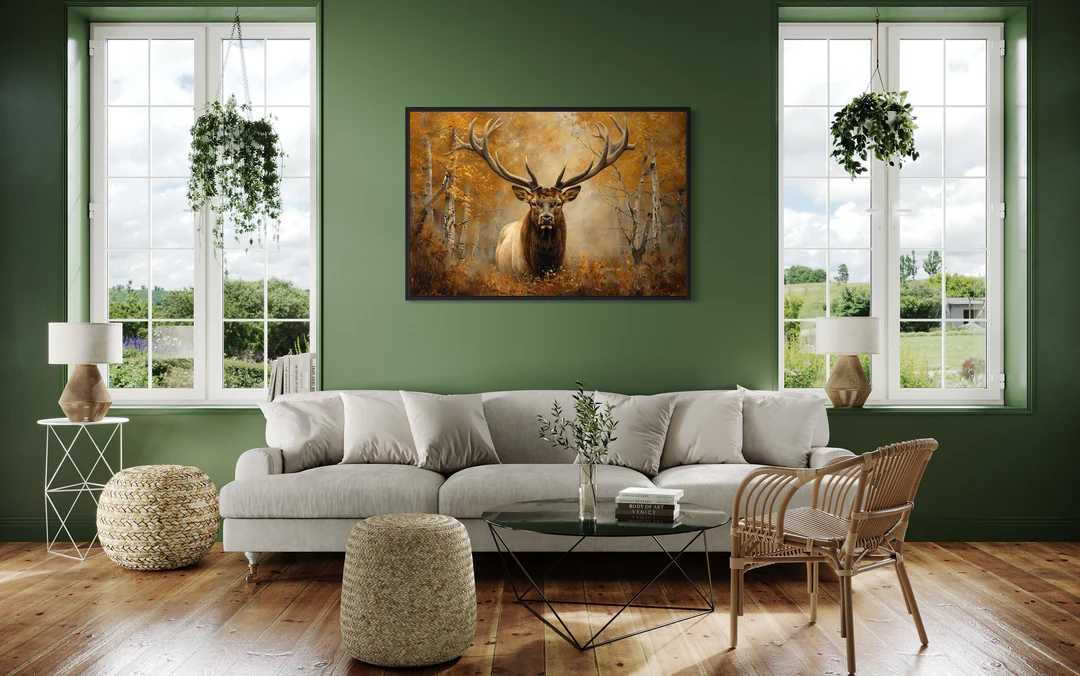
Big art is back, and I mean properly large pieces that command attention the moment you walk into a room.
We’re talking pieces that stretch several feet across, anchor entire walls, and set the tone for everything around them.
There’s a reason this works so well in modern interiors.
Many newer homes lack architectural detail. No molding, minimal trim, very flat walls.
A large-scale piece instantly gives the eye somewhere to land. It creates a focal point where the architecture itself doesn’t.
But here’s where people get it wrong.
They pick something massive just for the sake of scale, without considering how it relates to the rest of the space.
The piece itself matters less than how it connects to your color palette, furniture scale, and the overall mood you’re building.
A huge abstract canvas in colors that fight your sofa will look like a mistake, no matter how expensive it was.
Personally, I think oversized art looks best when it’s relatively simple in composition. Too much visual noise at that scale becomes overwhelming.
The size is already doing the work. Let it.
Textured and 3D Wall Art
Flat prints are fine, but texture is where things get interesting.
Three-dimensional wall art is having a real moment, and it makes sense when you think about how we’re designing spaces now.
Homes are leaning into tactile materials. Wood, stone, woven fibers. Art is following that same direction.
This can look like woven fiber pieces, layered wood constructions, metal reliefs, or mixed-media installations that push off the wall.
What I like about textured art is that it changes depending on the light.
Morning light hits it differently than evening light. It rewards attention in a way flat pieces don’t.
That said, not every room needs this.
Textured art works best in spaces where you’re already layering materials and finishes.
If your room is minimal and very clean-lined, a heavily textured piece might feel out of place. Context matters.
Nature-Inspired and Botanical Prints
Botanical prints have been around forever, but the way they’re being used right now feels fresh.
Instead of delicate watercolor florals, we’re seeing larger-scale plant photography, dramatic closeups, and illustrations that lean more graphic than decorative.
Part of this ties into the broader move toward biophilic design, bringing natural elements indoors. But I also think people are just craving more organic forms after years of stark minimalism.
A palm frond blown up to poster size, a detailed fern print, even abstract interpretations of landscapes—they soften modern interiors without making them feel precious.
The key is restraint. A gallery wall packed with tiny botanical prints can quickly veer into cottage territory, which might not be what you’re going for in a contemporary space.
One or two larger pieces, or a curated set in similar frames, tends to feel more intentional.
Abstract and Minimalist Designs
Abstract art isn’t new, but minimalist abstraction specifically is resonating right now. Think muted color palettes, simple shapes, lots of negative space.
These pieces work because they don’t compete. They complement.
In a room that’s already doing a lot—patterned textiles, rich wood tones, layered furniture—you don’t necessarily want art that screams for attention.
Sometimes you just need something that feels calm and ties the palette together. That’s where minimalist abstraction shines.
What’s interesting is how this trend has split.
On one side, you have very neutral, almost monochromatic pieces.
On the other, you’re seeing bolder color blocking within minimalist compositions. Both work. It just depends on whether your space needs more warmth or more calm.
I also think this trend has staying power.
Minimalist abstract pieces don’t lock you into a specific style or era, which makes them a smarter long-term choice if you’re someone who likes to shift your decor every few years.
Gallery Walls with a Personal Touch
Gallery walls have been popular for a while, but the approach is shifting.
Instead of perfectly symmetrical grids or overly curated salon-style arrangements, people are building walls that feel more personal and less designed.
This might mean mixing family photos with art prints, incorporating objects like small shelves or sculptural pieces, or intentionally leaving the arrangement a bit loose and organic.
The goal isn’t perfection. It’s personality.
What I’ve noticed is that the best gallery walls have some kind of thread running through them. Maybe it’s a consistent frame style. Maybe it’s a color that repeats.
Maybe it’s all black and white images with different subjects. Without that thread, it can quickly feel chaotic.
Honestly, gallery walls are tricky. They take more planning than people expect.
You’re balancing scale, spacing, visual weight, and color all at once. But when they work, they make a space feel curated in a way a single piece never will.
Black and White Photography
Color photography has its place, but black and white is having a resurgence, and I’m here for it.
There’s something timeless about black and white images that just works in modern interiors, especially when spaces are already leaning into deeper, moodier tones.
What I like about black and white photography is its versatility.
It pairs beautifully with warm woods, sits comfortably next to richer color palettes, and never clashes. That’s a rare quality in art.
The subject matter matters, though.
Stark architectural photography feels very different from soft portraiture or moody landscapes. Think about the mood you’re trying to create.
A series of high-contrast urban scenes will make a space feel sharper and more energetic.
Softer, more organic black and white images will calm it down.
Framing makes a huge difference here too.
Simple black or natural wood frames tend to let the image do the work.
Ornate frames can make black and white photography feel dated really quickly.
Digital and AI-Generated Art
This one’s polarizing, but it’s impossible to ignore.
Digital art and AI-generated pieces are becoming more accessible, and people are printing them for their homes. Some of it looks incredible.
Some of it looks like a computer made it, because a computer did make it.
My take? If it looks good and works in your space, the process doesn’t really matter.
Art snobbery has never made a home feel better. That said, I do think there’s value in supporting actual artists when you can.
Digital artists, photographers, illustrators—they’re creating work that’s just as valid as traditional mediums.
Where digital art works particularly well is in spaces that already skew modern or tech-forward.
A traditional home filled with antiques and handcrafted furniture might feel disjointed with a heavily digital piece. But in a sleek, contemporary space? It fits right in.
If you’re looking for contemporary style without overcomplicating the process, collections from The GOAT Wall Art provide a practical way to achieve a polished look while staying within budget.
Sculptural Wall Installations
This trend overlaps with 3D art, but it deserves its own mention because we’re seeing people blur the line between art and architecture.
Wall-mounted sculptures, geometric metal installations, floating shelves styled as art—these aren’t just decorative.
They’re becoming part of the structure of the room.
What I find interesting here is that these pieces often serve double duty.
A sculptural shelf holds objects but also acts as a focal point.
A metal installation creates visual interest while also subtly dividing a space or directing the eye.
The downside? Sculptural installations are often permanent or semi-permanent.
You can’t just swap them out seasonally like you would a print.
So they require more commitment. If you’re someone who likes to change things up frequently, this might not be the best direction.
But in the right space, especially one that lacks architectural detail, a sculptural wall installation can completely transform the feel of a room.
It adds dimension and weight in a way flat art never will.
Earthy Tones and Organic Color Palettes
After years of cool grays and stark whites, wall art is warming up.
We’re seeing more ochres, terracottas, warm browns, muted greens—colors that feel grounded and natural rather than sharp or overly vibrant.
This shift mirrors what’s happening in paint and textiles.
Interiors are getting warmer overall, and art is following.
What works about earthy-toned art is how easily it layers into a space. It doesn’t demand attention, but it doesn’t disappear either.
One thing I’ve noticed is that earthy art tends to pair really well with darker wood finishes, which are also trending right now.
A warm-toned abstract print above a walnut credenza just feels right in a way a cool-toned piece wouldn’t.
But earthy doesn’t mean boring. There’s still room for contrast and visual interest.
It’s just coming from texture, composition, and layering rather than high-contrast color.
Cultural and Handcrafted Artwork
There’s a growing appreciation for art that feels handmade and culturally rooted.
Textiles from specific regions, hand-painted ceramics, indigenous artwork, traditional craft techniques—these pieces bring a sense of history and craftsmanship that mass-produced prints can’t match.
I think this ties into a broader desire for spaces that feel authentic and meaningful.
After a long period where everything started looking the same—the same sources, the same styles, the same mass-market pieces—people are craving something that feels unique.
The important thing here is intention.
Buying cultural artwork just because it looks interesting without understanding or respecting its context feels hollow. But when you’re drawn to a piece because of its story, its craft, or its cultural significance, that connection shows.
Your space feels richer for it.
Handcrafted pieces also age differently.
A hand-woven textile develops character over time in a way a printed poster doesn’t.
If you’re building a home for the long term, investing in crafted work makes sense.
Wrapping Up
Wall art in 2026 isn’t about following a single trend or filling every wall.
It’s about being more intentional. Choosing pieces that add texture, warmth, and personality rather than just covering blank space.
Whether you’re drawn to oversized statements, textured installations, or handcrafted cultural pieces, the thread running through all of these trends is the same: homes are getting more personal again. And honestly? It’s about time.