
Curious how your next home inspection could be safer, faster and more accurate?
Home inspections have looked pretty much the same for decades.
An inspector climbs a ladder, walks around on the roof, snaps a few pictures and writes a report. It works… Kind of. But there’s a lot of problems with that method.
Luckily, infrastructure inspection drones are changing the game for home buyers all over the country. The technology has never been more accessible, nor more affordable.
Let’s dig into everything you need to know about drone inspections vs traditional home inspections.
Why Traditional Home Inspections Are Falling Behind
Old school home inspections require someone to physically access the roof and check things over with their own eyes.
The problem?
It’s a slow, dangerous way to gather information that often leaves gaps in the inspection report.
Not all areas of a roof are safely accessible for inspection.
Homes with steep roofs, multiple levels or roof damage can pose serious safety hazards when someone is manually climbing around up there.
The numbers back this up too.
According to BLS data, falls, slips and trips make up 82% of roofing fatalities on the job.
Roofing is consistently ranked as one of the top three deadliest jobs in America.
That doesn’t even factor in just how long traditional roof inspections take to schedule and complete.
Plus they don’t always catch everything. If an inspector can’t safely access an area of the roof…they’ll just skip it.
If they skip it, how’s a home buyer supposed to know about it?
Then there’s cost. Expect to pay somewhere between $300-600 for a manual roof inspection on a residential property.
That may seem cheap, but those prices can increase with surcharges for roofs with steep slopes.
How Infrastructure Inspection Drones Change The Game
Here’s where it gets interesting.
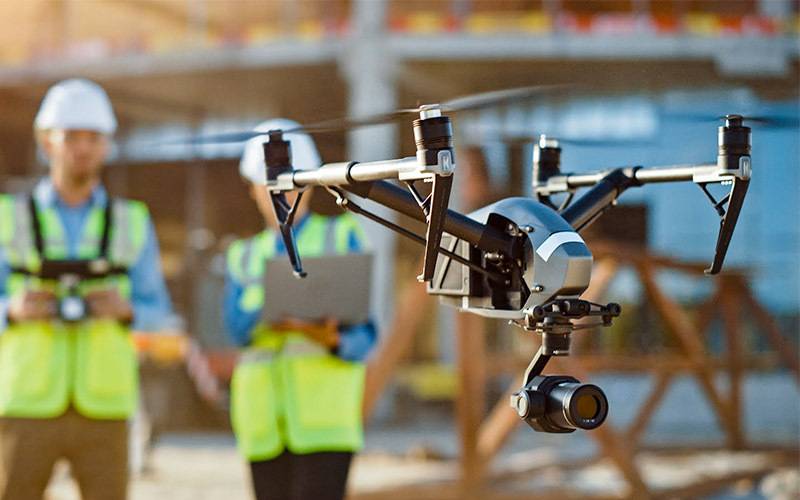
Infrastructure inspection drones can fly over your roof with high-def cameras and thermal imaging sensors to assess the condition of your roof faster than it takes for someone to climb a ladder.
They snap photos from every angle of your property without risking someone actually going on your roof.
Oh, and today’s drones can do way more than take photos.
Advanced options like a DJI alternative for surveying and mapping open up a whole new world of capabilities for drone pilots looking to do more than fly their drone around like tourists.
The benefits speak for themselves:
- Drone inspections are faster. Simple. Drones can cover an entire residential roof in under 30 minutes.
- Safer: No ladders required. No safety harnesses. No walking around on someone else’s roof.
- More accurate: High-quality cameras never get tired. They catch details that might be overlooked by a human eye.
- Offer thermal imaging: Infrared sensors can detect issues like moisture intrusion and missing insulation from a birdseye view.
Then there’s the cost savings.
Using drones to inspect roofs cuts the average turnaround time by half or more when compared to traditional methods. And drone roof inspections only cost between $150-$400 for residential properties.
Drone roof inspections are estimated to be a $199 million industry in 2024.
The market is expected to skyrocket to over $889 million by 2035. Talk about growth!
What Drone Inspections Can (& Can’t) Do
Drones aren’t perfect. But they can do a lot.
Best of all, they do it quickly.
Inspection drones excel at quickly assessing visual information.
Covering a large roof in minutes allows drones to compile repeatable data much faster than a human inspector can.
For home buyers, that means better data.
Photos with geotags and time stamps clear up any ambiguities about who took the picture or when. That creates a rock solid baseline of your home’s condition when you purchase it.
But here’s the catch…
No drone can replace hands on evaluation for everything.
There are certain conditions only a human can properly assess.
Material flexibility, seal strength, internal structural damage and certain cosmetic defects need to be touched in order to properly evaluate.
Weather can play a factor too.
Most drone pilots won’t fly in extreme weather conditions like heavy rain, snow or high winds.
That could limit availability if the weather isn’t cooperating when you need an inspection done.
The ideal solution? Combine the two.
Using a drone to rapidly assess a roof prior to doing a manual inspection allows home buyers to get the best of both worlds.
Limiting how much time an inspector needs to be physically on the roof keeps them safe.
While the drone captures slope, thermal and imagery data a human simply can’t.
When Buyers Should Request A Drone Inspection
Not every roof inspection is going to need a drone. But they certainly should be part of the inspection process in certain scenarios.
Request a drone inspection if your property:
- Has steep roofing, or multiple stories that are hard to access.
- Is an older home with potential for undetected damage or deterioration.
- Had an inspection previously that identified potential issues.
- Is larger or has complex roof structures where access could be incomplete.
Generally speaking, drone inspections run anywhere from $150-400 dollars. Half the price of traditional roof inspections.
Home buyers are already dropping hundreds of thousands of dollars on a new house.
A drone inspection is a smart investment to guarantee everything about the condition of the roof is known before closing.
Not to mention insurance.
A lot of insurance companies are using drone inspections for their own claims process.
Get that data ahead of time and it’ll make getting insurance way smoother down the road.
People are still dying at job sites across the construction industry. About 20% of work-related fatalities to be exact.
Drones keep pilots safely on the ground while creating better, faster reports. Don’t ignore that kind of value.
Pulling It All Together
Drones are not replacing traditional home inspections. But they are empowering home buyers to get better, faster and safer results.
Infrastructure drones give home buyers:
- Faster results. Drone inspections take minutes, not hours.
- Safer reporting. No more worrying about someone falling off a roof.
- Better information with thermal scans and 3D models.
- Save money! Drones cost half as much as traditional on-roof inspections.
Home drone technology is here. The market isn’t going anywhere but up.
It’s time to start taking advantage of everything drones have to offer.
Requesting a drone inspection is the smartest move for home buyers who want peace of mind.
Don’t leave money on the table.
Combine drone data with a manual home inspection to have complete confidence when closing on a new home.