
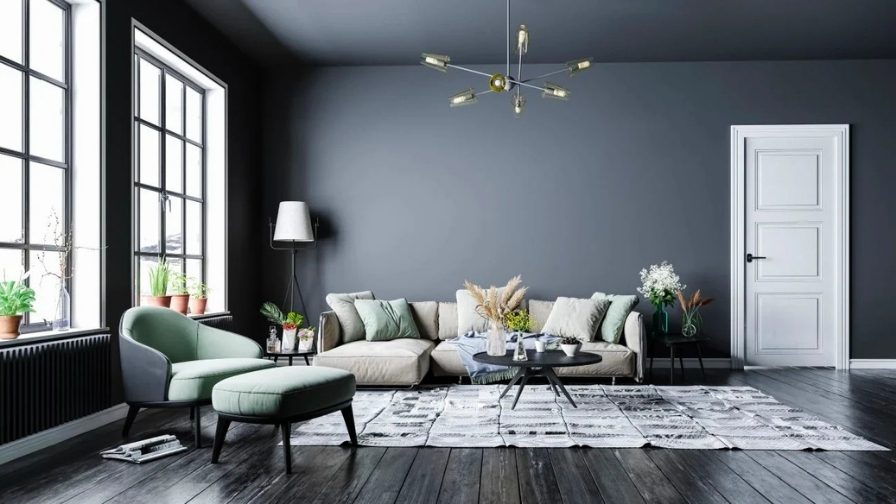
The thing about gray walls is that they’re everywhere.
When my husband and I were repainting our living room three years ago, gray felt like the safest bet as it’s neutral and modern.
Gray just works so much that what colors go with gray walls seemed like a question with endless right answers.
I’ve learned that gray walls can either look absolutely stunning or completely lifeless. The difference is the colors you pair with them and I’ve made enough mistakes to know that not every color combination is created equal.
The color combinations you choose affect everything about your mood when you walk into the room, how big or small the space feels, whether it looks modern or dated, warm or cold.
I once painted our bedroom light gray and realized it felt like a hospital room because I paired it with stark white and everything looked cold and dull.
That’s when I started actually paying attention to undertones, textures, and which colors genuinely made gray walls shine instead of standing out.
In this guide, we will be discussing everything I wish someone had told me before I made my first gray wall color pairing mistakes.
We will be discussing specific color combinations that actually work, room-by-room breakdowns, how to avoid making your space feel smooth, and the mistakes I see people make over and over again.
What Colors go with Gray Walls: Key Color Combinations
Let me tell you first that gray is not just gray.
I know that sounds obvious now, but when I first started working with gray walls, I thought any accent color would just work with it but I was wrong.
Gray comes in so many shades from light ash that’s almost white to deep charcoal that borders on black and every gray has an undertone.
Some lean cool with blue or green hints while others are warm with beige or brown undertones.
This matters so much when you’re choosing what colors go with gray walls in living room, bedroom, and bathroom spaces because cool grays love blues and greens while warm grays love mustard, beige, and warmer tones.
I’m going to break down the color combos that have worked best for me in different rooms, but remember to test your paint samples first.
White and Cream Color with Gray Walls for Fresh Look
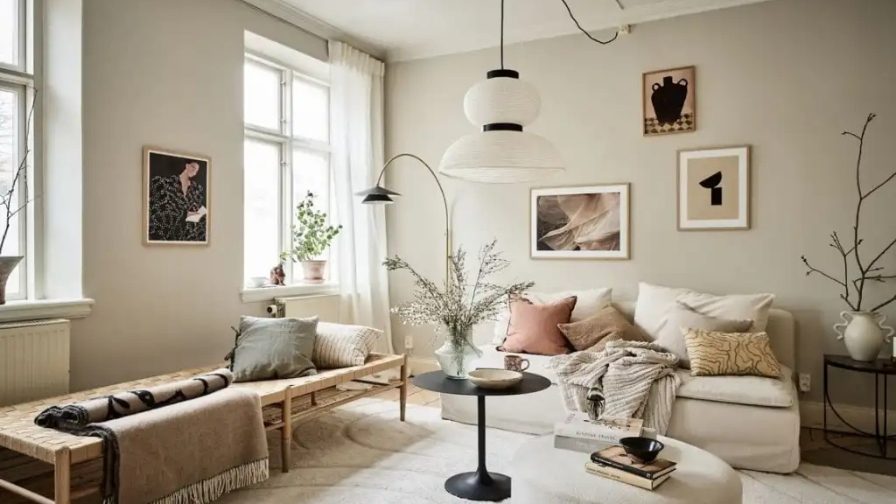
Okay so white and gray is probably the most classic combo as It works the best but it can also go wrong if you’re not careful.
I used white trim with my gray living room walls and it created this clean, crisp contrast that makes the whole space feel bigger. The trick is to make sure you’re not creating that hospital type that I mentioned earlier.
From what I have noticed Cream usually works best here with gray walls
When I added cream-colored pillows and a cream knit blanket to our gray living room, everything looked softened and it went from modern and cold to modern and inviting as the cream adds just enough warmth without making things look outdated.
In our bathroom, I have light gray walls with white subway tiles and cream towels which makes the white keep it fresh and clean-looking and the cream prevents it from looking too dark
One thing I learned is that matte finishes on gray walls paired with white trim in satin finish works really well.
Blue and Green Color with Gray Walls for Cool Look
This is where I got really excited about gray walls.
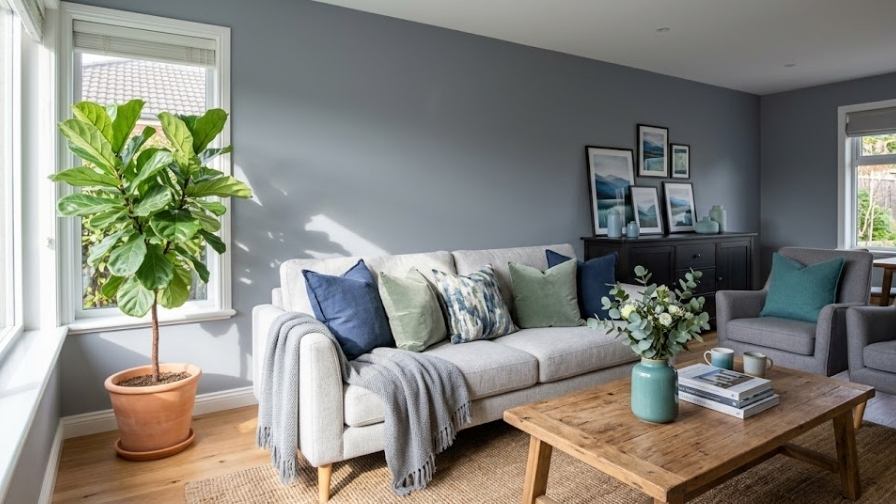
Blue and gray together is like they just belong together. They exist in nature this way like stormy skies, the ocean meeting rocks, foggy mornings.
I painted our guest bedroom in a cool-toned gray and added navy blue bedding and it looked slightly refined, calm, and gave a bit luxurious-feeling for a guest room.
My sister used teal accents with her gray dining room walls with teal pillows on gray chairs, a teal vase on the sideboard, and I was astonished as it was comfortable without being overwhelming.
Green is where things get interesting.
I was scared of green because I thought it would look too bold or wouldn’t work but sage green with gray walls in our bedroom changed everything as It brought an organic, calming vibe that made the room feel like an actual retreat and not a place where we just sleep.
The key with green color is picking the right shade because forest green works beautifully with darker grays for a moody, dramatic look while lighter sage or khaki green pairs better with light to medium grays.
I added some green plants and green throw pillows in our living room with the gray walls. The space went from dull to bright.
Mustard and Yellow Color with Gray Walls for Bright Look
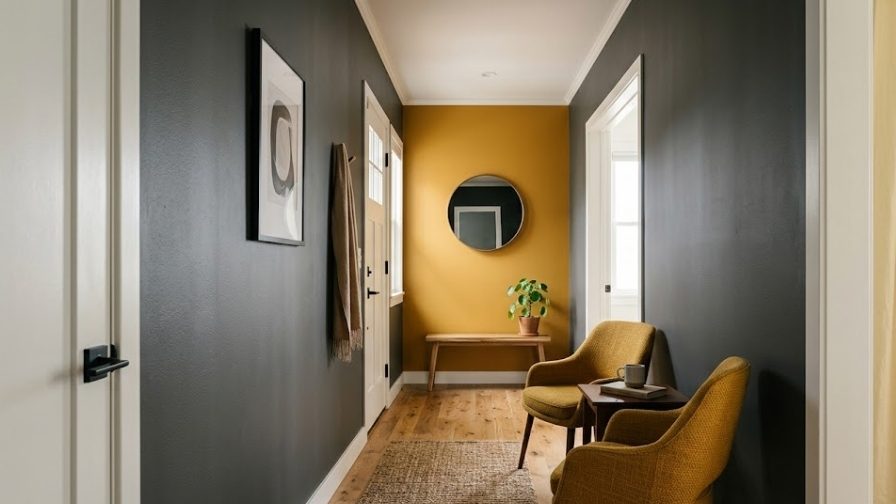
I was against mustard yellow for years as I thought it was too old and bold.
Then I once walked into my friend’s apartment and she had these mustard yellow accent chairs against her dark gray walls and it looked so good that i had to immediately text my husband that we need to talk about mustard yellow.
Mustard yellow adds warmth and energy to gray in a delicate and simple way until you see it. It’s not sunshine-bright yellow It’s deeper, richer, more refined.
I started by adding mustard yellow throw pillows to our gray couch, then a mustard yellow blanket and then I got brave and painted our hallway gray with a mustard yellow accent wall at the end and it was my best decision ever as mustard yellow fits perfectly with gray walls.
The contrast is striking but not harsh. It makes you feel something when you walk through space.
And in our small hallway that doesn’t get much natural light? The mustard reflects light and makes it feel less like a dark tunnel.
Regular bright yellow can work too because once I used pale yellow curtains in our kitchen gray walls, and they brighten the whole space without overwhelming it.
The trick with yellow and gray is proportion. Don’t go 50/50, let gray dominate and use yellow as your accent maybe 20-30% of the color story.
Black Color with Gray Walls for Bold Look
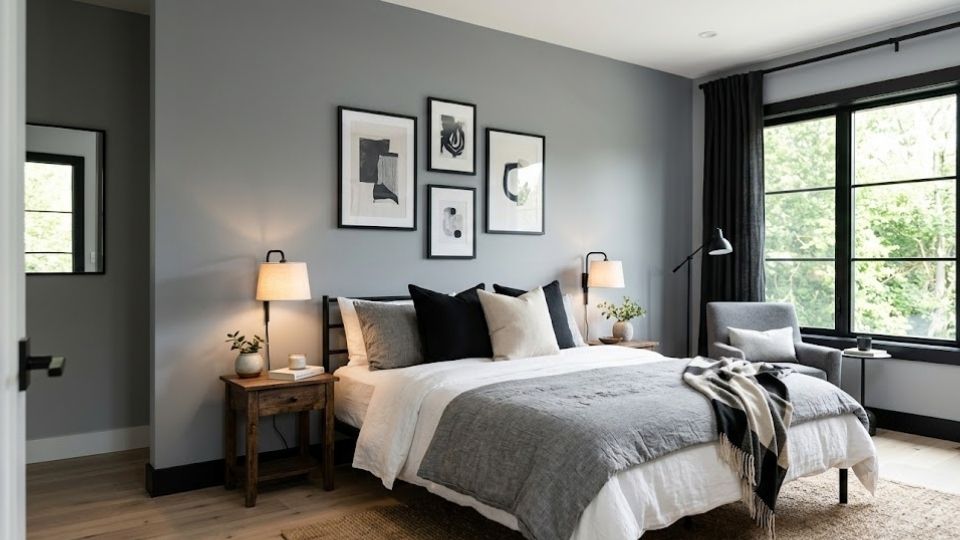
Adding black to gray walls sounds harsh but it’s the best choice.
I was nervous about this one because I thought it would make rooms feel smaller or too dark, but when I added black trim to our gray living room walls instead of white trim it made the whole room look modern and refined that the white trim wasn’t giving.
Black cabinetry with gray walls in a kitchen looks astonishing, sharp and dramatic as I’ve seen it done.
In our master bedroom, I have gray walls with black metal-framed artwork and black bedside lamps where black adds definition and keeps the gray from looking unclear and unsure.
The key is black should be a supporting player, not taking over. You can use black picture frames, black hardware on cabinets, black light fixtures, and black accent pieces of furniture.
From what I’ve noticed, if your gray leans warm, be extra careful with black as it can clash because black works best with cool-toned or true neutral grays.
Color Combinations for Gray Walls in Different Rooms
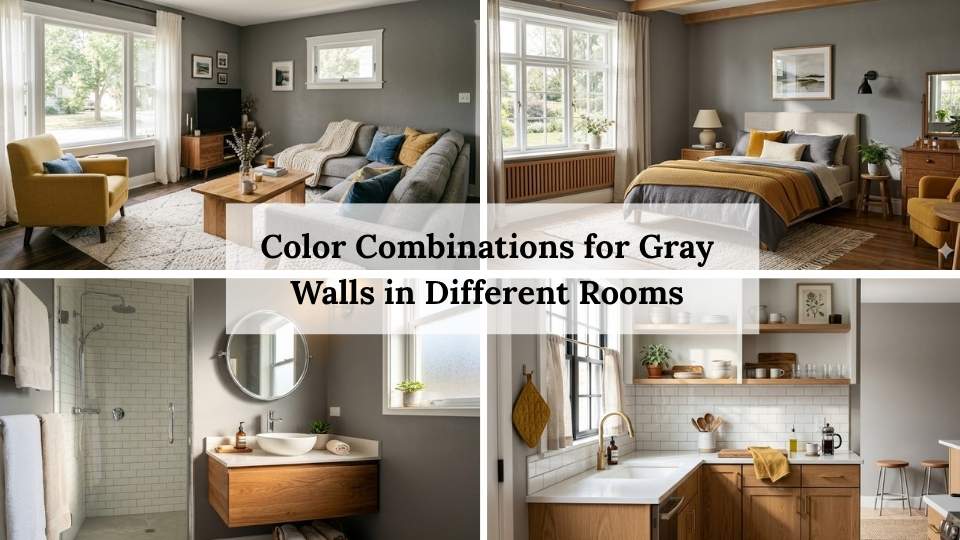
Different rooms need different feels because what works in your serene bedroom might be all wrong for your energetic kitchen.
I learned this by literally using the same gray in every room of our house and then wondering why some rooms felt right and others felt wrong.
Living Room
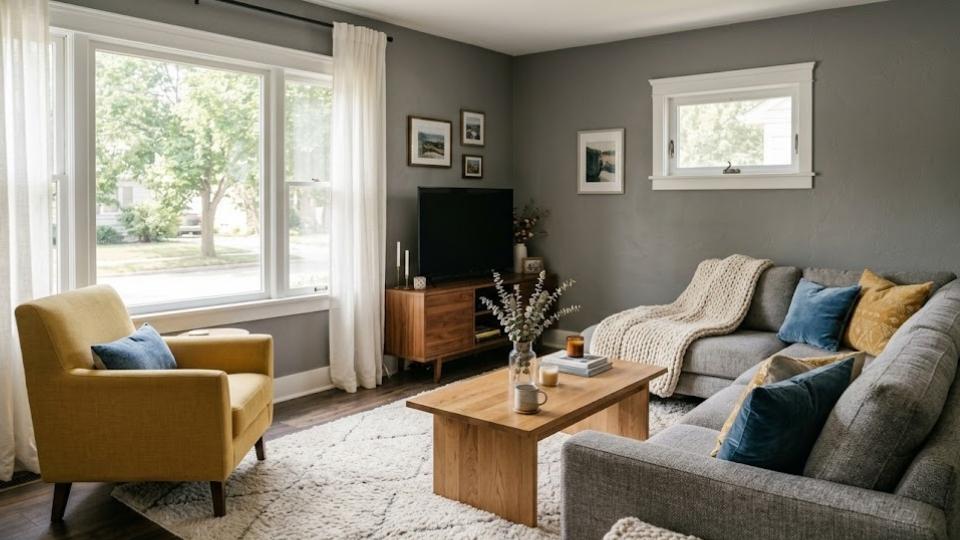
Gray walls in the living room can be absolutely perfect because living rooms need that versatile look.
I went with a medium gray on the walls because light felt boring and dark felt heavy. For furniture, I chose a gray sectional because different shades and textures of gray create depth without clutter, walls are a flat matte gray, and the couch is a slightly lighter gray in a textured fabric.
Then I layered in blue and mustard accents with Blue throw pillows, a mustard yellow armchair, and a cream-colored area rug that grounds everything while white trim around the windows and doors keeps it all fresh.
For textiles I mixed materials accordingly like velvet pillows, a chunky knit throw, linen curtains all in my accent colors plus neutrals which keeps the gray from feeling flat or look one-dimensional.
One thing that people don’t realize and that makes a difference is wood tones.
Our coffee table is natural wood, our media console is a warm brown wood which adds organic warmth that gray desperately needs or it just feels cold.
Bedroom
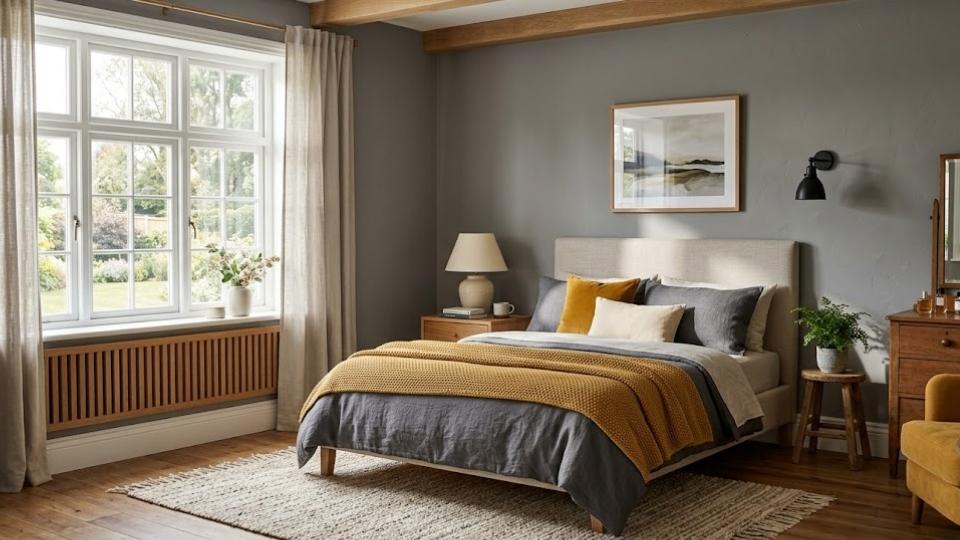
The bedroom is where I made my biggest mistakes and my best choices.
I brought in blush pink with pink throw pillows, a dusty pink throw blanket, and pink-toned artwork which made the room go from cold to romantic and soft.
Gray and pink together is one of those combinations that sounds almost too feminine or too safe, but when you get the tones right it looks lovely.
The bedding is cream and white layered together with cream duvet, white sheets, mixed texture throw pillows as cream is essential for warmth.
I added green plants on the nightstands and a sage green velvet bench at the foot of the bed that keeps green from being too pink-heavy and adds that natural, grounding element.
Lighting matters more than I thought it would. I used warm-toned bulbs which made everything look clear while cool white bulbs made the gray walls look blue and uninviting.
Wood nightstands in a medium brown tone and wood picture frames because these warm touches are worth compromising with gray walls in a bedroom as they create a fine and refreshing look
For a luxurious look add navy blue instead of pink. Navy bedding with gray walls and brass lamps and white sheets looks very hotelic.
Bathroom
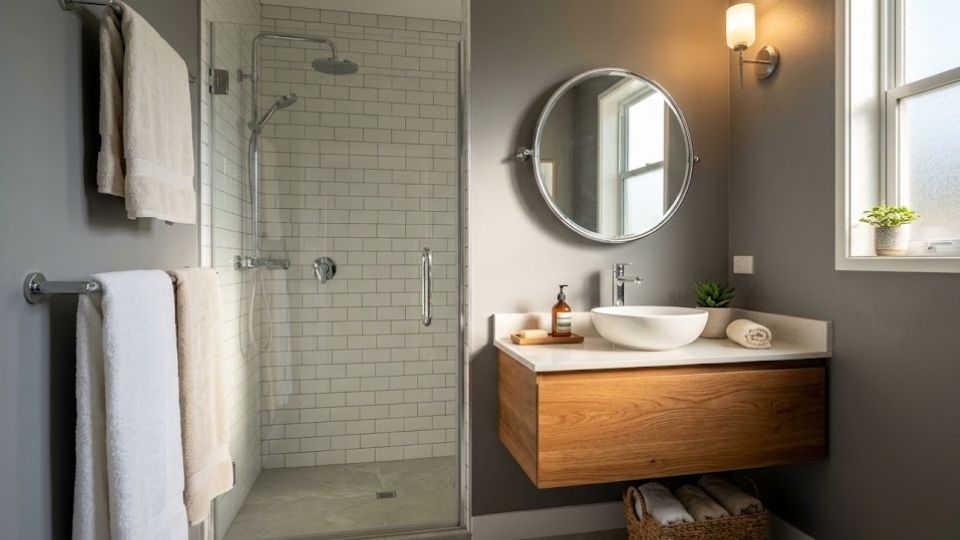
Gray bathroom walls are pretty popular and here are the reasons.
They feel clean and modern without being as dull as all-white bathrooms but bathrooms can go cold and dull with gray if you’re not careful.
Our main bathroom has medium gray walls with white subway tiles in the shower which gives a Classic and clean look and not going out of style anytime.
But here’s where I added warmth by using wood vanity. The warm brown wood against the gray walls is essential as it feels completely different with a white or gray vanity.
Also add Chrome fixtures like faucets, towel bars, shower head for clean, modern touch without being harsh like silver or stark like white.
For textiles, I use white and cream towels as white keeps it fresh and the cream adds softness.
Small things that matter in the bathroom: a few green plants, wood accents like a wooden tray on the counter, and warm-toned lighting creates an aesthetic view in the bathroom.
One thing I tried and didn’t go as planned was blue accents in the bathroom with gray walls. It worked in theory but in practice it just felt too cold and reminded me of a pool locker room.
If you have a larger bathroom, you could try black accents like black metal shelving, black framed mirror, black light fixtures to have a modern spa atmosphere.
Kitchen
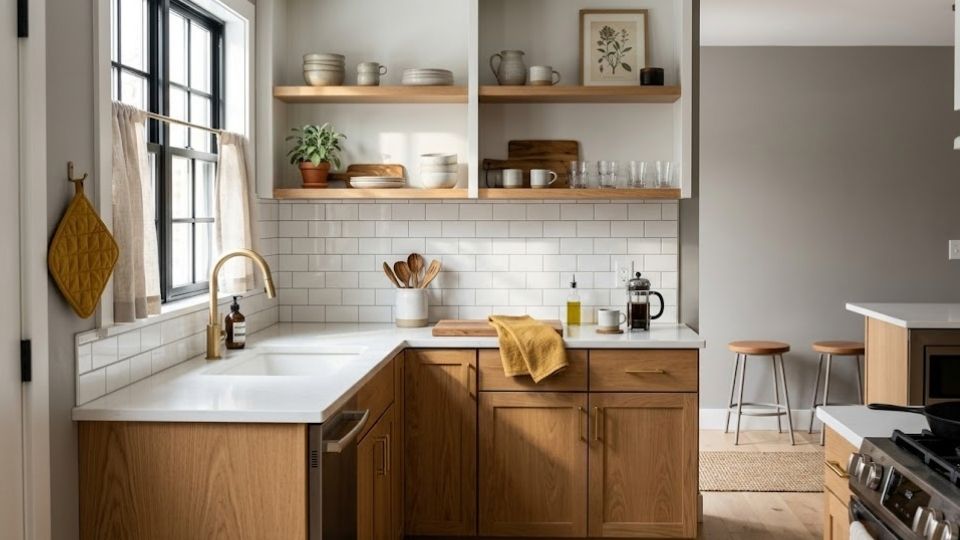
A kitchen with gray walls can go modern and sleek or warm and inviting depending on your choices.
The key seems to be wood elements. Gray walls with all-white cabinets can feel cold but gray walls with natural wood cabinets or even just wood open shelving gives energy in the kitchen.
White subway tile backsplash is a safe choice with gray walls as it looks classic and clean.
I’ve also seen green cabinets with gray walls and it’s stunning like a deep sage green or forest green for lower cabinets with gray walls and white upper cabinets or open shelving.
For kitchen textiles you can have the dish towels, the pot holders, the window curtains.
This is where you can bring in your accent colors like mustard yellow dish towels with gray walls and white cabinets which look good in the kitchen.
One thing I noticed was to avoid gray cabinets with gray walls as it looks too gray, no contrast, everything blends together and you can’t tell where one surface ends and another begins with Bad depth perception and bad visual interest.
How to Pair Colors with Gray Walls
After picking your gray wall color and you have some sense of accent colors how do you actually make it all work together is the place where I messed up a lot in the beginning.
In this section, we’re going to learn how you can pair colors with gray walls using space, lighting, textiles, and see how you can brighten your room
Through Spacing
From what I have noticed is that spacing matters more than I ever thought it would.
In our living room, I initially pushed all the furniture against the walls to maximize space but it made the room feel empty and weird and the gray walls felt overwhelming because the walls were too much visible.
When I pulled the furniture away from the wall, the couch came forward, chairs angled in, and the coffee table centered the seating area and suddenly the room felt dull and the gray walls became a backdrop instead of the main focus.
Crowded rooms with gray walls feel cluttered and make the walls look unfocused so you need breathing room, space between furniture pieces and space between wall decor items.
Empty spaces with gray walls feel cold and unfinished so you need enough furniture and decor to make it feel lived-in.
Through Lighting
Lighting changes everything with gray walls with different types of lighting, different temperatures, different times of day gray walls look different.
I used warm-toned bulbs with gray walls and it’s like a completely different room as the gray looked softer, warmer, and more inviting.
Natural light is your best friend with gray walls. If you have lots of windows, you can go with darker grays and if your room is naturally dark, stick with lighter grays and add plenty of lamps.
I have three different light sources in our living room: overhead ceiling light, two table lamps, and one floor lamp which helps me control which lights to be used and changes the whole look of the gray walls.
Cool lighting works if you want a very modern, crisp, almost commercial look but for living spaces where you want warmth, warm lighting is essential.
Through Textiles
Textiles are what saved my gray walls from looking dull.
From what I have noticed curtains, throw pillows, blankets, area rugs, even dish towels changes the whole look. The texture and color of these textiles can completely change how the gray walls feel.
In our living room, I have linen curtains in cream and the texture of linen adds visual interest and the cream warms up the space.
Layering different textures is essential as velvet pillows, knit blankets, woven baskets, smooth ceramic vases and all these different textures against the flat gray wall create depth.
While deciding which Color textiles it is the place where you can be bold or soft depending on your mood. Mustard yellow pillows create energy in the room while Blue or green throws calm in the room and Cream and tan creates warmth.
Sometimes I change my textile colors seasonally. Summer gets lighter colors like whites, creams, light blues while Winter gets richer colors like deep greens, burgundy, mustard.
Through Furniture
Furniture color and placement can make or break gray walls.
My best results were a mix of wood tones and upholstered pieces in accent colors.
Our living room has a gray couch, wood coffee table, mustard yellow chair, wood media console, white and wood bookshelf and this variety in furniture colors creates visual interest and prevents the gray from dominating.
Oversized furniture in a small room with gray walls makes the space feel cramped and the walls close in while too-small furniture in a big room makes it feel empty and the gray walls overwhelming which means size matters too in furniture.
Placement of furniture is also important as furniture pulled slightly away from walls makes gray walls look good instead of like you just gave up on color.
Common Mistakes and Ways to Avoid Them
There are a few mistakes that many people make when it comes to gray walls and those mistakes are very easy to avoid.
By understanding these mistakes, you can bring life to your gray wall and keep them from going too dull or cold.
Let me tell you about the mistakes I’ve made when deciding on what colors go with gray walls and what else I should keep in mind while styling my gray walls.
Firstly, overlooking the importance of undertones. I didn’t even know what undertones were when I first painted our bedroom gray.
I just picked a pretty light gray from the paint chip and called it done but then it turned out, the gray I picked had blue undertones. By the time I realised it was already too late and the whole room looked blue-gray with this uncomfortable cold vibe.
Since repainting the walls wasn’t in the option or in your budget, I decided to fix it by using warm-colored decor like mustard yellow, warm wood, cream textile and everything looked off like the colors were clashing.
That’s because warm-toned grays need warm-toned accents and cool-toned grays need cool-toned accent colors.
So, if your gray has blue or green undertones, use blues, greens, purples, or crisp whites as accents.
If your gray has beige, brown, or yellow undertones it wants mustard, cream, warm woods, terracotta, warmer colors.
To figure out undertones of your grey: Put your gray paint sample next to pure white and the color you see peeking through is your undertone.
You can also try a sample on the wall and look at it at different times of day like morning light, afternoon light, evening with lamps on you’ll see how the undertones appear.
Also, too much color is just bad, I figured out that mustard yellow looked good with our gray living room walls.
I added mustard pillows, a mustard chair, mustard curtains, and a mustard throw blanket and it made the gray walls disappear completely.
Gray walls need limited accent colors to actually show off those colors effectively.
My rule now: Pick 2-3 accent colors and let gray be the dominant color then add accent colors in smaller doses.
If you use too many colors, the gray walls start looking dull because your eye doesn’t know where to focus and everything starts to compete.
Tips for Styling Gray Walls
Some practical things I’ve learned through years and from trial and basis.
One of the styling tips that I find very effective is You can always try mixing different materials and it changes everything.
From what I have noticed about layering, it can be done by adding elements like wood (coffee table, picture frames, bowls), plants (real ones in ceramic pots), woven materials (baskets, jute rug), textiles (velvet pillows, knit throws, linen curtains), metal (brass lamps, picture frames), and ceramic (vases, planters).
All these different textures catch light differently. They create shadows and depth while creating a visual interest that makes gray walls look stylish instead of just gray.
I also mix metals like brass and black, with materials like wood and ceramic, mix textures – like smooth and rough which looks way better.
From what I have noticed is that paint sample testing is important and skipping this step can result in a bad look of the gray walls.
I skipped it one time and my blue-undertone bedroom looked fully dull and after that I’ve never skipped it again.
The size of the room changes how gray looks because small rooms make colors look darker and more intense while large rooms with high ceilings make colors look lighter and sometimes washed out.
Lighting changes everything. I’ve said this already but it’s worth repeating here. Direction of walls matters because north-facing rooms get cooler light while south-facing rooms get warmer light which affects how your gray works.
I almost painted our living room a gray that looked perfect in the paint store and beautiful on the sample card but looked purple on our walls in evening light which helped me catch that it looks like a purple wall in the sample test.
Conclusion
So here’s what I’ve learned after spending years to understand what colors go with gray walls. After trying every color combination possible that gray is only as good as what you pair with it.
On its own It can be dull, cold, and lifeless but with the right colors, the right textures, and the right lighting It’s the perfect choice for creating spaces that feel modern and warm, refined and inviting.
The color combinations I like the most are white or cream for freshness, blue or green for calm, mustard yellow for energy, pink for softness, black for drama but the important thing is in the details like the undertones, the proportions, the textures.
The mistakes I made and see over and over are ignoring undertones and ending up with colors that clash instead of complementing each other.
Using too many accent colors and making the space feel chaotic and not testing paint samples and ending up with gray that looks completely wrong in your specific lighting.
The reason why gray walls are popular is because of their versatile nature as they’re modern, they work with so many design styles though they require intention.
You can’t just paint your walls gray and call it done because you have to build the rest of the room around them.
My living room with gray walls is my favorite space in our house. It took me three tries to get it right, but when I finally figured out the balance of warm and cool, gray and accent colors, smooth and textured it made me figure out how living room looks can be made more enthusiastic and calm.
I hope this guide saves you from some of the mistakes I made and don’t forget to test your undertones and choose your accent colors intentionally accordingly while Layer your textures and also pay attention to lighting.
And if it doesn’t feel right, change it. I’ve repainted more walls than and each time it taught me something new. That’s how you figure out what actually works for you.
FAQs on What Colors go with Gray Walls
White, cream, blue, green, and mustard yellow are my top picks. White and cream create that clean, fresh vibe. Blue and green bring calm, nature-inspired vibes. Mustard yellow adds warmth and energy. The best choice depends on your gray’s undertones – cool grays pair better with blues and greens, warm grays love mustard and cream.
From what I have noticed most colors can work if you get the undertones right, but I’ve had bad luck with certain combinations. Bright orange with cool gray looks harsh. Purple can clash if your gray has warm undertones. Too much black in a small room makes gray walls feel oppressive. And mixing warm accent colors with cool-toned gray (or vice versa) usually looks off.
For living rooms I love blue and mustard yellow together with gray walls – the blue keeps it sophisticated, the mustard adds energy. Cream and wood tones are essential for warmth. Add green plants for life. I also use white trim to keep it crisp. The key is mixing warm and cool elements so the room doesn’t feel flat.
My favourite accent colors: Mustard yellow for energy, navy blue for sophistication, blush pink for softness, sage green for calm, cream for warmth. Use them in small doses – pillows, artwork, one accent chair. Don’t overdo it. Gray walls should stay the dominant color with accents adding personality.
Light gray walls are super versatile. They work beautifully with soft pastels like blush pink and baby blue. White and cream keep it airy and fresh. Darker accent colors like navy blue or forest green create nice contrast without overwhelming. I’d avoid super bright colors with light gray – they can look jarring. Stick with muted, sophisticated tones.