
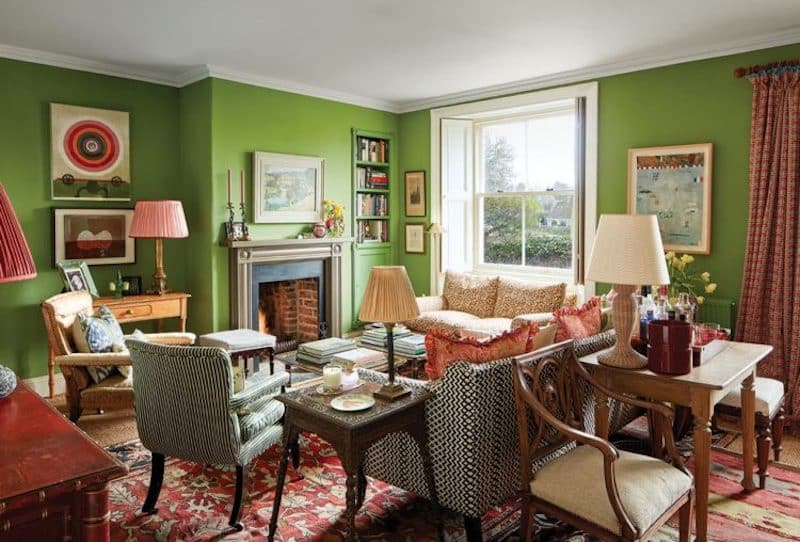
I’ve been obsessed with English country interiors for years now. And I know what you’re thinking—isn’t that just grandma’s house? But here’s the thing.
When done right, English country charm has this incredible ability to feel both refined and completely lived-in at the same time.
It’s not stuffy. It’s not precious.
It’s that perfect balance where you can put your feet up on the ottoman and still feel like you’re surrounded by something really special.
Over the last couple of years, I’ve noticed this style making a serious comeback. Not in the way it looked in the 90s, though.
We’re seeing it come back with fresh eyes.
More layered. More personal. And honestly? More livable than ever.
Understanding English Country Charm
English country style has roots that go way back.
I’m talking about centuries of evolution.
It started in rural English estates where families mixed hand-me-down pieces with things they collected over time.
Nothing matched perfectly. And that was kind of the point.
What I love most about this aesthetic is that it wasn’t designed by anyone. It just happened. Rooms accumulated character through generations.
A chintz sofa here. A needlepoint pillow from someone’s great aunt there.
Worn oriental rugs layered over stone floors. It all worked because it told a story.
The beauty is in the imperfection.
You’re not trying to create a magazine spread.
You’re creating a home that feels like it’s been loved for decades, even if you moved in last month.
And I think that’s why it resonates so much right now.
We’ve spent years chasing minimalism and that ultra-curated look. But there’s something really comforting about a space that doesn’t take itself too seriously.
Where you can see the wear on the leather chair and it just makes you love it more.
Core Elements of English Country Interiors
So what actually makes a room feel like an English country? There are a few key elements that always show up.
First, the color palette. We’re talking soft, muted tones pulled straight from the countryside. Sage greens. Dusty blues. Warm creams. Terracotta.
These aren’t bold statement colors. They’re the colors you see when you look out at rolling hills and gardens that have been there forever.
Florals are huge. And I mean everywhere.
Chintz fabrics, botanical prints, hand-painted wallpapers covered in roses or trailing vines. But here’s where it’s different from what you might remember—we’re layering these florals with stripes, checks, and even some solid textures.
Pattern on pattern, but in a way that feels collected, not matched.
The furniture itself leans traditional. Rolled arms on sofas. Turned legs on tables. Skirted chairs.
Pieces that look like they could have come from an antique shop, because honestly, a lot of them probably did. But you’re also mixing in pine farmhouse tables, weathered wood benches, and upholstered ottomans that are actually comfortable.
Natural materials show up constantly. Exposed wood beams. Stone fireplaces. Sisal rugs. Linen drapes that puddle just slightly on the floor.
Even modern touches like wood ceiling fans can be seamlessly incorporated, their natural materials and gentle circulation adding to the room’s comfort while maintaining the aesthetic’s organic feel.
And then there’s the lived-in quality. Books stacked on side tables.
Fresh flowers from the garden in mismatched vases.
Throws draped over chair backs like someone just got up from reading. This isn’t staging. This is life.
Creating a Cozy Yet Elegant Atmosphere
Here’s where English country charm really shines.
It manages to be fancy and cozy at the exact same time. I don’t know how it does it, but it does.
Layering is your best friend here.
Start with your larger pieces—your sofa, your main seating. Then add texture with throws and pillows. Not matching sets.
Different fabrics, different patterns, but all in that same muted palette we talked about.
Lighting makes a massive difference.
You want warm, ambient light.
Table lamps with fabric shades.
Maybe a chandelier that looks a little worn. Candles on the mantel.
The goal is to avoid anything too bright or too modern-feeling.
You’re creating pockets of light that make you want to curl up with a book.
Comfort is non-negotiable. Deep seat cushions.
Plenty of places to rest your cup of tea.
Ottomans you can actually put your feet on. An English country isn’t about looking at pretty things. It’s about using them.
I always tell people—if you can’t imagine yourself napping in the room, you haven’t nailed the cozy part yet. That’s the test.
The elegant piece comes from your restraint with colors and your attention to little details.
Crown molding painted the same soft white as your ceiling. Curtains hung just so.
A vintage mirror that reflects light beautifully.
These small choices elevate the space without making it feel untouchable.
English Country Charm in Different Rooms
Every room in the house can get this treatment. And honestly, I think they should.
Living rooms are where you really go for it. Big comfortable sofas, probably slipcovered. A mix of seating—wing chairs, a bench, maybe a settee if you have the space.
Coffee tables that look old, even if they’re not. Stacks of books. Botanical prints on the walls. A fireplace is ideal, but not required.
Bedrooms in this style feel like a hug. Four-poster beds or iron bed frames with layers of bedding. I’m talking quilts, duvets, shams, decorative pillows.
Floral wallpaper or a soft painted accent wall. A reading chair by the window. Bedside tables with lamps and fresh flowers. The goal is to make the bedroom feel like a retreat.
Kitchens get a more casual treatment but still maintain that charm. Open shelving showing off collected dishes. A farmhouse sink.
Wood countertops or butcher block islands. Painted cabinets in soft colors—cream, sage, pale blue. Glass-front cabinets displaying your everyday dishes mixed with a few special pieces. Herbs growing on the windowsill.
Dining rooms can go a bit more formal here. A solid wood table that seats everyone. Mismatched dining chairs or a bench on one side.
A sideboard or hutch displaying china and glassware. Fresh flowers as a centerpiece. Candlesticks that look inherited. The room should feel like somewhere you’d want to linger over Sunday dinner.
Decorative Accents That Define the Look
The little things matter so much in English country interiors. This is where personality really comes through.
Botanical prints and paintings. Vintage landscapes.
Watercolors of flowers or birds. You’re creating a gallery wall that looks like it was assembled over time, not bought as a set.
Pottery and ceramics show up everywhere.
A collection of ironstone on open shelves.
Blue and white ginger jars on the mantel. Earthenware pitchers used as vases. These pieces add texture and visual interest without feeling fussy.
Textiles are huge. Needlepoint pillows. Vintage quilts folded over a ladder. Embroidered table runners. Linen napkins with a little lace trim. These handcrafted touches make a space feel warm and personal.
Books are decorative and functional.
Stack them on coffee tables. Fill built-in shelves. Arrange them by color if that’s your thing, or just let them be. Well-loved books add instant character.
Fresh flowers and greenery. Always. Roses from the garden. Wildflower bunches. Eucalyptus branches. Even a simple pitcher of garden clippings works. This connection to nature is essential.
Mirrors, especially older ones with interesting frames, help bounce light around and make spaces feel larger.
Lean a big one against the wall or hang several smaller ones in a loose arrangement.
Blending English Country Charm with Modern Living
I get asked this all the time—can you do English country charm without your house looking dated? Absolutely.
The key is balance. You’re taking the bones of the style but making it work for how you actually live.
Start with a neutral base.
Your walls, your larger furniture pieces—keep these relatively simple. Then bring in the English country elements through accents and layers.
This way, if you get tired of the look in a few years, you haven’t committed to a whole room renovation.
Mix in some contemporary pieces.
A modern coffee table with traditional seating.
Sleek table lamps on an antique side table. Abstract art mixed with your botanical prints. This keeps the space from feeling like a period room.
Edit as you go. English countries can tip into clutter if you’re not careful.
So be intentional about what you display. Rotate your accessories seasonally. Keep surfaces functional, not just decorative.
Update your color palette slightly.
Instead of heavy burgundies and dark greens, go lighter. Incorporate more whites and creams. Let the space breathe a little.
Use modern conveniences without apologizing for them.
Your TV doesn’t need to be hidden in an armoire.
Just balance it with other elements in the room so it’s not the focal point.
Smart speakers can sit on a bookshelf next to vintage books. You get the idea.
The goal is to create a space that honors the English country aesthetic while being completely honest about how we live now.
Why English Country Charm Remains Timeless
I think this style endures because it’s rooted in something real. It’s not trend-driven. It’s not about having the latest thing.
English country charm is about comfort and authenticity.
It’s about creating spaces that work for actual living.
Where you can host dinner parties and play with kids and read for hours and all of it feels right.
There’s also this beautiful sense of continuity.
When you decorate in this style, you’re connecting to something that’s been around for generations.
You’re part of a longer story. And I think we crave that kind of permanence right now.
The flexibility helps too. This isn’t a rigid formula.
You can interpret it in so many ways.
Lean more casual with lots of worn wood and simple fabrics. Or go more refined with silk drapes and antique furniture.
Both are valid. Both are English countries.
And honestly? It just feels good to be in these spaces.
They’re not trying to impress you. They’re inviting you in.
Offering you a comfortable chair and a cup of tea. Making you feel like you can stay awhile.
Conclusion
English country charm isn’t going anywhere. And that’s exactly as it should be.
I’m seeing this style evolve and come back in really interesting ways.
Younger designers are putting their own spin on it. Mixing it with other influences.
Making it work in apartments and modern builds, not just old cottages.
What remains constant is that core feeling—warmth, comfort, layers of history and personality. That’s what we’re all really after when we decorate our homes.
So whether you go all in with chintz and florals and layers of pattern, or you just add a few English country touches to your existing space, I think you’ll find it transforms how your home feels.
More lived-in. More loved. More you.
And really, that’s what good design should do.