
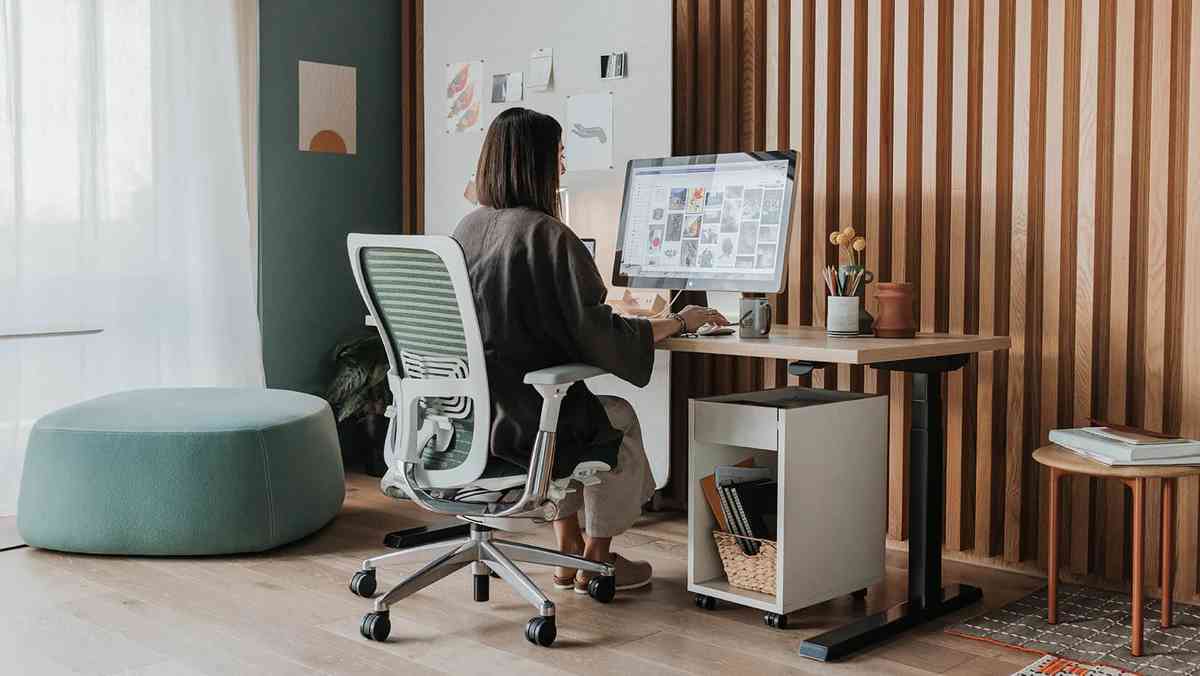
Need to be more productive at home?
Your workspace matters.
When it comes to your home office, the arrangement and setup have everything to do with how much you get done.
Here’s the deal…
Most people never even think about their home office setup.
They work at the kitchen table. They work from the couch. They work in bed.
And when was the last time you finished an assignment or crossed something off your list while laying in bed?
It’s no surprise that research found 81% of workers believe ergonomics directly affects productivity. Your environment matters.
The best news?
Home office solutions don’t need to be complicated or expensive.
You can make some quick adjustments to your space that will keep you comfortable, focused, and productive all day long.
Contents
- Why Ergonomics Are So Important For Remote Workers
- What Are The Key Elements Of An Ergonomic Home Office?
- Simple Solutions For An Ergonomic Home Office To Increase Productivity
- Top Mistakes That Kill Productivity In The Home Office
Why Ergonomics Are So Important For Remote Workers
Ergonomics is about more than just buying the right desk and chair. It’s about optimizing your workspace to your body.
Get it right, and you reduce fatigue and work with ease all day long. Ignore it? You end up with back pain, tense shoulders, and that 3 o’clock slump that kills your focus.
More and more remote professionals are signing up for a virtual office address in Chicago to look the part without the hassle of an office building.
Here’s the deal:
Almost 25% of remote workers report that finding enough workspace at home was challenging.
That’s 1 in 4 people working in an environment that diminishes their productivity day in and day out.
The stats prove this point.
A Washington State University study showed that businesses that implemented ergonomic programs experience a 25% increase in productivity in the tasks being performed.
This is no small percentage. This is a quarter more output simply from making your workspace the right way.
What Are The Key Elements Of An Ergonomic Home Office?
So what does an ergonomic home office look like? Let’s break down what makes the difference.
Your Chair
It’s no surprise that most people are doing this wrong.
Research indicates that 41% of home office chairs are positioned too low for the user.
This means bad posture, elevated arms, and tense necks over time.
A quality ergonomic chair should feature:
- Adjustable height so your feet can rest flat on the ground
- Lumbar support to promote the natural curve of the spine
- Armrests to maintain the elbows at a 90-degree angle
- Breathable material for those long work sessions
If budget is an issue, put a pillow behind your lower back for support. This is a quick and simple solution that can make a big difference.
Your Desk Setup
Ever wonder why your arms rest a certain way on a keyboard? Ergonomics is why.
Your arms should be comfortably at keyboard level without raising your shoulders. Too high a desk and your neck takes the hit. Too low, and it’s your back.
Try these solutions:
- Standing desk converters to alternate between sitting and standing
- Monitor risers to bring your screen up to eye level
- Keyboard trays to ensure proper arm placement
Desk-workers are significantly more productive than those working off couches or dining room tables. If productivity is your goal, invest in a proper desk.
Monitor Position
Ever notice how some people hunch over while working?
Yours truly is totally guilty of it. It’s a bad habit that creeps up when your monitor position is less than ideal.
The top of your screen should be at or just below eye level.
This allows your neck to rest in a neutral position without the dreaded forward head tilt that creates tension headaches.
The ideal monitor position is:
- At an arm’s distance from the user
- Slightly tilted upwards
- Positioned away from glare of windows and overhead lights
According to statistics, 17% of home offices experience glare from windows or lights. Another 5% are too dark. Both of these factors negatively impact productivity.
Place your desk perpendicular to windows to avoid direct sunlight shining on your screen at peak hours.
Simple Solutions For An Ergonomic Home Office To Increase Productivity
You don’t have to drop thousands of dollars to set up an ergonomic workspace. Simple changes can help…
Lighting
Bad lighting causes eye strain, headaches, and fatigue. Most home offices get this wrong.
Combine overhead lighting with a desk lamp to cut down on shadows.
Opt for warm light bulbs in the evening hours to avoid disrupting the body’s natural sleep cycle.
Natural lighting is good, but it creates glare on screens. Control direct sunlight during high use hours by adding blinds or curtains.
Movement Breaks
Sitting for eight straight hours is brutal for the body and mind.
Here’s how to combat the negative effects:
- Stand up every 30 to 45 minutes
- Stretch your neck and shoulders throughout the day
- Go for short walks in between tasks
Standing desks and treadmill desks are not a fad.
People use them for a reason. Building movement into the workday improves focus and cuts fatigue.
Cable Management
This is a minor detail. It’s not.
Messy cables create visual clutter that your brain constantly processes.
They also make it difficult to adjust your work space to the proper ergonomic setup.
Invest in cable ties, clips, or a cable management box to keep your equipment neat and tidy.
A clean desk is a clear desk.
Top Mistakes That Kill Productivity In The Home Office
Even the most well-intentioned individuals that attempt to create an ergonomic work space make these mistakes…
Working from the couch. It feels great at first. But your posture suffers, and you lose productivity over time.
Ignoring keyboard position. Wrists should hover naturally over a keyboard. Bent wrists lead to injuries.
Neglecting the monitor.
Working solely off of a laptop forces the user to look down.
This causes massive strain on the neck over time. Utilize an external monitor or laptop stand.
Forgetting temperature. Too hot or too cold creates distraction. It’s critical to maintain a comfortable workspace temperature to focus.
The Bottom Line
Your home office setup can help you get more done or kill your productivity.
The statistics are clear.
Proper ergonomics results in more productivity, fewer injuries, and sustained focus throughout the day.
The best part? Home office solutions don’t need to be complex.
There are some quick changes you can make that make a huge difference.
Begin with these steps:
- Audit your current space for glaring issues
- Adjust your chair height and monitor position first
- Implement better lighting to avoid eye strain
- Add movement breaks to your schedule
You don’t need to completely transform your space.
Start small. Fix one thing this week. Next week, add another tweak.
Pretty soon you’ll have a workspace designed for productivity instead of getting in its way.
Your body will thank you, and your productivity will, too.