
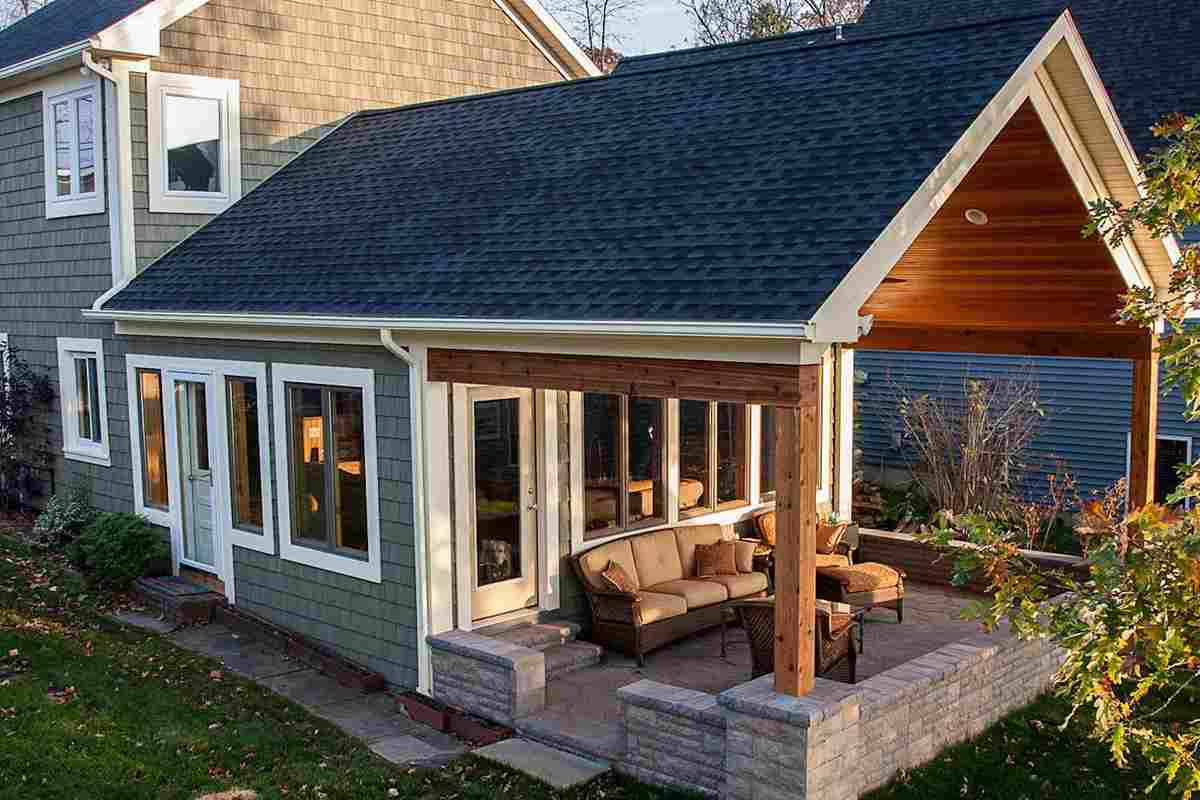
So you’re feeling cramped. Your home worked great five years ago, but now? The kids are older, you’re working from home, or maybe you just accumulated way too much stuff.
Before you start scrolling through real estate listings, let’s talk about home additions.
Because here’s the thing—moving is expensive.
Like, really expensive. And if you love your neighborhood, your schools, your neighbors, or even just the fact that you’re finally done unpacking from the last move… well, building onto your existing home might make a whole lot more sense.
How To Expand Home Life And How Home Addition Make Sense
Look, I’ve been covering home renovations and design for over fifteen years now.
Interviewed dozens of contractors, architects, homeowners who’ve been through this. And the one thing that keeps coming up? People wish they’d known their options earlier.
An addition isn’t always the right move.
Sometimes it is. Let’s break down when it makes sense, what you’re actually getting into, and whether you should even bother.
When a Home Addition Makes Sense
Your lot size matters. A lot.
If you’ve got a tiny urban lot where your home already takes up most of the buildable space, going up might be your only real option.
Setback requirements—those rules about how close you can build to your property line—they’re not suggestions. Your city will shut your project down if you violate them.
Drive around your neighborhood first. Seriously.
See what other people have done.
If you spot homes with second stories or additions that look similar to what you’re imagining, you’re probably okay from a zoning perspective.
If every single home is a single-story ranch and yours would be the only two-story? Might want to call the planning office before you get too excited.
Another reason additions make sense: you actually like your location.
Maybe you’re three blocks from an amazing school.
Maybe your commute is only fifteen minutes. Maybe your street has block parties and you know everyone’s name. That’s worth something.
Moving to get more space often means giving up location, and sometimes that trade-off doesn’t pencil out.
Also—and this gets overlooked—your outdoor space.
If you’ve spent years getting your landscaping just right, building out might mean tearing up your garden, losing mature trees, or destroying that patio you just installed.
Building up preserves what you’ve already got.
The connection to your existing floor plan can push you toward an addition too.
Sometimes adding bedrooms upstairs with a new staircase makes way more sense than trying to connect a wing off the side of your house. The flow just works better.
Why Homeowners Choose to Build an Addition
The reasons people build additions? They’re all over the map, but some patterns show up again and again.
Growing families, obviously. That third kid needs a bedroom, and someone’s tired of sharing. Or aging parents need to move in, and you want them close but not, you know, right there in the middle of everything.
A separate suite with its own bathroom? That can save relationships.
Work-from-home situations changed everything the past few years.
Suddenly everyone needed a real office, not just a laptop at the kitchen table. And if you’re on video calls all day, you can’t have kids screaming in the background or someone making lunch six feet away.
Some people just want their home to finally feel finished.
Maybe you bought a fixer-upper and you’ve been slowly working through it. Or the house has good bones but the layout is stuck in 1975 and you need to bring it into this century.
There’s also lifestyle stuff. You want a home gym.
A real one, not three dumbbells in the garage. Or a hobby room for woodworking, painting, music. Or maybe you’re just tired of not having a proper guest room and making people sleep on an air mattress in the living room like they’re college students crashing on your couch.
And then there’s home value.
An addition done right can increase your home’s worth, sometimes even more than what you spent. Sometimes. We’ll get to that.
Types of Home Additions to Consider
You’ve got options. More than you probably think.
Bumping out. This is the smallest version. You take an existing room and push one wall out maybe three to six feet.
Doesn’t sound like much, but it can make a huge difference in a cramped kitchen or bathroom.
The costs are lower because you’re not messing with the roof structure too much, and often the engineering is pretty straightforward.
You won’t double your square footage, but you might finally be able to fit an island in your kitchen.
Single room additions. Adding one room onto the main floor.
Could be a bedroom, office, sunroom, whatever you need.
This usually means extending your foundation, building new walls, and tying into your existing roof. More involved than a bump-out, but still way simpler than a full second story.
Second story additions. Now we’re talking serious construction.
You’re either building on top of your entire home or doing a partial second floor over part of it.
The engineering gets complicated because now you’re asking your existing foundation and walls to hold way more weight than they were designed for. Pre-1940s homes? This can get real tricky real fast.
Newer homes have an easier time, but you’re still probably reinforcing walls and possibly pouring new footings.
The advantage is square footage. You can basically double your home’s size while keeping your yard intact. The disadvantage is cost and time. These projects aren’t cheap and they’re not quick.
Accessory Dwelling Units (ADUs). This is separate from your main house.
Could be above your garage, could be a standalone structure in your backyard. Some cities have been loosening ADU regulations, which makes this option way more viable than it used to be.
Great for rental income, aging parents, adult kids who need their own space, or even as your own separate office or studio.
Garage conversions. You’ve already got the structure.
Converting a garage into living space can be one of the more cost-effective options, though you lose parking and storage. But if you don’t actually park in your garage anyway—and let’s be honest, most people don’t—this might make sense.
Financial and Practical Considerations
Let’s talk money. Because this is where dreams meet reality.
Home additions aren’t cheap. Even small projects run tens of thousands.
Bigger ones? You’re looking at $100,000 to $400,000 or more.
I’ve seen full second-story additions in some markets hit $500,000 or $600,000 when you factor in high-end finishes and structural challenges.
Cost per square foot varies wildly depending on where you live, what you’re building, and what’s going inside that new space.
A simple bedroom addition might run $150 to $300 per square foot. But if you’re adding bathrooms, kitchens, complicated rooflines, or dealing with engineering nightmares, you could be looking at $400 or $500 per square foot.
And here’s something contractors don’t always emphasize upfront: going up costs more than going out.
Building a second story is more expensive per square foot than adding onto your main level.
You’re dealing with more complex engineering, you might need to strip and replace your entire roof, and the construction process is just harder.
Then there’s permits. Depending on your city, getting permits can take anywhere from one month to six months. Or longer.
Some jurisdictions move fast, others… don’t. And you can’t start work without them unless you want to risk having the city shut down your project and fine you.
Your timeline for the whole project—design, permits, construction—could be anywhere from six months to over a year.
Design alone often takes three to five months for major additions because there’s engineering, architectural drawings, possibly some investigation into your existing structure.
Then permits. Then construction might be another five to nine months.
Can you live in your home during construction? Sometimes. For single-story additions, usually yes, though it’s loud and dusty and your yard becomes a construction zone.
For second-story additions, it gets trickier. Some contractors can keep the home livable, others can’t. You might need to move out, and that’s another cost to factor in.
Then there’s ROI—return on investment.
Will you get your money back when you sell? Maybe. Sometimes you’ll recoup 50% to 70% of what you spent.
Sometimes more. It depends on your neighborhood, what you built, how well it was done, and what the market’s doing when you sell.
But here’s the thing: if you’re planning to stay in your home for years, ROI might not matter that much. You’re paying for the lifestyle improvement, not just future resale value.
Alternatives to a Home Addition
Before you commit to a six-figure construction project, let’s look at what else you could do.
Remodel what you’ve got. Sometimes the space is there, it’s just being used wrong.
Knocking down a wall to create an open floor plan, finishing your basement, converting an attic—these can give you functional square footage without actually building new structure. Often cheaper, often faster.
Declutter and reorganize. Okay, not as exciting, but sometimes people feel cramped because they’ve got fifteen years of accumulated stuff everywhere.
Built-in storage solutions, getting rid of things you don’t need, better organization—it can make your existing space feel way bigger. Costs a few thousand instead of a few hundred thousand.
Move. I know, you don’t want to hear it. But running the numbers honestly might show that selling and buying a bigger home costs less than adding on.
Especially if your home’s value has gone up, you might have more equity than you realize. And you won’t have to live through construction.
Rent storage or office space. If your issue is specifically work-from-home or too much stuff, renting a nearby office or storage unit might solve your problem for $100 to $300 a month.
Compare that to a $200,000 addition and, well… sometimes the simple solution works fine.
Making the Right Decision
So how do you actually decide?
Start with what you need, not what sounds cool.
Write down specifically what’s not working about your current home.
Be honest. Is it actually space, or is it layout? Is it storage? Is it privacy? Noise? Sometimes what feels like “we need more space” is actually “we need better space.”
Then get some professional opinions. Talk to a contractor or design-build firm.
Many will do initial consultations for free or cheap.
They can tell you what’s feasible on your property, what it might cost, what the engineering challenges are.
You want someone who’ll be straight with you, not just trying to sell you the biggest project possible.
Check out what’s been done in your neighborhood.
Not just for zoning reasons, but to see what actually works.
If you spot an addition that looks great, knock on the door.
Ask the homeowner about their experience. Most people are happy to talk about their renovation once it’s done.
Run the numbers. Actually run them. Get real bids, not just estimates you found online.
Compare the cost of adding on versus moving. Factor in selling costs, moving costs, higher mortgage payments, commute changes, all of it.
Think about how long you’re staying.
If you’re planning to move in two years, an addition probably doesn’t make sense.
If you’re planning to stay ten years, it might. The longer your timeline, the more the financial equation tips toward building what you want.
And consider the disruption. Construction is chaotic. It’s noise, dust, strangers in your home, decisions every week, problems that pop up, timelines that slip.
Some people handle it fine. Others find it incredibly stressful. Be honest about which type you are.
Conclusion
Home additions aren’t for everyone, but when they work, they really work.
You get to stay in the location you love while getting the space you need.
You create exactly what you want instead of compromising on someone else’s floor plan. And if you’re planning to stay long-term, you’re investing in your own quality of life, not just paying someone else’s mortgage.
But they’re expensive, time-consuming, and complicated.
Which means you need to go in with eyes open, realistic expectations, and honest answers about whether this is actually your best option.
The good news? You don’t have to decide today.
Talk to professionals. Get some bids. Think it through. The right answer for your situation will become pretty clear once you’ve got real information instead of just guesses.
And if you do decide to build? Make sure you’re working with people who’ve done this before, who can walk you through engineering requirements, permit processes, and all the details that can make or break these projects.
Because a home addition done right can transform how you live. Done wrong? That’s an expensive headache you don’t want.