
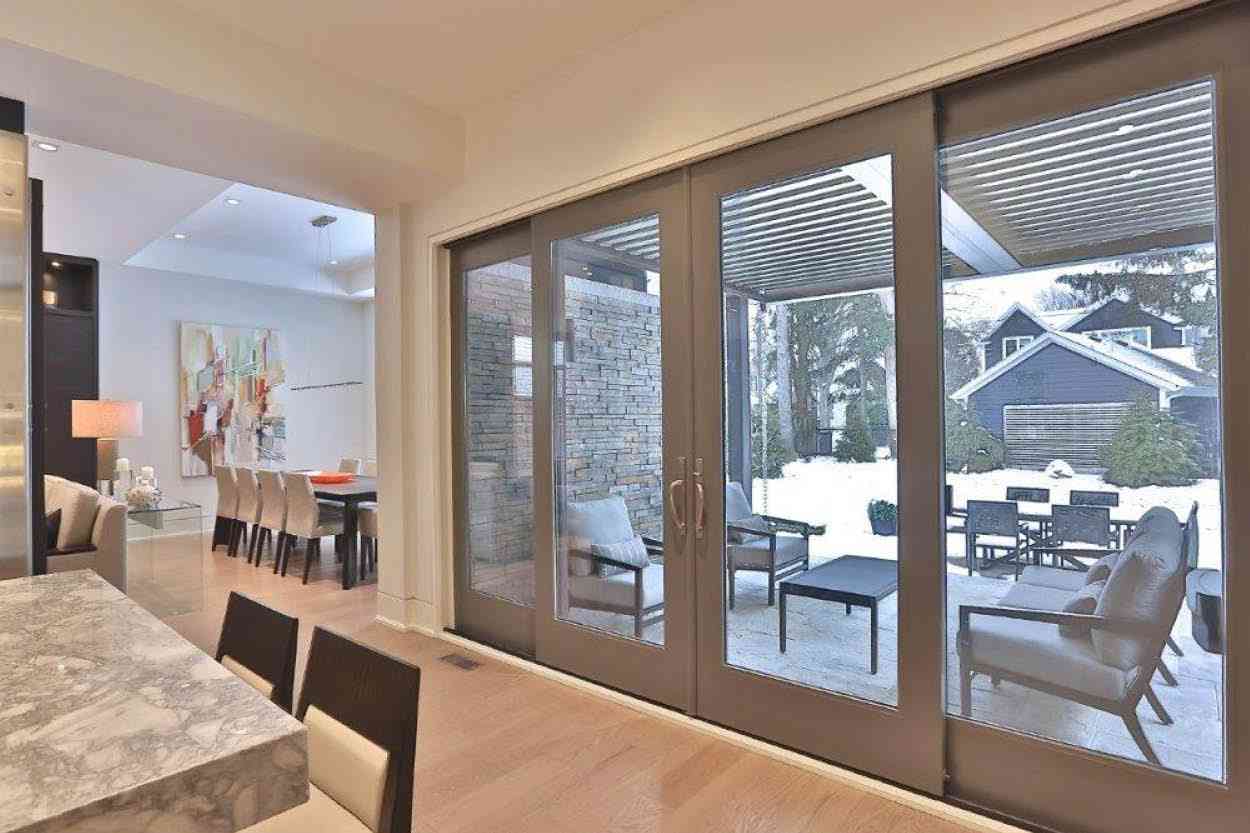
So you’re thinking about getting new sliding doors. Maybe your old ones are drafty, maybe they’re just ugly, or maybe you’re building fresh and need to pick the right ones from scratch.
Here’s the thing though – walk into any home improvement store and you’ll see about fifty different options staring back at you.
Aluminum, vinyl, wood, glass panels, pocket doors, bypass doors. It gets overwhelming fast.
I’ve been writing about homes for over fifteen years now.
Toured celebrity mansions, tiny apartments, everything in between. And you know what I’ve noticed? The sliding doors people choose tell you a lot about whether they actually thought it through or just grabbed whatever looked decent.
This isn’t rocket science, but it does need some attention. Because a sliding door isn’t just a door. It’s a wall that moves.
It controls light, temperature, security, and honestly the entire vibe of your space.
Pick wrong and you’re stuck with it for years. Pick right and you forget it’s even there – it just works.
I’m going to walk you through eight ways to actually choose the right sliding doors. Not the most expensive ones.
Not the ones your neighbor has. The ones that make sense for your actual home, your actual budget, your actual life.
Let’s get into it.
8 Ways To Choose Right Sliding Doors For Your Home
Understanding Sliding Doors
Okay so first thing. What even are we talking about here?
Sliding doors are basically large panels – usually glass, sometimes solid – that slide horizontally instead of swinging open.
You’ve seen them. Patio doors leading to your backyard. Closet doors in bedrooms.
Those massive glass walls in modern homes that disappear into the wall.
There are different types though. Bypass doors where one panel slides past another.
Pocket doors that slide right into the wall and disappear completely.
Multi-slide systems where three, four, even six panels can stack. Then you’ve got lift-and-slide doors which are this German engineering thing where you lift the handle and the door glides like butter.
Most people only think about the standard two-panel patio door. That’s fine.
But knowing your options means you might realize a pocket door makes way more sense for your narrow hallway, or that a four-panel system would actually open up your living room to the deck properly.
Here’s what I tell people: Think about the opening you have, the space on either side, and how you actually want to use it. Don’t just default to what everyone else does.
Key Factors to Consider When Choosing Sliding Doors
So before you even look at materials or colors, you need to nail down some basics.
Size and opening width. Measure your opening. Then measure it again. I’ve seen so many people order doors based on what they think the opening is.
Standard sizes are usually 5 feet, 6 feet, 8 feet, or 12 feet wide. But your opening might be custom. And if it’s custom, you’re paying custom prices.
Climate where you live. This matters more than you think. Live in Florida? You need impact-resistant glass and frames that won’t corrode from humidity.
Live in Colorado? You need serious insulation and frames that won’t contract and crack when it’s freezing. California? Sun exposure is going to fade and warp certain materials faster.
Traffic and usage. Is this door going to get opened twenty times a day or twice a week? High traffic means you need better rollers, sturdier frames, and hardware that won’t wear out in two years.
A door to a rarely-used balcony? You can probably get away with something lighter.
Security needs. Ground floor doors facing the street need different security than second-floor bedroom sliders.
I know people don’t want to think about break-ins, but sliding doors have always been a weak point. More on that later.
Who’s using it. Got kids? Elderly parents? Someone with mobility issues? The door needs to slide easily, not require a wrestling match every time.
Some doors have a 50-pound panel. Others have a 200-pound panel. Big difference when grandma tries to open it.
Write this stuff down. Seriously. Because when you’re standing in the store or talking to a contractor, these details determine which doors even make sense for you.
Material Options for Sliding Doors
Now we’re getting somewhere. Materials are where people usually start, but honestly it should come after you know your requirements.
Vinyl frames. Cheapest option usually. They don’t rust, they don’t need painting, they’re decent insulators. But they look cheap.
They warp in extreme heat. They can crack in extreme cold. The color selection is limited – usually white, tan, maybe bronze.
If you’re on a tight budget and functionality matters more than looks, vinyl works. Just know what you’re getting.
Aluminum frames. This is probably the most common. Stronger than vinyl, slimmer profiles, more color options.
Modern homes love aluminum because you can get those thin frames that make it look like it’s all glass. Downside? Aluminum conducts temperature.
So without a thermal break – which is an insulator between the inside and outside of the frame – your door is basically a heat conductor.
Cold in winter, hot in summer. Make sure you get thermally broken aluminum if you care about energy bills.
Wood frames. Beautiful. Warm. Classic. And high maintenance. Wood frames need to be sealed, painted, or stained regularly.
They can rot if exposed to moisture. They’re heavy.
They’re expensive. But man, if you want that craftsman look or you’re matching existing wood windows, nothing else really compares. Just be honest about whether you’ll actually maintain them.
Fiberglass frames. Newer option.
Strong as aluminum, insulates like wood, low maintenance like vinyl. Sounds perfect right? It kind of is, except for the price.
Fiberglass is expensive. But if you live in harsh climates and want something that’ll last twenty years without babysitting, this might be worth it.
Composite materials. Some manufacturers mix wood fibers with polymers to create frames that look like wood but act like vinyl.
These can be good middle-ground options. Not as cheap as vinyl, not as pricey as real wood, decent performance.
Here’s my take: Don’t pick materials based on what sounds impressive. Pick based on your climate, your maintenance tolerance, and what actually fits your home’s style.
A wood door on a modern minimalist home looks confused. An aluminum door on a 1920s craftsman looks wrong.
Match your home. Match your lifestyle.
Glass and Panel Features
This is where things get technical but it matters for your comfort and your wallet.
Single-pane glass. Don’t. Just don’t.
Unless you’re doing a shed or something that doesn’t need insulation, single-pane glass is outdated. It offers zero insulation, terrible sound blocking, and it’s actually less safe.
Double-pane glass. Standard now. Two layers of glass with an air gap between them. This provides decent insulation and some sound reduction.
Most residential sliding doors use this. It’s the baseline you should accept.
Triple-pane glass. Three layers. Better insulation, better sound blocking, heavier, more expensive. Overkill for mild climates. Essential if you live where it actually gets cold or if noise is an issue.
Low-E coatings. This is a microscopically thin metallic coating on the glass that reflects heat. In summer, it keeps heat out. In winter, it keeps heat in.
Cuts down on UV rays too, which means your furniture won’t fade as fast.
You can also get a custom made sliding door made with Low-E glass to better reflect heat and prevent it from entering or escaping your home. Worth the extra cost in most cases.
Tempered glass. Safety glass that shatters into small chunks instead of dangerous shards. This should be standard on any sliding door. Check that it’s included.
Laminated glass. Two layers of glass with a plastic interlayer. If it breaks, the glass sticks to the plastic instead of falling everywhere.
This is what you want if security or hurricane protection matters. More expensive but way stronger.
Tinted or frosted glass. Privacy and sun control. Tinted glass reduces glare and heat. Frosted glass gives you privacy without blocking light completely.
Think about which rooms need this. Bathroom sliders? Probably want frosting. Living room to the backyard? Probably want clear.
Grids or no grids. Those little dividers that make it look like individual panes. Some people love the look.
I think they’re harder to clean and they block your view. But if your home has a traditional style, grids might be necessary to match existing windows.
Don’t let a salesperson talk you into features you don’t need. But also don’t cheap out on the glass itself. That’s the part you’re looking through every single day.
Style and Design Considerations
So now your door needs to actually look good.
Frame color and finish. White, black, bronze, wood tones, custom colors.
Look at your exterior and interior. What colors are already there? Your sliding door frames should either match your window frames or at least coordinate.
Don’t introduce a random new color just because you liked it in the showroom.
Panel configuration. Two panels where one slides? Three panels where two slide and one is fixed? Four panels that stack? The configuration changes how much of the opening you can actually use.
A standard two-panel door only opens 50% of the space.
A four-panel stacking system can open 75% or more. Think about furniture moving, how you’ll use your patio, whether you want that indoor-outdoor flow.
Hardware and handles. This is the jewelry. Cheap handles look cheap. Period. Upgrade the hardware if you can.
Matte black is trendy right now. Brushed nickel is timeless.
Oil-rubbed bronze if your home is traditional. Make sure the handles are comfortable to grip and that locks are easy to operate.
Sightlines. This is designer-speak for how thick the frames look.
Thin sightlines mean more glass, more view, more modern aesthetic. Thicker frames are more traditional and sometimes stronger. Know which look you’re going for.
Interior and exterior finish. Some doors have different colored frames on the inside versus outside.
This is useful if your interior is all white but your exterior is dark bronze. Not all manufacturers offer this, but it’s worth asking about.
Screen doors. Do you need them? Retractable screens that disappear when not in use are amazing but pricey. Standard sliding screens are cheaper but they’re always there.
Some people skip screens entirely. Think about bugs in your area and whether you actually want fresh air without insects.
Style isn’t just about looking good. It’s about looking right in your space. I’ve seen $5,000 doors that looked terrible because they didn’t match the home’s character.
Performance and Functionality
A door that looks perfect but doesn’t work right is just an expensive wall.
Ease of operation. Go to a showroom and actually slide the doors. Not just once. Open and close them ten times.
Do they glide? Do you have to shove? Quality rollers make all the difference. Ball-bearing rollers last longer and operate smoother than nylon rollers.
Tandem rollers – where there are two sets per panel – distribute weight better on heavy doors.
Weather sealing. Check the weatherstripping. There should be seals on all four sides of the panel when closed.
Compression seals work better than brush seals. If you can see light coming through when the door is closed, air is getting through. That’s wasted energy and potential water intrusion.
Water drainage. Sliding door tracks have weep holes – little slots that let water drain out instead of pooling in the track.
Make sure these exist and aren’t blocked. Otherwise you’ll get standing water, mold, and eventually rot in wood floors.
Sound insulation. If traffic noise or neighbor noise is an issue, ask about the Sound Transmission Class (STC) rating.
Higher numbers mean better sound blocking. Standard sliding doors are around STC 25-28. Quality doors with triple-pane glass can hit STC 35-40. That’s a noticeable difference.
Air infiltration rating. This measures how much air leaks through the closed door.
Lower numbers are better. Look for doors rated 0.30 or less. Your energy bills will thank you.
Security features. Standard sliding door locks are notoriously weak. Look for doors with multi-point locking systems where the door locks at the top, bottom, and middle.
Some have anti-lift blocks that prevent someone from lifting the door off its track. Flush-mounted handles with key locks are more secure than standard latches.
Warranty. What’s covered and for how long? Glass breakage? Hardware? Frame integrity? Some manufacturers offer lifetime warranties.
Others offer five years. Read the fine print on what voids the warranty.
Test everything you can before buying. And ask installers or previous customers about long-term performance.
A door that works great for six months but falls apart after a year is worse than a cheaper door that stays mediocre but functional.
Budget and Long-Term Value
Let’s talk money.
Sliding doors range from about $300 for basic vinyl patio doors to $10,000+ for custom wood or lift-and-slide systems. Installation adds another $200-$1,000 depending on complexity. So you’re looking at anywhere from $500 to $15,000 total.
Budget tier ($500-$1,500 installed). Vinyl or basic aluminum frames, double-pane clear glass, standard hardware. This works for rentals, budget renovations, or low-use applications. Don’t expect them to last more than 10-15 years.
Mid-range ($1,500-$4,000 installed). Better aluminum or wood-clad frames, Low-E double-pane glass, upgraded hardware, better warranties. This is the sweet spot for most homeowners. Good balance of quality and cost. Should last 20-25 years with minimal maintenance.
Premium ($4,000-$8,000 installed). Fiberglass, quality wood, or high-end aluminum. Triple-pane glass, custom sizes, multi-point locks, excellent energy efficiency. Worth it if you’re staying in the home long-term or if resale value matters.
Luxury ($8,000+ installed). Custom everything. Lift-and-slide mechanisms, floor-to-ceiling panels, exotic wood, minimal sightlines. Honestly this is for specific architectural situations or people who just want the best regardless of cost.
Here’s what I’ve learned: Spending 20% more on a mid-range door instead of the cheapest option usually gives you 50% better performance and longevity. But spending 100% more to jump from mid-range to premium gives you maybe 20% better performance. Diminishing returns.
Energy savings matter. A quality door with Low-E glass and good seals can save you $100-$300 per year on heating and cooling.
Over twenty years, that’s real money. So don’t just look at upfront cost.
Resale value. New sliding doors generally return about 70-80% of their cost in home value. Better if they’re part of a larger renovation.
Buyers notice dated, drafty, ugly doors. New ones make the whole house feel upgraded.
Maintenance costs. Factor this in. Wood doors need refinishing every few years. That’s time and money. Vinyl and aluminum need almost nothing.
Your long-term cost of ownership changes based on material choice.
Set a realistic budget, but be flexible if you find the right door costs slightly more. You’ll use this thing every day.
Cheaping out just to save $300 is shortsighted when it affects your comfort for the next twenty years.
Installation Considerations
Last thing. Even perfect doors fail if installation is terrible.
DIY or professional? Simple door replacements where you’re swapping same-size doors can be DIY if you’re handy. But most sliding door installations involve framing, waterproofing, leveling, and precise adjustments.
One mistake and you’ve got water damage or a door that never slides right. Unless you’ve done this before, hire someone. The labor cost is worth avoiding expensive mistakes.
Structural requirements. Large door openings might need a header beam to support the weight above.
If you’re enlarging an opening, you’re dealing with structural modifications. That requires permits and probably an engineer.
Don’t skip this. I’ve seen people install beautiful doors in openings that weren’t properly supported. The building settles, the doors jam, nightmare.
Waterproofing and flashing. This is critical. The door needs proper flashing above it to direct water away.
The threshold needs to be sealed correctly. The track needs weep holes and drainage. Bad waterproofing means water intrudes during rain, causes mold, rots framing. Your installer should know building codes for this. Ask how they handle waterproofing.
Shimming and leveling. The door has to be perfectly level and plumb. If it’s off even slightly, it won’t slide right or seal properly.
This requires patience and skill. Cheap installers rush this step.
Insulation around the frame. The gap between the door frame and your house framing needs to be insulated. Low-expansion foam works well. This prevents air leaks and energy loss.
Interior and exterior trim. After the door is in, you need trim to cover gaps and make it look finished. Some doors come with trim kits. Others you’re on your own. Match existing trim style in your home.
Permits and inspections. Depending on where you live, replacing sliding doors might require permits. Don’t skip this. It protects you legally and ensures the work meets code. Plus it creates a record for future buyers.
Timing. Door installation means your home is open to the elements for several hours minimum. Don’t schedule this during the rainy season or middle of winter if you can avoid it.
Get multiple quotes. Check references. Look at previous work. A good installer makes even a mediocre door perform well. A bad installer ruins even an expensive door.
Conclusion
So there you have it. Eight ways to actually think through sliding doors instead of just picking whatever’s on sale.
I’ve walked you through understanding what sliding doors really are, the factors you need to consider for your specific situation, the materials that actually make sense, glass features that matter, style considerations so it looks right, performance aspects that determine if it actually works, budget reality, and installation requirements.
None of this is complicated. It just requires you to slow down and think about your actual home, your actual climate, your actual needs.
Not what looks cool on Instagram. Not what your neighbor bought. What works for you.
If you take away one thing: Don’t cheap out on quality where it matters – rollers, glass, seals – and don’t overspend on features you don’t need.
Find the middle ground that gives you great performance without wasting money.
Go measure your opening. Figure out your budget.
Think about how you’ll actually use the space. Then start looking at specific doors that check your boxes.
Your sliding doors should disappear into your daily life.
You shouldn’t notice them. They should just work, look right, and make your home better. That’s it. Now you know how to make that happen.