
If you’re getting your hardwood floors refinished, one of the first decisions you’ll face is the finish.
Oil-based or water-based polyurethane? Both protect your floors, both look great when done right, and both have loyal fans in the flooring world. But they’re not interchangeable, and picking the wrong one can leave you disappointed with the result.
After 15 years of refinishing hardwood floors across metro Atlanta, I’ve applied both finishes thousands of times.
Here’s what I tell homeowners when they ask me which one to choose.
The Quick Comparison
Before we get into the details, here’s the high-level difference.
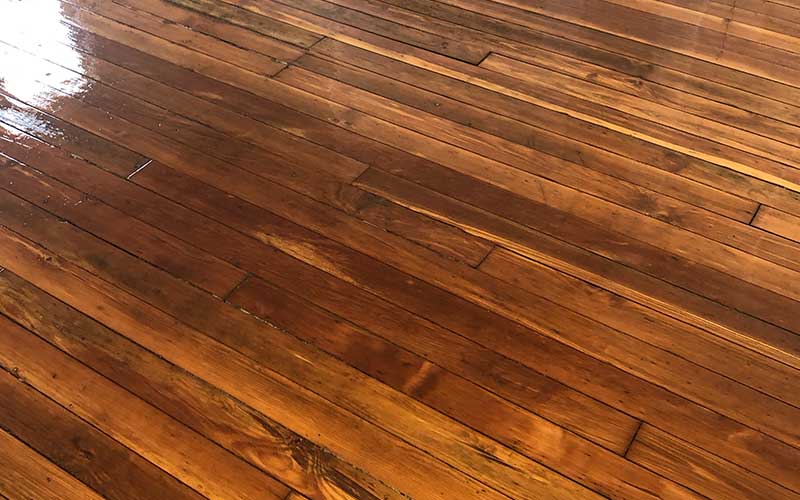
Oil-based poly gives your floors a warm, amber glow that deepens over time.
Water-based poly dries clear and keeps the wood’s natural color intact.
Everything else, from dry time to durability to cost, flows from that core difference.
Appearance
This is usually the deciding factor for most homeowners, and it should be.
Oil-based polyurethane adds a golden amber tint to the wood. On oak floors, this creates that classic, warm hardwood look most people picture when they think of refinished floors. Over the years, oil-based finishes continue to yellow slightly, which some people love and others don’t.
Water-based polyurethane dries almost completely clear. If you want your white oak to stay light and cool-toned, or if you’ve chosen a gray or whitewash stain, water-based is the only option that won’t pull the color warm. It also keeps its clarity over time without yellowing.
The bottom line on looks: If you want warmth and a traditional feel, go oil-based. If you want to preserve the raw color of the wood or show off a custom stain exactly as it looks wet, go water-based.
Durability
This is where opinions get heated, and honestly, both sides have a point.
Oil-based poly creates a thicker film per coat and has been the industry standard for decades.
It holds up well in high-traffic areas and scratches tend to blend in because the finish has some flexibility to it.
Water-based poly has improved dramatically over the past ten years.
Modern commercial-grade water-based finishes like Bona Traffic HD are extremely hard and scratch-resistant.
In fact, many professional flooring contractors (myself included) now use water-based finishes on high-traffic commercial jobs because the hardness rating is actually higher than most oil-based products.
The honest truth: Durability used to be a clear win for oil-based. That’s no longer the case with professional-grade water-based products.
The cheap water-based poly from the hardware store is a different story, so the product matters more than the category.
Dry Time and Convenience
This is where water-based pulls ahead significantly.
Oil-based polyurethane takes 24 hours between coats and typically requires 3-4 days before you can move furniture back in. The fumes are strong, so you’ll want to stay out of the house during application and for at least a day after. You’ll also need to open windows and run fans for ventilation.
Water-based polyurethane dries in 2-3 hours between coats. A full refinishing job with three coats can be done in a single day. The odor is minimal, and most homeowners can sleep in the house the same night. For families with kids, pets, or anyone sensitive to fumes, this matters a lot.
If convenience is a priority, water-based wins by a wide margin. This is the main reason it’s become the default choice for many homeowners, especially in modern homes that can’t be vacated for multiple days.
Cost
Oil-based polyurethane is generally less expensive as a product, and it’s faster to apply because you need fewer coats (two coats of oil-based often equals three coats of water-based in terms of film thickness).
That said, the longer dry time means more days on the job, which can offset the material savings depending on how your contractor prices the work.
Water-based poly costs more per gallon, and you’ll typically need an extra coat. But the faster dry time means the job wraps up sooner, and there’s less disruption to your daily life.
In practice, the total project cost difference between oil and water-based is usually 10-20%.
It’s a factor, but it shouldn’t be the deciding one.
How to Tell Which Finish Is Already on Your Floors
If you’re curious about what’s on your floors, here are two simple tests:
The color test: Look at a spot where the finish meets an unfinished surface, like under a baseboard or inside a closet. If the finished area has an amber or yellowish tint compared to the raw wood, it’s almost certainly oil-based. If it looks clear with no color shift, it’s probably water-based.
The solvent test: Put a few drops of denatured alcohol on an inconspicuous spot. If the finish gets tacky or soft after 30 seconds, you’re dealing with shellac or lacquer (common in older homes). If nothing happens, it’s polyurethane.
In practice though, most flooring contractors don’t bother with these tests.
If you’re doing a full sand-down to bare wood, it doesn’t matter what was on there before because you’re removing it completely.
And if you’re doing a screen and recoat on an older floor where the finish has fully cured for years, the bond between the new coat and the existing finish is usually fine regardless of whether you’re going oil over water or water over oil.
The “never mix them” rule applies more to fresh finishes than to floors that have been cured for a decade.
Can You Switch From One to the Other?
Yes, and it’s easier than most people think.
If you’re doing a full refinishing project where the floors are sanded down to raw wood, you can switch to whatever finish type you want since you’re starting from a clean surface. If you’re curious what a project like that would cost, try our free refinishing cost calculator to get a ballpark before calling a contractor.
But even on a screen and recoat, switching from oil to water or water to oil is doable on older floors where the existing finish has fully cured.
I’ve done it many times without adhesion issues.
The key is proper screening to give the new coat something to grab onto.
The “never mix them” warning you’ll see online applies more to layering fresh coats within days of each other, not to recoating a floor that’s had years to cure.
My Recommendation
For most homeowners, I recommend water-based polyurethane.
The clarity, fast dry time, low odor, and modern durability make it the better all-around choice.
It used to be the “compromise” option, but with products like Bona Traffic HD on the market, it’s now the professional standard for good reason.
That said, if you love the warm, classic amber look of traditional hardwood and you don’t mind the longer dry time, oil-based is still a beautiful finish that’s been proven over decades.
The best advice I can give: ask your contractor to show you samples of both finishes on your specific wood species.
Seeing the actual color difference on your floors is worth more than any article.