
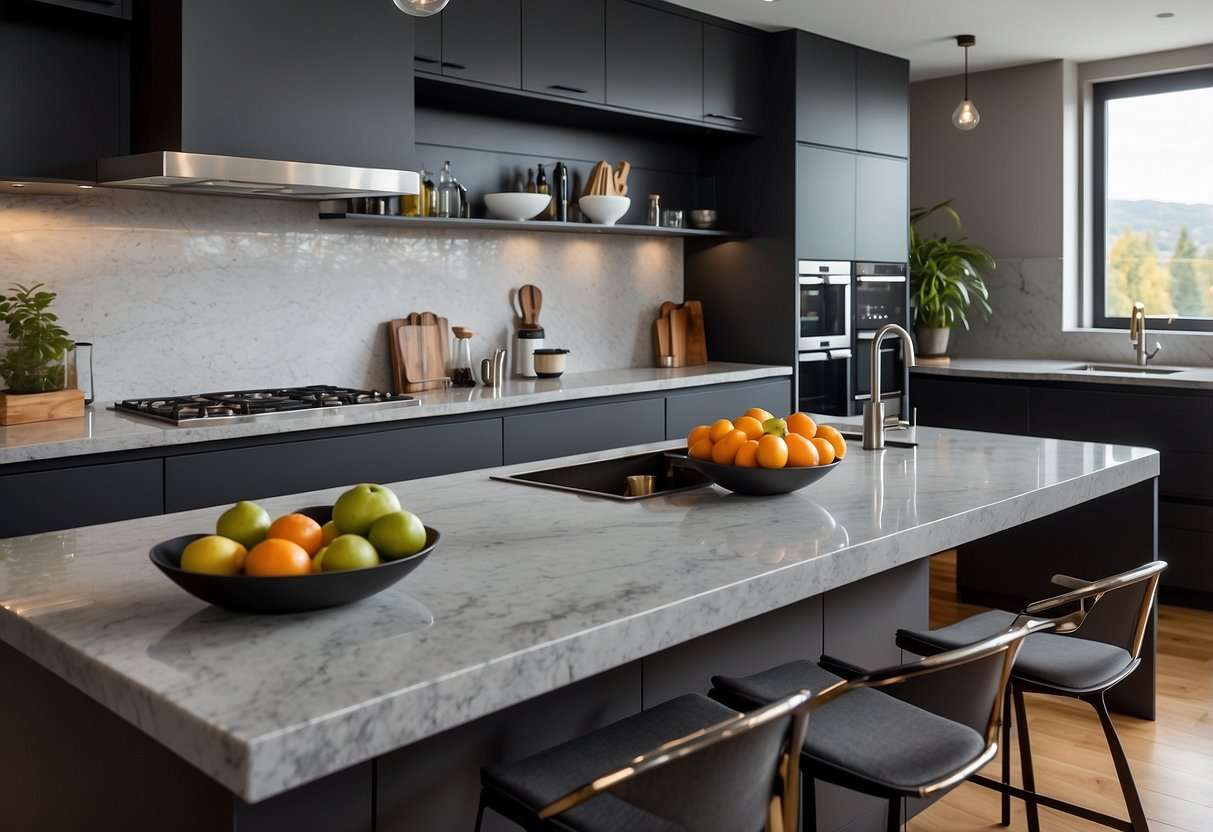
If you’ve been staring at your outdated kitchen counters wondering how you’re going to afford new ones, I’ve got good news.
You don’t need to spend $10,000 on custom fabrication to get that stone look you’ve been dreaming about.
Prefab countertops are kind of the secret weapon for kitchen upgrades right now.
They give you real stone or quality materials without the custom price tag. And honestly, unless you’re building a mansion or have super weird cabinet layouts, prefab might be all you need.
I’ve been writing about home design for over 15 years, and I keep seeing homeowners skip prefab because they think it’s “cheap” or “limited.” That was true maybe 10 years ago. Not anymore.
8 Smart Affordable Ways To Upgrade Your Kitchen
Look, kitchen renovations stress people out.
The costs add up fast. But prefab counters? They actually make sense for most budgets. Here’s why they work.
What Are Prefab Countertops?
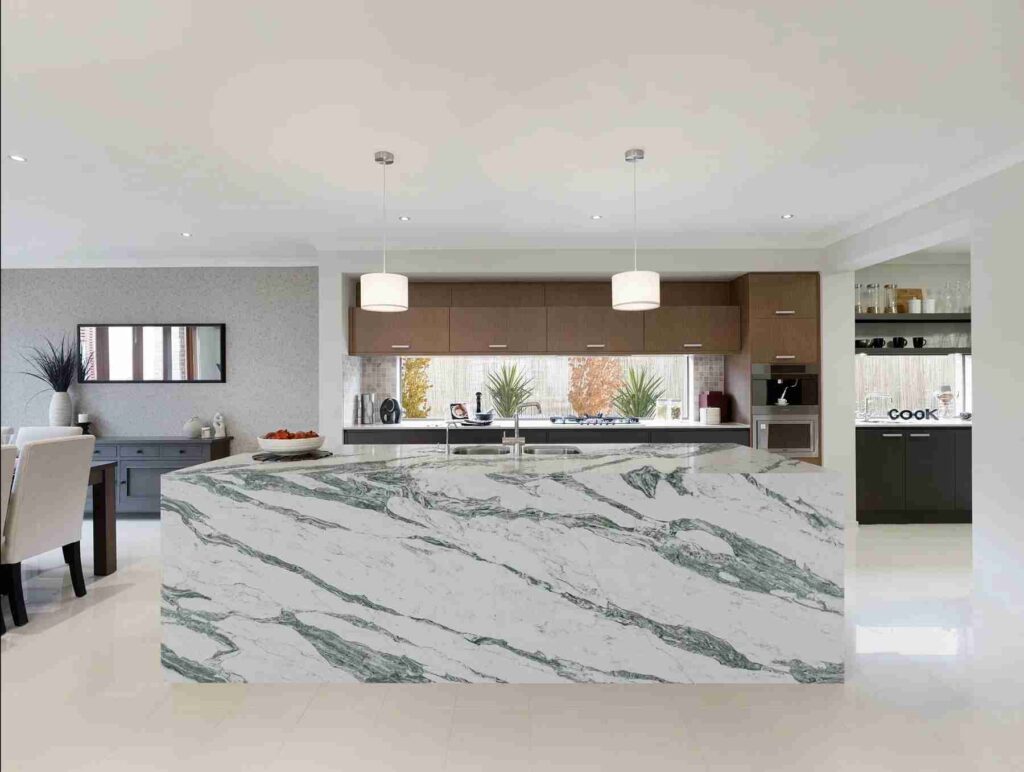
Prefab countertops are pre-cut slabs that come in standard sizes. Think of them like buying jeans off the rack instead of getting them custom tailored.
The fabricator cuts these at their facility ahead of time.
Common sizes are usually 25.5 inches deep (that’s standard counter depth) and lengths vary—you’ll see 6-foot, 8-foot, 10-foot sections.
Some places even stock 12-foot pieces.
The edges are already finished. Polished, beveled, whatever style you pick.
The sink cutouts? Those can be done on-site pretty quickly, or sometimes they come pre-cut for standard sink sizes.
Now, this doesn’t mean you’re getting some flimsy particle board situation.
Prefab comes in granite, quartz, marble—real materials. Just pre-sized.
Prefab countertops offer a practical and cost-effective solution for homeowners seeking a kitchen update without complex construction work. That’s really the whole point.
You’re not waiting weeks for custom templating, cutting, and scheduling.
You pick your slab, they adjust it to fit your space, done.
Why Prefab Countertops Are So Affordable
Custom countertops require a specialist to come measure your exact space.
Then they create a template, usually with that laser tool I talked about before.
They take those measurements back to the shop, cut your specific slabs, polish the edges, and schedule installation around your timeline.
That’s a lot of labor hours. And labor isn’t cheap.
Prefab skips most of that. The slabs are already cut and finished. You’re paying for:
- The material itself
- Minor adjustments if needed
- Installation
That’s it.
You’re also not paying for waste.
When fabricators cut custom slabs, there’s leftover material.
Guess who pays for that? You do. It’s built into the cost. With prefab, the sizing is standardized, so waste is minimal.
I’ve seen prefab installations come in at 40-50% less than custom.
Sometimes more if you’re comparing to high-end granite or marble.
A custom quartz counter might run you $75-$100 per square foot installed. Prefab quartz? You’re looking at $40-$60 per square foot. Maybe less depending on where you shop.
Instant Visual Upgrade Without Full Renovation
Here’s the thing about kitchens. Countertops are one of the first things people notice.
You can have outdated cabinets, old appliances, whatever—but if the counters look modern, the whole space feels better.
I’ve walked into plenty of homes where the cabinets were builder-grade from 1995, but the owner installed new quartz counters, and suddenly the kitchen looked decent. Not incredible, but decent.
You’re not ripping out walls. Not relocating plumbing.
Just swapping the counter surface. The install usually takes a day. Sometimes less if your kitchen is small.
That’s a huge return for minimal disruption.
You’re not living in construction zone chaos for three months. You’re not eating takeout every night because your kitchen is gutted.
Professional Stone Look at a Fraction of the Price
I remember touring a home last year where the owner had installed prefab granite.
I assumed it was custom until she mentioned the price. $3,200 for the whole kitchen.
If that had been custom, she’d have paid closer to $6,000, maybe $7,000.
The look was identical. The durability was identical. The only difference was her bank account wasn’t empty.
People get weird about prefab like it’s somehow inferior. But once it’s installed, nobody knows. There’s no sticker that says “This was prefab!” Your guests aren’t going to inspect your counters with a magnifying glass.
Stone is stone. Quartz is quartz. The fabrication method doesn’t change the material quality. It just changes how much you pay.
Wide Range of Colors and Styles to Match Any Kitchen
Okay, this is where prefab used to fall short.
Five or ten years ago, your options were limited. You’d get basic black, white, maybe a beige granite. That was about it.
Not anymore.
I was at a supplier recently—just browsing for a client project—and the prefab selection was huge. White quartz with gray veining. Black granite with gold flecks.
Butcher block style (though I’d skip that for resale reasons).
Marble-look quartz that honestly looked better than some real marble I’ve seen.
Colors ranged from warm creams to cool grays to dramatic blacks.
Some had subtle patterns. Others had bold veining.
Marble or patterned surfaces can act as a focal point while maintaining neutral tones elsewhere in the kitchen, which is great if you want that statement piece without going overboard.
You’re not getting the exact custom slab where you handpick the specific veining pattern. But for most people? That level of control doesn’t matter.
You just want something that looks good and matches your cabinets.
Standard sizes also mean you can mix and match if your layout allows it.
Maybe you do a different color on your island versus your perimeter counters. Prefab pricing makes that more affordable.
Durable and Low-Maintenance Materials
I’m going to be straight with you. Prefab doesn’t mean lower quality material. It means different fabrication.
If you get prefab granite, it’s the same granite that goes into custom counters.
Same hardness. Same heat resistance. Same scratch resistance.
Quartz prefab? Still non-porous. Still stain resistant. Still low maintenance.
The durability comes from the material itself, not whether someone custom-cut it for your exact kitchen dimensions or cut it ahead of time in a standard size.
Now, some materials are better than others. Quartz is pretty much maintenance-free. You wipe it down, that’s it. No sealing required.
Granite needs sealing every year or so. Not a huge deal, but it’s something.
You buy the sealer, wipe it on, wait 15 minutes, wipe off the excess. Takes maybe 20 minutes total.
Marble—and I know some people love the look—is high maintenance.
It stains. It etches if you spill lemon juice or wine. If you’re set on marble, just know what you’re getting into.
But quartz or granite prefab? Those are workhorses.
They handle daily cooking, hot pots (mostly—remember quartz can scorch with extreme heat), spills, knife cuts if you accidentally miss your cutting board.
I installed quartz in a rental property three years ago. It still looks brand new. The tenants aren’t exactly gentle with it either.
Budget Room Left for Other Kitchen Upgrades
This is probably the smartest angle if you’re doing a full kitchen refresh.
Let’s say your budget is $15,000 total. You want new counters, new backsplash, maybe paint the cabinets, new hardware, possibly a new faucet.
If you spend $8,000 on custom counters, you’ve got $7,000 left. That doesn’t stretch far.
But if you spend $4,000 on prefab counters, now you’ve got $11,000 for everything else.
You can afford that tile backsplash you wanted. You can hire someone to professionally paint the cabinets instead of DIYing it. You can upgrade to a nicer faucet.
The kitchen ends up looking more complete.
I’ve seen too many homeowners blow their entire budget on custom counters, and then the rest of the kitchen still looks tired.
The cabinets are scuffed. The backsplash is that beige tile from 2002. The hardware is brass from the ’80s.
That’s not a good look.
Better to balance the budget across all the elements. Prefab counters let you do that.
Best Materials to Choose for Prefab Countertops
Alright, let’s talk about what actually works.
Quartz is probably your best bet. It’s durable, low maintenance, comes in a ton of colors, and the cost is reasonable.
You’re looking at $40-$60 per square foot installed for prefab quartz. It’s non-porous, so bacteria and stains aren’t an issue.
It’s heat resistant, though not heatproof—don’t put a screaming hot pan straight from the oven onto it. Use a trivet.
The look is consistent too. Since quartz is engineered (it’s about 90-95% natural quartz mixed with resin and pigments), the pattern is controlled.
You won’t get wild variations between slabs.
Granite is still solid. It’s natural stone, so you get unique patterns.
It’s heat resistant, scratch resistant, and it’s been the standard for high-end kitchens for decades.
The cost for prefab granite runs about $35-$55 per square foot installed, depending on the color and grade.
The downside? Sealing. You’ll need to reseal it annually.
It’s not hard, but it’s one more thing to remember.
Marble looks incredible but comes with baggage.
I love the look of white marble with gray veining. It’s classic. It photographs beautifully. But it’s soft, porous, and stains easily.
If you spill red wine and don’t wipe it up immediately, you might have a permanent reminder of that dinner party.
For prefab marble, you’re still looking at $50-$70 per square foot because marble isn’t cheap, even in standard sizes.
If you go this route, seal it regularly and accept that it’s going to develop a patina over time. Some people love that. Others hate it.
Solid surface and porcelain are worth considering.
Solid surface (like Corian) is man-made, non-porous, and you can repair scratches by sanding them out.
The look isn’t as natural as stone, but it’s clean and modern. Cost is usually $35-$50 per square foot for prefab.
Porcelain is newer to the counter scene.
It’s extremely durable, heat resistant, UV resistant (great for outdoor kitchens), and scratch resistant.
It can be harder to fabricate, which sometimes limits prefab availability, but when you can find it, the performance is excellent.
Skip laminate if you care about resale. I know it’s cheap. I know it’s easy. But market research shows laminate doesn’t add value to your home.
If you’re planning to sell within the next few years, spend the extra money on quartz or granite.
If this is a rental property or a temporary situation, sure, laminate works. But for your primary home? Go with stone.
Wrapping This Up
Look, I’m not saying prefab is perfect for every situation.
If you have a super custom kitchen with weird angles, curved edges, or non-standard depths, you might need custom fabrication.
If you want to handpick the exact slab and control every inch of the veining pattern, custom is your route.
But for most kitchens? Prefab works.
You get real stone benchtop. You get durability.
You get a professional look. And you save a chunk of money that you can spend on other parts of your kitchen or, you know, literally anything else.
I’ve been watching the prefab market grow for years now, and the quality keeps getting better while the prices stay reasonable. That’s rare in home improvement.
If your counters are looking rough and you’ve been putting off the upgrade because you think it’s going to cost a fortune, check out prefab options.
Visit a few suppliers. Look at the actual slabs in person because photos don’t always capture the depth and texture.
You might be surprised at what’s available. And your wallet will definitely thank you.