
You probably don’t think about the air inside your home very often.
Maybe you notice when someone burns toast or when your neighbor’s cooking smells drift through the vents, but that’s about it.
Here’s something that might surprise you—the air inside your home is likely way more polluted than the air outside. Yeah, even if you live near a busy street.
The epa says indoor air can be two to five times more contaminated than outdoor air.
Sometimes even worse. And since most of us spend around 90 percent of our time inside, that’s a problem worth paying attention to.
I’ve been writing about homes and interiors for over fifteen years now, and I can tell you that air quality is one of those things people overlook until someone in the family starts having headaches or breathing issues.
But here’s what’s encouraging. Unlike outdoor pollution where you’re pretty much at the mercy of traffic and industrial emissions, you actually have control over what’s floating around in your living room.
This isn’t about buying expensive equipment or tearing apart your house. Most of it is simpler than you’d think.
9 Ways To Improve Indoor Air Quality For A Healthier Home
Understanding Indoor Air Quality
So what exactly are we talking about when we say “indoor air quality”?
It’s basically all the stuff that ends up in the air you breathe when you’re inside.
Combustion byproducts from your gas stove or fireplace. Pet dander from your dog.
Mold spores if you’ve got moisture problems. Volatile organic compounds—or VOCs—that come from cleaning products, paint, furniture, even that new carpet you just installed.
Then there’s particulate matter. Those tiny particles that float around and get deep into your lungs. Dust mites. Pollen that hitches a ride on your clothes.
Carbon monoxide if something’s not venting right.
The tricky part? You can’t see most of this stuff. Your home might look spotless and still have air quality issues.
Poor indoor air has been linked to everything from irritated eyes and headaches to more serious stuff like asthma, cardiovascular disease, and even cognitive problems.
That harvard study about office workers? Turns out bad air actually makes people worse at their jobs. Kids and older adults are especially vulnerable.
I used to think air quality was mainly about allergies, but it goes way beyond that.
Improve Ventilation Throughout the Home
Ventilation is probably the single most effective thing you can do. And it doesn’t have to be complicated.
Fresh air needs to come in. Stale air needs to go out.
Sounds obvious, right? But so many homes are sealed up tight, especially newer constructions that are built for energy efficiency.
Opening windows is the easiest approach.
Even just cracking a few windows for 15-20 minutes a day makes a difference.
Create cross-ventilation by opening windows on opposite sides of your home so air actually moves through instead of just sitting there.
But. If you live in a city with high outdoor pollution, or near a highway, or during wildfire season, opening windows might make things worse instead of better.
You need to be strategic about when you do it.
Bathroom and kitchen exhaust fans are your friends. Use them. Every time you cook, especially if you have a gas stove. Every time you shower.
Let them run for at least 15-20 minutes after you’re done. Moisture and cooking fumes need somewhere to go.
Some homes benefit from mechanical ventilation systems.
These range from simple exhaust fans to more sophisticated heat recovery ventilators that bring in fresh air while keeping your heating or cooling from escaping. If you’re doing a renovation, it’s worth considering.
Attic fans can help too. They pull hot air up and out, which creates a gentle airflow through the whole house.
The point is to keep the air moving. Stagnant air collects pollutants.
Use Air Purifiers and Filters
Okay, this is where people either spend way too much money or buy something that doesn’t do anything at all.
Not all air cleaners are created equal. Some are genuinely effective. Others are complete junk.
Here’s what you need to know. An air purifier needs to do two things well: capture pollutants efficiently AND move enough air through the filter.
A purifier that catches 99% of particles but only processes a tiny amount of air won’t help much.
Same goes for one that moves lots of air but doesn’t actually capture anything.
Look for true HEPA filters. These capture at least 99.97% of particles that are 0.3 microns or larger. That includes most allergens, dust, mold spores, and bacteria.
The CADR rating matters too—that’s the Clean Air Delivery Rate.
It tells you how much filtered air the unit produces. Match the CADR to your room size.
A small purifier in a large living room won’t do much.
For most homes, you’ll want units in the rooms where you spend the most time.
Bedroom for sure, since you’re in there for eight hours. Living room or home office.
Change or clean your filters on schedule. A clogged filter doesn’t work.
I’ve seen people wonder why their air purifier stopped helping, and it’s because they haven’t changed the filter in two years.
Avoid ozone generators. Some air cleaners produce ozone as a byproduct, and ozone itself is a lung irritant. You’re trying to improve your air, not make it worse.
Doing your research by reading HVAC service reviews is always a great idea! Watkins Heating & Cooling has an excellent reputation when it comes to HVAC maintenance reviews in Mason OH.
Keep Your Home Clean and Dust-Free
Dust isn’t just annoying. It’s a collection of dead skin cells, dust mites, pollen, fabric fibers, and whatever else gets tracked in from outside.
Vacuum regularly. And I mean with a good vacuum that has a HEPA filter, not one that just blows dust around.
Twice a week for high-traffic areas. Once a week for the rest. If you have pets, maybe more.
Here’s something I learned from an indoor air quality specialist—vacuums without proper filtration can actually make your air worse.
They suck up the dust and then blow the smallest particles right back out into the air.
Those tiny particles are exactly the ones that get deep into your lungs.
Damp mopping works better than dry sweeping. Sweeping kicks dust into the air. Mopping captures it.
Don’t forget the places you can’t see.
Top of ceiling fans, behind furniture, air vents, the top of your refrigerator. Dust settles everywhere, and then it gets kicked back up into the air.
Wash bedding weekly in hot water. Your mattress and pillows collect dead skin, dust mites, and allergens.
Mattress covers can help, the kind that’s designed to block allergens.
Curtains and upholstery need attention too. Vacuum them. Or wash them if you can.
Shoes off at the door. This alone reduces how much outdoor pollution and allergens you track inside.
Control Humidity Levels
Humidity is one of those goldilocks things. Too much, too little—both cause problems.
High humidity encourages mold and dust mites. Both love moisture.
Mold can grow on walls, in bathrooms, in your HVAC system, places you might not even see. And mold spores in the air are terrible for your lungs.
Aim for 30-50% relative humidity. You can get a simple hygrometer for like fifteen bucks to measure it.
If humidity’s too high, run a dehumidifier.
Especially in basements. Fix any leaks immediately. Water damage turns into mold damage fast. Use exhaust fans when cooking and showering.
Don’t overwater your indoor plants.
Dry your bathroom after showers if you can. Wipe down the walls, leave the door open, run the fan.
Check under sinks, around windows, in the attic. Anywhere water might be sneaking in.
Too little humidity is also a problem.
Dry air irritates your respiratory system and makes you more susceptible to infections. It also makes airborne viruses survive longer.
In winter when you’re running the heat, you might need a humidifier.
Clean humidifiers and dehumidifiers regularly. Otherwise they become bacteria and mold factories, which defeats the whole purpose.
Avoid Indoor Air Pollutants
This is about source control. Stop pollutants from getting into your air in the first place.
Gas stoves release nitrogen dioxide and carbon monoxide.
Use your range hood every time you cook, and make sure it vents outside, not just recirculates.
Consider an induction cooktop if you’re replacing appliances.
Cleaning products are a major source of VOCs. You don’t need harsh chemicals for most cleaning jobs. Vinegar, baking soda, and soap work fine for everyday stuff.
If you do use chemical cleaners, open windows while you’re using them.
Paint and new furniture off-gas VOCs for weeks or even months.
Look for low-VOC or zero-VOC paints. Let new furniture air out in a garage or outside for a few days if possible before bringing it into your living space.
Air fresheners, scented candles, plug-in fragrances—these add chemicals to your air.
If you want your home to smell good, deal with the source of bad odors instead of covering them up. Open windows. Clean regularly.
Don’t smoke indoors. Pretty obvious, but worth saying.
Radon is a radioactive gas that comes from the ground and can seep into homes through cracks in the foundation. It’s the second leading cause of lung cancer.
You can’t smell it or see it. Test for it. If it’s present, get a mitigation system installed. This isn’t optional.
Avoid storing chemicals, paints, pesticides, or gasoline inside your living space.
Garage or outdoor shed only, and make sure they’re sealed properly.
Maintain Heating and Cooling Systems
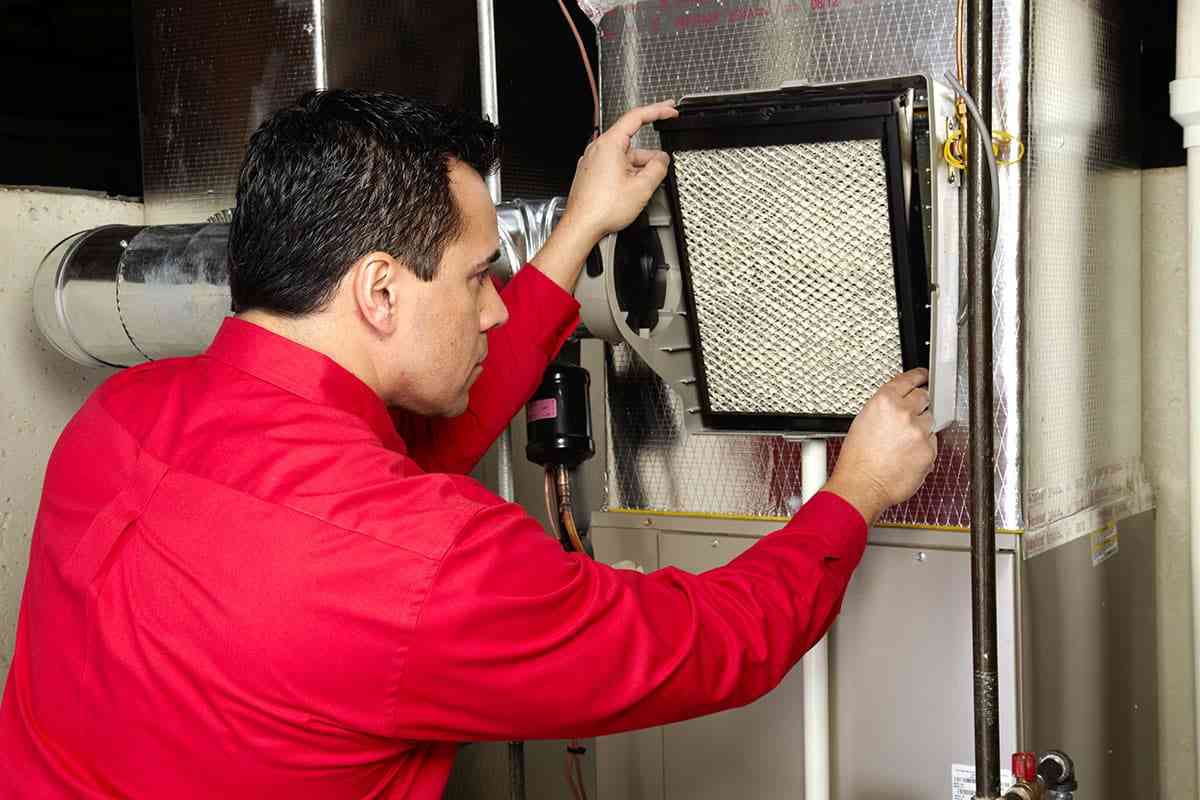
Your HVAC system circulates air through your entire home. If it’s dirty or poorly maintained, it’s spreading dust, mold, and whatever else throughout every room.
Change your furnace and air conditioning filters every one to three months.
More often if you have pets or allergies. This is basic, but so many people forget.
Use good quality filters. Not the cheapest fiberglass ones. Look for MERV ratings between 8-13 for most homes.
Higher ratings capture smaller particles but make your system work harder, so check your system’s specifications.
Have your HVAC system professionally serviced once a year.
They’ll clean the coils, check for mold, and make sure everything’s working efficiently.
Neglected systems don’t just waste energy—they degrade your air quality.
Clean your air ducts if they’re visibly moldy or clogged with dust.
This doesn’t need to happen often, maybe every five years or so, but it matters when it does.
Make sure your dryer vents outside properly and that the vent isn’t clogged with lint. Dryer lint is a fire hazard and also adds particles to your indoor air.
Add Indoor Plants Thoughtfully
Plants as air purifiers—this is one of those things that got overhyped.
The original NASA study that everyone cites was done in sealed chambers with lots of plants relative to space.
You’d need dozens of plants in every room to see the same effect.
That said. Plants do provide some air cleaning benefit, just not as much as people think. They absorb some VOCs and produce oxygen.
They also increase humidity, which can be good or bad depending on your situation.
If you like plants, go ahead and keep them.
Just don’t expect them to replace actual air purification strategies. And don’t overwater them because that creates mold problems.
Good low-maintenance options include snake plants, pothos, spider plants.
They’re hard to kill and don’t need much attention.
Actually, the psychological benefit of having plants might be more valuable than the air cleaning benefit. They make spaces feel more alive and comfortable.
Create Healthier Daily Habits
Small daily choices add up.
Take shoes off at the door. I mentioned this already but it’s worth repeating.
You’re tracking pesticides, pollutants, allergens, whatever you walked through outside.
Groom pets regularly, preferably outside. Brush them to remove loose fur before it ends up all over your house.
Reduce clutter. More stuff means more surfaces collecting dust and harder to clean thoroughly.
Wash hands when you come home. Especially before touching your face or preparing food.
Be mindful of what you bring into your home. That new carpet smell? VOCs. Fresh paint? VOCs. New electronics, mattresses, furniture—they all have off-gas chemicals initially.
Test for radon and carbon monoxide. You can get detectors for both.
Carbon monoxide detectors should be on every floor, especially near bedrooms.
Don’t idle your car in an attached garage, even with the door open. Carbon monoxide seeps into the house.
Conclusion
Look, improving your indoor air quality doesn’t have to be overwhelming.
Start with the basics. Open some windows. Change your HVAC filters. Keep things clean.
Those three things alone will make a noticeable difference.
Then layer in the other strategies as you can. Maybe you add an air purifier to your bedroom. Get your HVAC system serviced.
Fix that leak that’s been dripping in the bathroom. Switch to gentler cleaning products.
You don’t have to do everything at once. But the thing is, the air you breathe matters.
You eat carefully, you exercise, you try to get enough sleep—but what about the 20,000 breaths you take every day?
Most of these changes are pretty simple.
Some cost money, some don’t. But they’re all worth considering if you care about your health and your family’s health.
Your home should be the place where you feel best.
Where you recover and recharge. Hard to do that if you’re breathing in pollutants all day.
Start somewhere. Pick one thing from this list and do it this week.
Then pick another. Your lungs will thank you.