
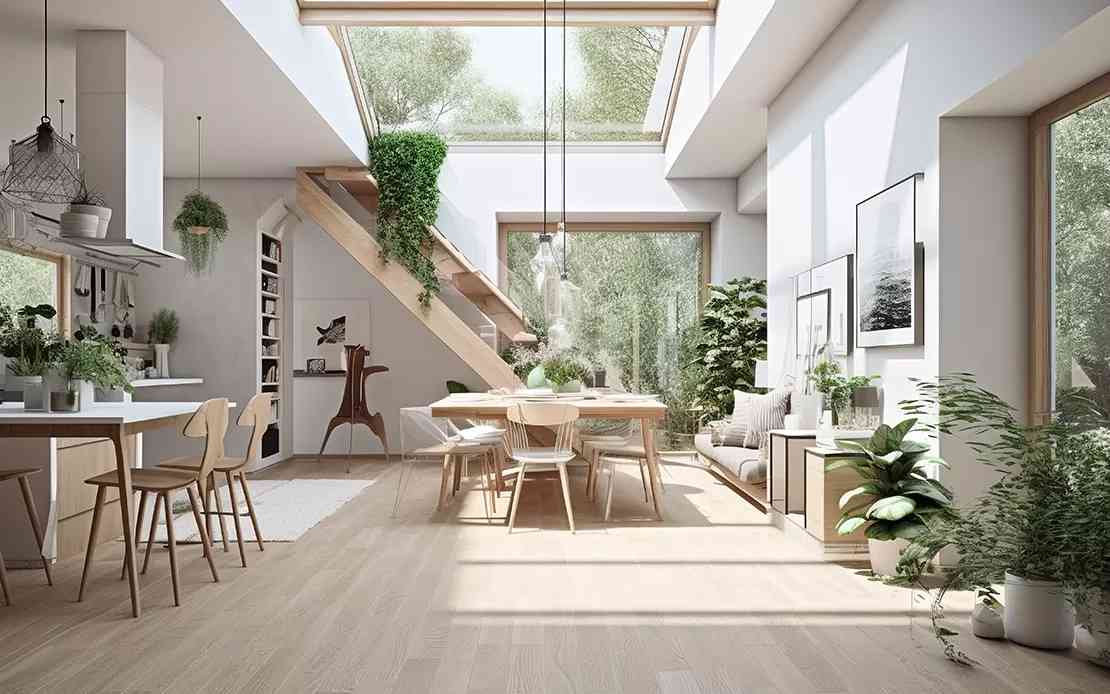
Does your house also feel a bit too tight and congested? You are definitely not the only one.
Many people struggle with spaces that always look too small or are difficult to move through.
Fortunately, making your home feel bigger doesn’t have to be the result of wall demolition or adding more floor space.
Intelligent decor decisions can make tiny interiors look bright, airy, and welcoming places.
In this blog, we’ll share some easy tips that will help you to make your home feel more spacious and a place where you love to stay.
Embrace Open Floor Plans
One of the most effective ways to make your house feel bigger is by getting rid of the walls that separate rooms.
When the walls are removed, the spaces run naturally into each other.
It gives you the opportunity to look further since the whole area appears bigger.
Additionally, open floor plans maximize the natural movement of air and also make it more convenient to talk with your family members when you are in different parts of the house.
You do not necessarily have to remove all the walls to experience the benefits.
Even if you take down one wall between the kitchen and the dining room it can have a great impact on how spacious your home feels.
It requires a bit of work to create a smooth transition between rooms.
One of the first things that you should take into consideration when planning your home renovation is the way you move through it daily.
Take away the obstacles that prevent your way or make you use narrow paths.
Do not put furniture in the doorways and walkways to still have space for clear paths.
Bring in Greenery
Plants bring so many benefits to your home beyond just looking nice.
They clean the air, lower stress levels, and make the whole area feel alive and inviting.
Nothing drapes the mood more than a fresh home decorated with real plants that, in some way, incorporate the outdoors.
If you find it hard to keep plants alive, don’t be discouraged.
You can find lifelike faux plants from HRtrees that are as visually appealing as the real ones but without the upkeep.
Today’s artificial plants are so detailed that they can easily replace the real ones in any corner of the home, even those that receive little sunlight.
Something to consider when decorating with plants is the use of tall plants in the corners as they attract the gaze of a viewer upwards and thus, the height of the ceiling is emphasized.
You can use hanging plants for adding greenery to your place when you do not have enough floor space.
In an open floor plan, you can use large plants as natural dividers that separate spaces while still letting light pass through and keeping the view open.
Maximize Natural Light
Among other factors that make a space feel open and inviting, natural light is the most important.
A room bathed in sunlight is often perceived as bigger, fresher, and cozier. Besides, light can be reflected off the walls and even make colors appear more brilliant and alive.
On the contrary, dark rooms tend to be smaller in appearance and can be very dull and depressing to spend time in.
Our brains prefer bright and naturally-lit spaces as they contribute to the regulation of our sleep patterns and raise our energy levels.
There are numerous solutions for letting more light into your home.
You can replace small windows with larger ones, or put a new window in a dark room.
Skylights are also a great choice to illuminate rooms without wall windows.
Opt for window treatments that are light and simple, so they do not absorb valuable sunlight.
Choose Light and Neutral Color Palettes
Colors affect us very strongly and this includes space perception.
Light colors make the walls look like they’re further away and create more visual space.
Dark colors bring walls “closer” thus making you feel enclosed.
That doesn’t mean the interior must be dull and all white. However, knowing the color effects will guide you in making clever picks.
Among cool colors, blues and greens look more roomy than warm colors such as reds and oranges.
For the most spacious effect, use neutral paint colors such as white, cream, light gray, or soft beige for your walls and ceilings.
These colors not only reflect light but also make a serene backdrop for your furniture and decor.
Personality and color can be introduced via art, cushions, carpets, and other decorative items.
If you find all-neutral too plain, try painting one wall with a slightly deeper color while leaving the other walls light.
A ceiling painted a shade lighter than the walls will give an impression of greater height.
Invest in Multi-Functional Furniture
In a smaller home, practically every piece of furniture should be effective in providing the homeowner with utility, as well as the reason for it occupying the space.
By serving more than one purpose, multi-functional furniture helps the owner to reduce the total number of items they require.
As a result, more floor space is left unoccupied and rooms become easier to move around.
Such single pieces become extremely valuable when one lives in an apartment or a home where space is very limited.
Sofa beds are an excellent example as they offer a lounging area during the day and a sleeping spot for guests at night.
Homeowners can also use ottomans to hide their blankets, magazines, or toys inside.
An expandable dining table remains compact for daily use but can be enlarged when one is having visitors over.
Use Area Rugs to Define Spaces
Area rugs are brilliant tools for creating separate zones in open floor plans without building walls.
They provide visual boundaries that help organize a large space into distinct areas for different activities.
A rug under your dining table says “this is where we eat,” while another rug under your sofa defines the living area.
This makes open spaces feel organized and purposeful instead of confusing or empty.
Choosing the right size rug matters more than most people realize.
In living rooms, your rug should be large enough for at least the front legs of all furniture to rest on it. This anchors the seating area and makes it feel cohesive.
Too-small rugs make spaces look choppy and disconnected.
In dining rooms, make sure the rug extends at least 24 inches beyond the table on all sides so chairs stay on the rug when pulled out.
Style-wise, keep rugs fairly neutral in open floor plans so they don’t clash with each other. Stick with a coordinated color palette that ties the whole area together.
Utilize Smart Storage Solutions
Clutter is the enemy of openness. When surfaces are covered with stuff and belongings pile up in corners, even large rooms feel cramped and stressful.
Getting clutter under control is essential for creating the open, peaceful home you want.
The secret is having enough storage so everything has a proper home where it can be tucked away when not in use.
Hidden storage is especially valuable because it keeps your space looking clean while still holding all your belongings.
Install floor-to-ceiling cabinets to maximize vertical space while keeping items out of sight. Use under-bed storage boxes for seasonal clothing or extra linens.
Mount floating shelves high on walls for items you need but don’t use daily.
Choose furniture with hidden compartments like storage ottomans or hollow benches.
Install hooks inside closet doors for bags and accessories.
Use drawer dividers to organize small items so drawers don’t become junk piles.
In kitchens, install pull-out shelves in cabinets so you can access items in the back easily.
Conclusion
Opening up space and making your home more livable is not necessarily about costly renovations or hiring designers.
The clever design choices which we have discussed in this article are all complementary to the transformation of your space.
Make sure you try one or two of the ideas that you like and see how great the difference they make.
Your home should be a place where you are comfortable and joyful.
Using these design strategies, you can get the open, warm space that you have always desired.