
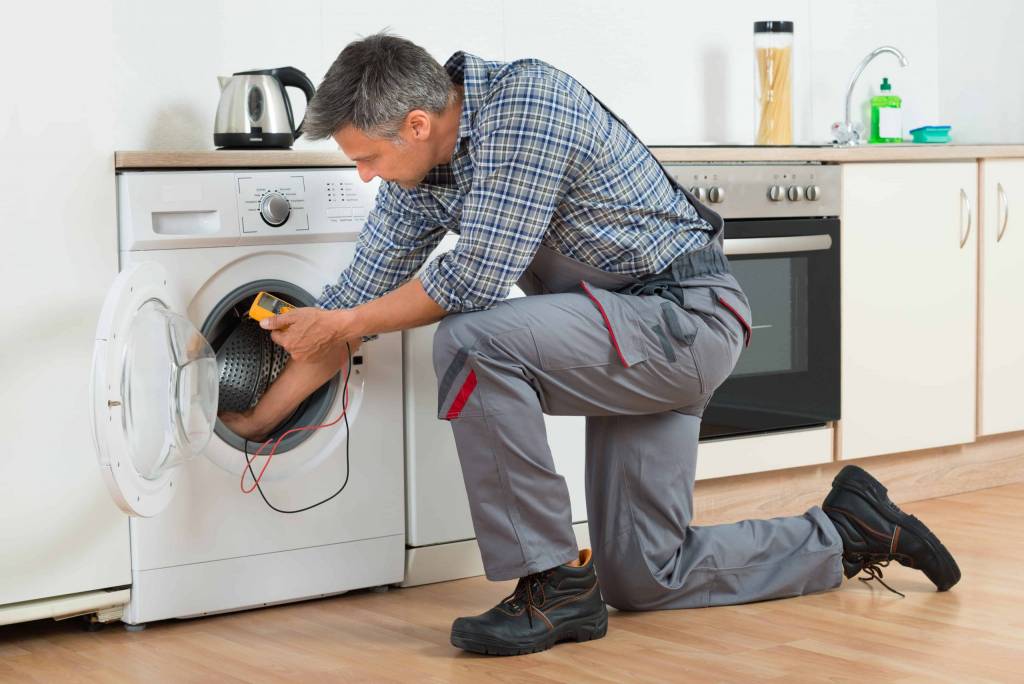
So let me tell you about something that comes up a lot in my shop.
People call in, their washer’s broken, and the first thing they ask is can you use a cheaper part? And I get it. I really do.
Nobody wants to spend more money than they have to, especially on a washing machine repair.
But here’s the thing—and I’m going to be completely honest with you because that’s what I do—there’s a reason why guys like me, servicemen who’ve been doing this for years, we push for OEM parts.
That’s Original Equipment Manufacturer parts, by the way.
The same parts that came in your machine when it rolled off the factory floor.
Now, am I going to sit here and tell you that aftermarket parts are garbage? No, because that’s not entirely true.
But what I am going to tell you is why the experts, the people who fix these machines day in and day out, consistently recommend OEM. And why you should probably listen.
Understanding OEM Washing Machine Parts
Alright, so what even is an OEM part?
When your washing machine was built, let’s say it’s a Whirlpool or an LG or whatever brand you’ve got, the manufacturer used specific parts.
These parts were designed, tested, and engineered specifically for that model.
OEM means you’re getting that exact same part. Same specs, same materials, same everything.
Now here’s where it gets a little confusing for people.
You’ve got OEM parts, and then you’ve got aftermarket parts.
Aftermarket parts are made by third-party companies.
They’re designed to fit your machine, sure, but they’re not made by the original manufacturer. Sometimes they’re fine.
Sometimes they’re not. It’s a gamble.
And then there’s this other category—refurbished or used OEM parts.
These are original parts that have been pulled from other machines and cleaned up.
I’m not a huge fan of these for most repairs, but that’s a conversation for another day.
The point is, OEM means original.
It means you’re putting back exactly what was supposed to be there.
Why Experts Recommend Genuine OEM Washing Machine Repair Parts
So why do I recommend OEM parts? Why does pretty much every serviceman I know recommend them?
First off, they fit right.
I can’t tell you how many times I’ve gone to a service call where somebody tried to install an aftermarket part themselves, or maybe another technician used one, and it just doesn’t fit correctly.
Maybe it’s off by a millimeter, maybe the mounting holes don’t quite line up.
These little differences? They cause problems down the road.
Second thing is longevity. OEM parts are built to last because the manufacturer’s reputation is on the line. When LG makes a part for an LG machine, they want it to last.
They don’t want you calling them saying their machine broke again.
Aftermarket manufacturers? They’re just trying to undercut the price. Quality control isn’t always there.
And I’ll tell you something else.
Warranty. If your machine is still under warranty, using an aftermarket part can void that warranty. Most people don’t think about this until it’s too late.
You save $30 on a part, but now your $1,200 washing machine isn’t covered anymore. Is it worth it? You tell me.
Experts consistently recommend genuine OEM washer repair parts for a reason.
We see what happens when people cut corners.
We’re the ones who come back six months later to fix the same problem because that aftermarket part failed.
Performance is another big one.
High-quality components support stable washing cycles and balanced spinning. Clothes receive proper care, and water usage stays efficient.
When you start mixing in parts that weren’t designed for that specific machine, you lose that precision.
Your washer might work, but it’s not working optimally.
Common Washing Machine Parts That Should Be OEM
Now, are there some parts where you can maybe get away with aftermarket? Possibly. But there are some parts where you absolutely should not mess around.
The transmission or gear case.
This is the heart of your washing machine. If this goes, you need OEM. I’ve seen aftermarket transmissions fail within a year.
The original might have lasted 15, 20 years. Don’t cheap out here.
Pumps are another one. The drain pump, the circulation pump—these need to be OEM. I’ve installed aftermarket pumps that started leaking within months.
Water and washing machines, you don’t want leaks. Trust me on this.
Control boards. Oh man, control boards.
These are the brains of your machine.
An aftermarket control board might work initially, but the programming can be off.
I’ve seen machines that run cycles incorrectly, or the board just fries itself because the components weren’t up to spec.
Door latches and lid switches. These are safety components.
They prevent the machine from running when it shouldn’t.
You do not want to mess around with safety parts. OEM all the way.
Motors, bearings, and suspension components.
These affect how your machine runs, how much noise it makes, how well it spins.
Aftermarket versions might be louder, might vibrate more, might not last.
Hoses and seals, you might think these are simple parts. But the wrong material can degrade faster, can crack, can leak.
OEM hoses are designed for the specific pressures and temperatures of your machine.
Are there parts where aftermarket is okay? Maybe some of the cosmetic stuff. Knobs, sometimes.
But even then, I usually just go OEM because I don’t want to deal with a callback.
How to Identify Genuine OEM Washing Machine Repair Parts
So you’ve decided you want OEM parts.
Good choice. Now how do you make sure you’re actually getting them?
First thing, buy from authorized dealers.
The manufacturer’s website will list authorized parts distributors.
If you’re buying from some random website you’ve never heard of, be careful.
Check the part number. Every OEM part has a specific part number.
Cross-reference this with your machine’s model number.
The owner’s manual usually has a parts diagram, or you can look it up online.
If the part number doesn’t match exactly, it’s probably not OEM.
Look at the packaging. OEM parts come in branded packaging.
It’ll have the manufacturer’s logo, part number, and usually some other identifying information.
If it comes in a plain box or bag with just a sticker, that’s a red flag.
Price can be an indicator too, though not always.
If a part is significantly cheaper than everywhere else, ask yourself why.
Maybe it’s a sale, but maybe it’s not actually OEM. If it seems too good to be true, it probably is.
Read the product description carefully. Some sellers will use tricky language like “OEM quality” or “OEM equivalent.”
That’s not the same as OEM. They’re telling you it’s aftermarket right there, just in a way that might confuse you.
When in doubt, ask a professional.
Call a service company, call the manufacturer.
Verify before you buy. Returning a part is a hassle, and if you’ve already installed it, you might not be able to return it at all.
Cost vs Value: Are OEM Parts Worth It?
Okay, let’s talk money because I know that’s what everyone’s thinking about.
OEM parts cost more. There’s no getting around that.
An OEM pump might be $120 while an aftermarket one is $60. That’s double the price. So the question is, is it worth it?
Here’s how I look at it. That OEM pump, if it’s anything like what I’ve seen, it’ll last you 10, maybe 15 years. The aftermarket pump? Maybe 3 to 5 years if you’re lucky.
So you’ll end up buying that aftermarket pump two, maybe three times over the life of the machine.
Plus you’re paying for labor each time if you’re not doing it yourself.
Do the math. $120 once, or $60 three times? You’re actually spending more going the cheap route.
And that’s not even considering the hassle factor.
Your time is worth something.
Taking apart your washing machine once is annoying enough.
Having to do it again a few years later because you went cheap? That’s just frustrating.
There’s also the risk of additional damage.
I’ve seen cases where an aftermarket part fails and damages other components.
Now you’re not just replacing the original part again, you’re also fixing whatever else broke. That $60 savings just cost you $300.
For me, and for most servicemen I know, OEM parts are worth it.
You’re paying for reliability, for proper fit, for longevity. You’re paying for peace of mind.
But I’m not going to sit here and tell you that everyone should always buy OEM no matter what.
If you’ve got an older machine that’s on its last legs anyway, and you just need to squeeze another year out of it, maybe an aftermarket part makes sense.
That’s a judgment call you have to make.
Just go in with your eyes open. Know what you’re getting, know the risks.
Expert Tips Before Purchasing Repair Parts
Before you pull the trigger on buying any part, OEM or otherwise, here are some things to think about.
First, make sure you’ve actually diagnosed the problem correctly.
I can’t tell you how many times people order parts they don’t need because they guessed wrong about what was broken. If you’re not sure, get a professional diagnosis.
Yes, it costs money, but it’s cheaper than buying the wrong part.
Check if your machine is still under warranty.
If it is, contact the manufacturer. They might cover the repair, or at least the part.
Don’t void your warranty by doing it yourself if you don’t have to.
Consider the age of your machine. If your washer is 15 years old and needs a major repair, sometimes it makes more sense to replace the whole machine.
I know that’s not what you want to hear, but it’s the truth.
Putting $400 worth of parts into a machine that might only last another year or two? That’s not smart money.
Look up the part before you have a technician come out.
Know what it costs, know what the labor should roughly be.
I’m not saying assume your technician is ripping you off, but it’s good to be informed.
Most of us are honest, but there are some bad apples out there.
Buy from reputable sources. I mentioned this earlier, but it’s worth repeating.
Authorized dealers, well-known parts suppliers, the manufacturer directly.
Don’t buy critical parts from auction sites unless you really know what you’re doing.
Keep your receipt and documentation.
If the part fails, you want to be able to return it or get warranty service on it. OEM parts usually come with some kind of warranty.
And here’s something most people don’t think about—check the install difficulty. Some parts are easy to replace.
Others require basically tearing the whole machine apart.
If you’re doing it yourself, watch some videos, read the instructions.
Know what you’re getting into before you start. There’s no shame in calling a professional if it’s over your head.
Conclusion
Look, at the end of the day, it’s your washing machine and your money. You can do whatever you want.
But if you’re asking me, as someone who’s been servicing appliances for years, who’s seen thousands of repairs, who knows what works and what doesn’t—I’m going to tell you to use OEM parts. Especially on the important stuff.
The cost difference isn’t as much as you think when you factor in longevity and reliability.
The fit is better, the performance is better, and you’re not gambling with your machine.
Are there situations where the aftermarket might be okay? Sure. But those are the exceptions, not the rule.
My advice is simple. Talk to a serviceman before you buy parts.
Get a proper diagnosis. Make sure you’re fixing the right problem. And when you buy that part, get the OEM version.
Your future self will thank you when that repair is still holding strong years down the road.
Because there’s nothing worse than fixing something twice when you could have done it right the first time.
Anyhow, I hope this helps some of you out there who are dealing with a broken washer.
It’s not fun, I know. But make the smart choice, get the right parts, and you’ll be back to clean laundry before you know it.
And if you’ve got questions or you want to tell me about your own experiences with OEM versus aftermarket parts, I’d love to hear about it.
We’re all learning from each other.