
Window flower boxes have long been decorating house facades.
Using one is a simple way to keep a garden close to home, even without a yard. The right box adds beauty and life to your home when installed correctly.
However, a window box installation isn’t always easy.
A common mistake many newbies make is not securing and draining the box properly.
Faulty window boxes could fall or drown the plants you meticulously planted.
Before installing your window boxes, check out this guide.
This article will discuss all you need to know about secure box mounting and correct draining.
Getting Window Box Measurements
Window boxes look best when they fit the windows they’re on. That said, measurements vary depending on the style the window sports.
Basic windows have no shutters or trim, in which case, just measure them from edge to edge.
For windows with decorative or functional shutters, allow an excess of four to six inches. Measure the excess from the inside edge of both shutters.
If your shutters open and close, ensure enough clearance from the bottom sill.
For windows with trim, measure from the outer edge of one stud to that of the opposite stud.
As for the depth, you can choose between two kinds: standard (below 10 inches) and extra-large (10 inches and above).
The ideal depth depends on the kind of plant you wish to put in the box. Larger boxes can accommodate plants whose roots go deeper and can retain more water.
Getting measurements serves a dual purpose. You don’t simply put potting soil and plants directly into the box; you must put a barrier first, such as a liner.
Window box liners come in various sizes, so having clear measurements helps you choose ones that fit.
Don’t worry about the weight. Most liners are made from lightweight PVC that won’t warp, sag, crack, distort, or fade.
Mounting the Box
Once you’re sure of your box’s measurements, you’re ready to mount it.
A window box installation can be tricky, and you could fail to secure the box if you’re not careful.
Securing the box is essential for many reasons.
Aside from preventing your precious plants from getting ruined, falling from a substantial height is no joke.
If one flowerpot can cause serious head injury and a potential lawsuit, what more a window box filled with more earth than a pot?
To ensure a secure window box installation, follow these strategies:
Surface Type
When mounting window box planters, pay attention to the surface where you’ll put one. For example, wood framing supports direct fastening when the anchors hit a solid structure.
Vinyl siding should never carry the full weight alone.
You can use the no-drill method, in which the box is mounted via vinyl siding hooks.
The longer and heavier your window box, the more hooks you need to keep it steady.
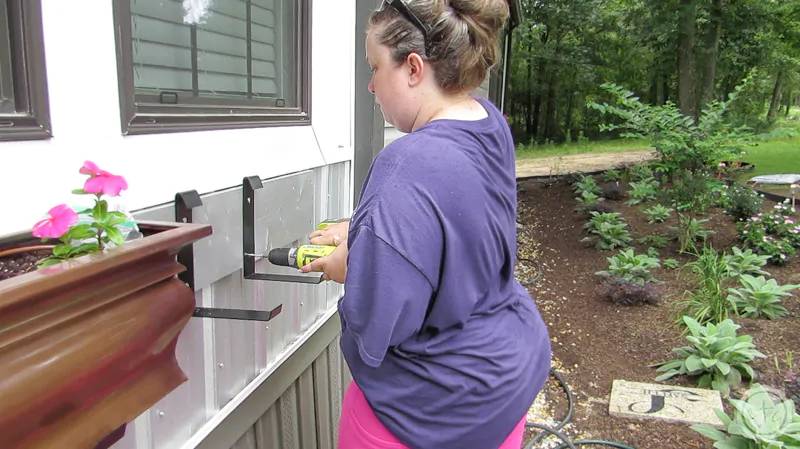
If the window flower box weighs 15 lbs. or more, secure drilling is a more appropriate option.
This process involves drilling into the vinyl and installing window box brackets for mounting the box.
To install boxes on surfaces with a stucco finish, mark the holes, then use a masonry drill bit to drill holes for the anchors or lag shields.
A spirit level helps ensure the mounting brackets are level.
Finally, secure the box by placing screws on the underside. The holes are pre-drilled, so you can directly insert the fasteners.
For homes with brick sidings, drill-free alternatives exist.
You can mount the boxes using construction-grade adhesives or clamps and gripping hooks.
Screws and fasteners hold heavier boxes much better than these methods.
Brackets vs Direct Mount
Bracket mounting reduces the weight on several points, which reduces the stress on the fasteners. Window box brackets also encourage proper airflow beneath the box.
They help moisture escape instead of sticking to the walls.
On the other hand, direct mounting fully relies on fastener quality and placement.
When installed correctly into the window frame, direct mounts maintain a cleaner appearance.
However, mistakes can manifest faster through sagging or loose boxes. Follow precise alignment and use strong anchors for this mounting technique.
Fastener Placement
Instead of using several fasteners, focus more on achieving excellent placement.
Well-placed fasteners can improve long-term stability.
Anchors placed too close together concentrate stress points, especially after watering.
Wider spacing spreads the load and reduces torque during heavy soil saturation.
Vertical alignment is also an important factor.
Fasteners should sit level with one another to prevent twisting forces. Mounting into the trim leads to gradual loosening, even when the hardware feels tight at first.
Leveling Strategy
Contrary to what you may believe, a perfectly level window box planter is often the cause of drainage problems.
That’s why it’s better to have a slight forward tilt to allow water to freely exit.
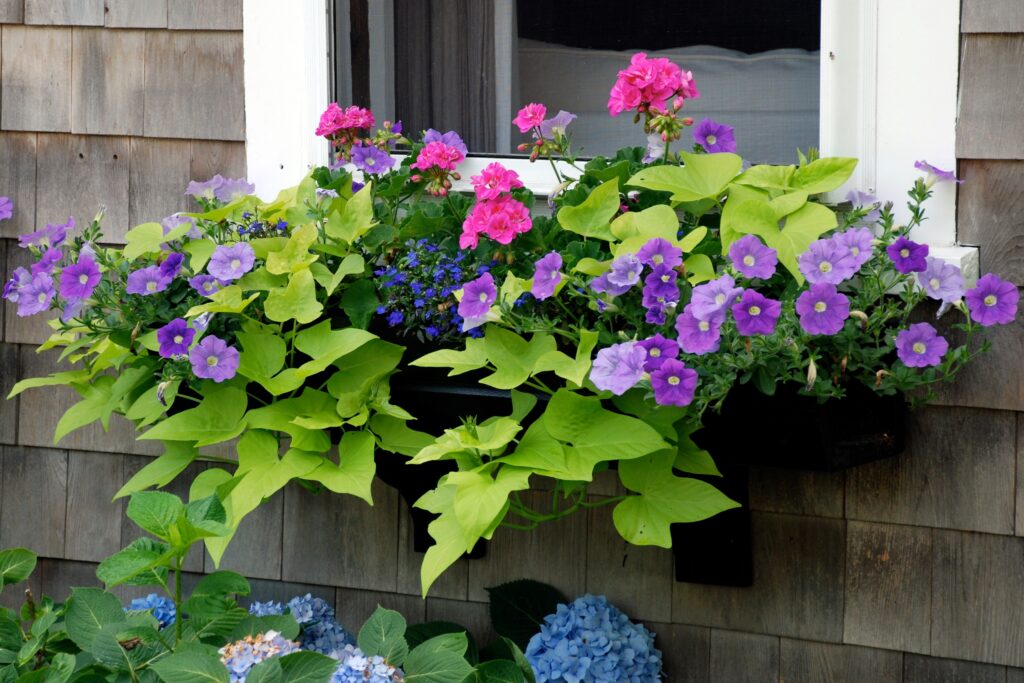
A slight angle is also subtle enough that it doesn’t add visual distraction once you fill the box with plants.
Shims help achieve this tilt without forcing brackets into awkward positions.
However, shims should never trap moisture against siding. Water absorption-resistant materials work best for long-term stability.
Load Distribution
Load distribution often gets ignored during window box installation, yet it determines how hardware performs under stress.
Unevenly filled boxes pull harder on one side, especially when taller plants are grouped together. Even planting spreads the weight and lessens anchor fatigue.
Longer boxes benefit from center support, even when end brackets feel sufficient.
Midpoint support prevents bowing and keeps soil settled evenly. Avoid skipping this step, as doing so shortens the lifespan of the box and its hardware.
Ensuring Proper Drainage
When planning a window box installation, always consider how the water drains. Drainage starts with the holes themselves, yet many boxes still get this part wrong.
A few well-sized holes release water faster than several tiny ones that clog easily with soil.
Some liners include a self-watering reservoir that releases water slowly to prevent waterlogging.
It typically comes in the form of a pipe that runs at the bottom of the box.
Placement matters just as much, since drainage holes drilled too close to edges weaken the box and may result in cracks.
Centered openings allow water to exit evenly without soaking the corners.
What goes inside the box affects drainage just as much as what’s drilled underneath.
Heavy garden soil compacts quickly and traps moisture around roots.
Container-specific mixes drain faster while staying light after watering. Skipping gravel layers also helps, since they often hold water instead of moving it out.
Water should leave the box without lingering near the wall.
Tight installations trap moisture against siding and trim, which leads to stains and soft spots. Remember, these boxes are also a part of your outdoor space.
That’s why a forward tilt matters for plant growth and house protection.
Wrapping Up
A window box installation becomes leagues easier when you know about proper mounting and drainage.
It’s quite simple if you follow the steps, prioritizing the ones that ensure security and protection of the box, plants, and your property.
Plan well and make sure you have all you need to successfully install this beloved home decor feature.