
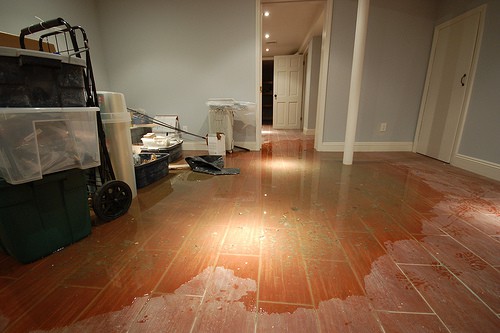
You mop up the obvious water, haul out a few soggy boxes, and think you’re in the clear.
Then, a week later, the house smells like a wet basement, and your breaker keeps tripping.
Welcome to the not-so-fun world of hidden water damage.
The tricky part is that moisture loves to travel and hide.
It wicks up drywall, slips under flooring, crawls into outlets, and camps out in ducts.
If you suspect the problem goes beyond towels and fans, flood damage restoration can save you weeks of frustration and prevent secondary damage by finding and drying what you can’t see.
Below are the subtle signals most people miss in the first days and weeks after a flood and how to confirm what’s really going on before it becomes a bigger, more expensive problem.
The “Almost Dry” Trap
Paint that blisters or faint brown “tide lines” a few inches (or feet) off the floor are classic clues. Run your hand along the wall.
Does it feel cooler than nearby surfaces? Tap it gently: a dull, papery sound can mean the gypsum core is soft.
Baseboards bowing or pulling away from the wall often means moisture is still behind them.
If you lightly score a caulk line and the blade comes out damp, that’s your sign.
What Your Feet Can Tell You
Hardwood that cups (edges higher than the center), laminate that crowns, or LVP planks that click and lift are red flags.
For tile, look for chalky white residue (efflorescence) along grout lines or hollow-sounding spots when you tap tiles with a knuckle.
Carpet can feel dry on top, but hide a swamp in the pad.
Press a paper towel deep at the edge where the carpet meets the baseboard.
If you see any wicking, that’s a clue that moisture is still present underneath.
Switches and the Breaker Panel
GFCIs that randomly trip, switches that feel gritty or stiff, and discolored outlet plates can point to corrosion inside the box.
If there’s any chance wiring got wet, don’t open panels or poke around, though. Instead, turn circuits off immediately and have a licensed electrician inspect.
Hidden electrical damage is not a “wait and see” kind of problem.
Sneaky Moisture Traps
A musty smell that appears the moment the HVAC system kicks on usually indicates damp dust in ducts or a wet return cavity.
Rust streaks on the furnace cabinet or a condensate line that starts clogging are all post-flood tells.
Change filters early and often as they load fast in damp homes.
Even if the flood never reached the attic, wind-driven rain often does.
Look for matted or clumped insulation (it should be fluffy) or faint daylight where it didn’t exist before.
Moisture can wick up inside wall cavities and show as ceiling stains days later.
A persistent earthy or “sweet” musty smell is the smoke alarm of moisture.
If your eyes itch or you start sneezing in one room more than others, that room deserves a closer look.
When Hidden Water Damage Requires Professional Help
Not all water damage can be dealt with surface drying and home cleaning methods.
It might be possible to dry the water and improve ventilation in minor cases. But ensuring all the moisture is extracted from behind the walls, underneath the flooring, or in the insulation materials requires specialized equipment.
Remember that untreated moisture can cause structural weakening and mold growth in just a matter of days.
This is when it’s time to involve a professional restoration franchise.
As they use commercial grade equipment for moisture detection, drying, and containment techniques etc., which is otherwise not available in a regular household.
In cases where the damage source is not apparent or has spread across several places, expert damage assessment is preferred to ensure the issue is fixed at its root source rather than have it masked temporarily. And restoration companies do just that.
Why Acting Fast Matters and How to Test Without Tearing Out Walls
Beyond health risks and structural headaches, the dollars add up quickly.
According to FEMA, just one inch of floodwater can cause roughly $25,000 of damage to a typical home.
That’s before you count the ripple effects of warped floors, moldy drywall, fried electronics, and a longer repair timeline when moisture lingers.
Here are some simple tests you can do if you’re unsure:
- Moisture meter: A basic pin-type meter is inexpensive and surprisingly useful. Check baseboard bottoms, drywall 6–12 inches above the floor, and subfloor near doors.
- Plastic wrap test: Tape a square of clear plastic to a suspect wall or slab. If condensation forms on the inside after 12–24 hours, you still have a moisture drive.
- Infrared thermometer: Damp spots often read colder than their surroundings. You don’t need a fancy camera to spot-check temperatures across a wall or floor and note cool anomalies.
- Edge checks: Lift a floor register or gently pry a quarter-inch of base shoe molding in an out-of-the-way corner. If it’s damp, assume the wet zone is wider than you think.
Bottom Line
Hidden water damage is a slow-burn problem.
It’s not immediately dramatic, but it can be costly and stubborn if you ignore it.
So, use your senses and a couple of simple tools, and don’t hesitate to escalate when the clues point to moisture hiding behind the scenes.
Catch it early, and you’re looking at a controlled, quicker recovery instead of a months-long mess.
If your home took on water and any of the signs above ring true, that’s the moment to bring in pros who can dry and document the problem before it grows.