

True minimalism isn’t about living in an empty, sad room.
It’s about keeping what actually matters to you, and hiding the rest so well you barely remember it’s there.
Without smart storage, just one stray remote or pile of mail can ruin that hard-won calm. And once the calm breaks, the whole room feels off.
Storage isn’t just practical; it’s the quiet engine that lets a room breathe.
It creates space, yes, but also peace. When everything has a hidden home, your eyes and mind finally get to rest.
Hidden vs. Displayed Storage
Before buying a single bin or basket, a critical distinction needs to be made.
Minimalism relies on a 90/10 rule: ninety percent of belongings should be hidden from view, while ten percent can be displayed as intentional art.
Open shelving is not a place to dump every book and trinket.
Open shelves are a stage. If a shelf looks like a garage sale, the whole room feels chaotic.
- Hidden storage is the backbone: Drawers, cabinets, ottomans with lids, and closed wardrobes keep life’s mess out of sight. This creates the visual silence necessary for minimalism.
- Display storage is an accent: A single floating shelf holding one ceramic vase and one small plant. A glass-front cabinet showing three matching bowls. That is display storage.
- The enemy is “surface clutter”: Kitchen counters, coffee tables, and nightstands must remain at least 80% clear. Every item left out demands attention. Storage removes that demand.
Harnessing External Solutions for a Fresh Start
Sometimes, a minimalist home starts outside, not inside.
Trying to shove every seasonal decoration, old paper, and dusty tool into your closets just leads to stuffed drawers and bulging cabinets. That ruins the whole look.
To keep things clean and calm indoors, the bulky stuff needs to go elsewhere.
Get it out, and you can finally breathe. For residents in Melbourne’s southeast, a practical solution is to rent Store Local self storage in Narre Warren for holiday decorations, camping gear, or off-season wardrobe items.
Removing these “once-a-year” objects from the home instantly frees up prime real estate in bedroom wardrobes and garage shelving.
- Seasonal rotation: Keep only the current season’s clothing and gear inside the home. The rest lives off-site.
- Sentimental overflow: Not every baby onesie or high school trophy needs a home closet. External units preserve memories without crowding daily life.
- Business supplies: Home offices stay minimalist by storing old invoices, extra product inventory, and backup equipment elsewhere.
Multi-Functional Furniture as Secret Agents
In a truly minimalist home, every piece of furniture works at least two jobs.
A coffee table that does nothing but hold a magazine is a wasted opportunity.
The most elegant minimalist spaces use furniture that contains hidden compartments or entire rooms of storage.
This keeps the floor plan open while multiplying hiding spots.
- Storage ottomans: Hide blankets inside a simple leather block.
- Platform beds: Drawers under the mattress replace bulky dressers.
- Entry benches: Lift the seat to stash shoes and leashes.
- Nesting tables: One slides under the other until guests arrive.
- Wall desks: Fold down to work, fold up to disappear.
Using Walls and Doors
Floors matter most in minimalist design.
Every empty square inch of floor space helps create a sense of calm. That’s why storage needs to climb upward.
Vertical storage pulls the eye up, makes ceilings feel higher, and rooms feel larger. The key is keeping it sleek and unbroken.
- Floor-to-ceiling cabinets: A single wall of simple, handleless cabinets in a living room or bedroom holds so much. The flat front becomes a peaceful backdrop.
- Door racks on closet doors: The inside of a closet door is perfect for shoes, cleaning supplies, or jewelry. Closed, you’d never know it’s there.
- Tall, narrow bookcases: Skip the wide, low media console. Go with a tall bookcase that has doors on the lower half. Upper shelves hold just two or three objects. Lower doors hide electronics and cords.
- Over-toilet shelving: In bathrooms, a slim cabinet above the toilet holds towels and toiletries, without cluttering the counter.
Grouping Small Items
Even inside a closed drawer or cabinet, things can still get messy.
Minimalism asks for order at every level. Opening a drawer to find tangled chargers, loose rubber bands, and random batteries creates hidden stress.
The fix is containers inside containers. Small bins, trays, and dividers turn a junk drawer into a calm grid of useful stuff.
- Drawer dividers for utensils and office supplies: Wood or acrylic dividers keep each category separate. No sliding, no mixing.
- Clear bins inside deep cabinets: In the kitchen, clear bins hold canned goods or snack packs. Pull out one bin instead of digging through a dark cave.
- Matching baskets on open shelves: If you must have open shelves, use identical woven baskets. They hide the mess while adding texture. Label them on the bottom, discreetly.
- Tray-based bathroom storage: A single ceramic tray on the counter holds just a soap pump and a toothbrush holder. Everything else lives inside the medicine cabinet or a vanity drawer.
The One-In-One-Out Rule
No storage system in the world can sustain a minimalist look if new items enter the home faster than old items leave.
Storage is not a void to be filled. It is a finite, peaceful container.
Once every drawer has a designated purpose and every shelf has breathing room, a strict discipline must take over.
The most effective rule for maintaining a minimalist home is simple: for every new item brought in, one similar item must go out.
- Clothes: Buy a new sweater. Donate an old one. The wardrobe never exceeds its designated drawer space.
- Books: Purchase a new novel. Sell or give away a read one. The bookshelf remains half-empty.
- Kitchen gadgets: Get a new air fryer. Recycle the old panini press that hasn’t been used in three years.
- Toys for children: A new birthday gift arrives. One old, broken toy goes to recycling. Kids learn boundaries.
- Digital clutter: Physical storage matters, but so does digital.
- Unsubscribe from junk mail. Delete old photos from the phone. A clear mind supports a clear home.
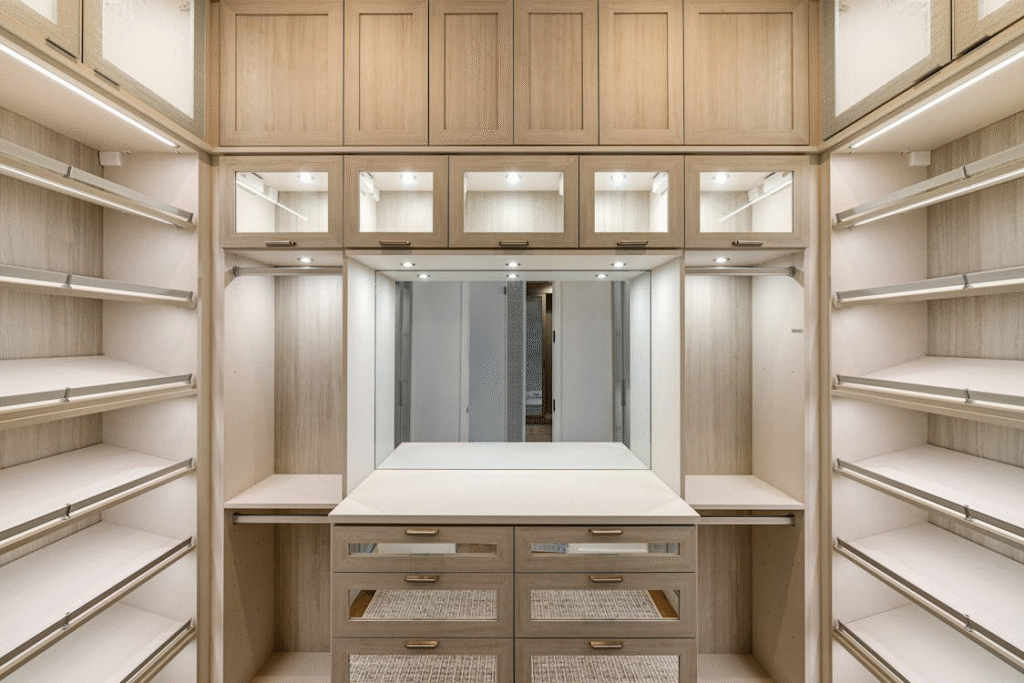
A minimalist home isn’t a frozen museum. It breathes, shifts, and lives with you.
Storage gives it bones, but the one-in-one-out rule builds the habit.
When every item has a hidden spot, anxiety settles. Your eyes rest. Your brain rests.
Minimalism isn’t about owning hardly anything; it’s about tucking away what you do need, neatly.
Start with smart storage, and calm just shows up on its own.