
Privacy is one of those things you don’t think about until you need it.
Maybe you’ve just moved into a new place and realized your neighbor can see directly into your living room. Or perhaps you’re working from home now and that big beautiful window suddenly feels a bit too exposed during video calls.
But here’s the thing. Most privacy solutions come at a cost, and I’m not talking about money.
Heavy drapes, solid shutters, thick blinds—they all block the very thing that makes a space feel alive: natural light.
The good news? You don’t have to choose between the two.
There are plenty of ways to create privacy while keeping your home bright and airy.
Some are simple tweaks you can do this weekend. Others might require a bit more planning. But all of them work.
Use Sheer Curtains for Soft, Filtered Privacy
This is probably the easiest place to start.
Sheer curtains are made from lightweight, semi-transparent fabric that diffuses light instead of blocking it completely.
During the day, they obscure the view into your home without making the room feel dark or closed in. You get a soft, filtered glow that feels almost ethereal.
At night, though, you’ll want to layer them with something heavier if you’re after complete privacy.
The nice part about sheers is how flexible they are.
You can hang them on their own for a minimal look, or pair them with heavier curtains that you can draw when needed.
White and cream are the usual choices, but you can find them in soft grays, blush tones, or even subtle patterns.
Voile is a particularly popular type of sheer fabric.
Curtains like https://www.terrysfabrics.co.uk/collections/voile-made-to-measure-curtains filter sunlight gently without making a room feel closed off.
They’re breathable, light, and work well in living rooms, bedrooms, or anywhere you want that balance between openness and seclusion.
One tip: hang them wider than your actual window frame. That way, when they’re open, they don’t block any light. It’s a small detail that makes a real difference.
Install Frosted Window Film
If curtains aren’t your thing, frosted window film is worth considering.
It’s a vinyl film that sticks directly onto your glass, creating a translucent surface that lets light through but blocks the view.
I’ve seen this used in bathrooms, front doors, street-facing windows, and even office spaces at home.
The application is straightforward—most films are peel-and-stick or applied with a bit of soapy water.
You can remove them later without damaging the glass, which is great if you’re renting.
There are different opacity levels, too.
Some films are completely opaque, while others just blur the view slightly.
You can also get decorative patterns—geometric designs, gradients, or frosted bands that cover only part of the window.
One thing to watch: cheap films can look plasticky up close.
If you’re doing a prominent window, it’s worth spending a bit more for something that looks like actual etched glass.
Add Top-Down Bottom-Up Shades
These are brilliant, and I wish more people knew about them.
Most blinds operate from the top down.
You pull them up from the bottom, which means you either expose the whole window or cover it completely.
Top-down bottom-up shades let you lower the shade from the top or raise it from the bottom. Or both at once.
So you can keep the lower half of your window covered for privacy while letting light pour in from the top.
Perfect for ground-floor rooms, bathrooms, or anywhere you’re close to foot traffic but still want that daylight.
They come in different materials—cellular shades, roller shades, even Roman shades.
I’d lean toward cellular if energy efficiency matters to you.
They trap air in their honeycomb structure, which helps with insulation.
Installation is the same as standard shades, so it’s not a complicated upgrade. Just measure carefully.
Incorporate Indoor Plants Near Windows
This one’s a bit more organic. Literally.
Tall plants placed strategically near windows can act as a natural screen.
They break up sightlines from the outside without blocking too much light, especially if you choose plants with airy foliage.
Fiddle leaf figs, bird of paradise, monstera, bamboo palms—these all work well.
You can cluster a few smaller plants on a shelf or windowsill, or go for one statement plant in a big pot on the floor.
The height and density matter here.
If privacy is your main goal, pick something that grows tall and full.
If it’s more about softening the view, something lighter and more delicate will do.
And yes, this only works if you’re willing to keep them alive.
Low-light tolerant varieties like pothos or snake plants are more forgiving if your thumb isn’t particularly green.
But beyond privacy, plants just make a room feel better.
There’s research showing they can reduce stress, improve air quality, and boost your mood.
Not bad for something that also happens to look good.
Try Light-Filtering Roller Shades
Roller shades get overlooked because they seem basic. But the right fabric can give you privacy and light at the same time.
Light-filtering roller shades are made from fabrics that are woven loosely enough to let daylight through, but tight enough that you can’t see through them clearly.
They soften the harshness of direct sun and give you coverage without the cave-like feeling of blackout shades.
They’re clean, minimal, and work in pretty much any room.
You can get them in dozens of colors and textures—linen-look, woven, sheer, or solar fabrics that reduce glare and UV exposure.
Some are motorized now, which is genuinely useful if you have high windows or just want to automate your shades based on time of day.
A bit of an investment, sure. But the convenience is real.
One consideration: light-filtering doesn’t mean blackout.
If you need complete darkness for sleep, you’ll want a different solution or a dual-shade system.
Install Glass Block Windows in Select Areas
Glass blocks might feel a bit retro, but they’re making a comeback—and for good reason.
They let in plenty of light while completely obscuring the view.
You literally cannot see through them. That makes them ideal for bathrooms, basements, street-facing walls, or anywhere privacy is non-negotiable but you still want natural light.
Modern glass blocks come in different patterns and finishes.
Some are clear with wavy textures, others are frosted or tinted.
You can install them as a full window, a partial wall, or even as an accent within a larger window opening.
The downside? They don’t open.
So you lose ventilation unless you incorporate operable windows elsewhere or use glass block vents, which do exist but aren’t common.
Installation isn’t a DIY job for most people.
They’re set in mortar, similar to brick or tile, so you’ll want someone experienced to handle it. But once they’re in, they’re durable, low maintenance, and surprisingly effective at soundproofing.
Use Sliding Panels or Room Dividers
Sometimes the privacy issue isn’t about windows at all.
It’s about internal sightlines—open floor plans, home offices visible from the living room, or bedrooms that open directly onto common areas.
Sliding panels and room dividers can create separation without walls. And if you choose materials like sheer fabric, frosted acrylic, or slatted wood, light can still pass through.
Japanese-style shoji screens are a classic example.
Rice paper panels in wooden frames let diffused light through while dividing a space.
There are modern versions made with acrylic or fabric that are more durable and easier to clean.
Sliding track systems let you open or close sections as needed.
You can use them to hide a closet, separate a workspace, or create a temporary guest room.
I’ve seen people use tall bookcases, open shelving units, or even hanging plants on ceiling tracks. The key is that it doesn’t have to be solid.
Partial coverage often does the job while keeping things feeling open.
Upgrade to Textured or Reeded Glass
If you’re renovating or replacing windows, consider textured glass instead of standard clear panes.
Reeded glass, fluted glass, ribbed glass—they all have vertical or horizontal patterns that distort the view while letting light through beautifully.
Rain glass has a texture that looks like water running down it.
Seeded glass has tiny bubbles trapped inside.
These are particularly nice in front doors, sidelights, interior doors, or cabinet fronts. They add visual interest and privacy at the same time.
Textured glass works well in modern and traditional homes.
The key is matching the style of texture to your overall aesthetic. Reeded glass feels a bit Art Deco. Frosted is more minimalist.
Seeded leans cottage or farmhouse.
If you’re replacing existing glass, check whether it’s possible to swap just the pane or if you need a whole new door or window unit.
Sometimes it’s easier than you’d think.
Position Outdoor Privacy Features Strategically
Your privacy solution doesn’t always have to be on the window itself. Sometimes it’s smarter to create a barrier outside.
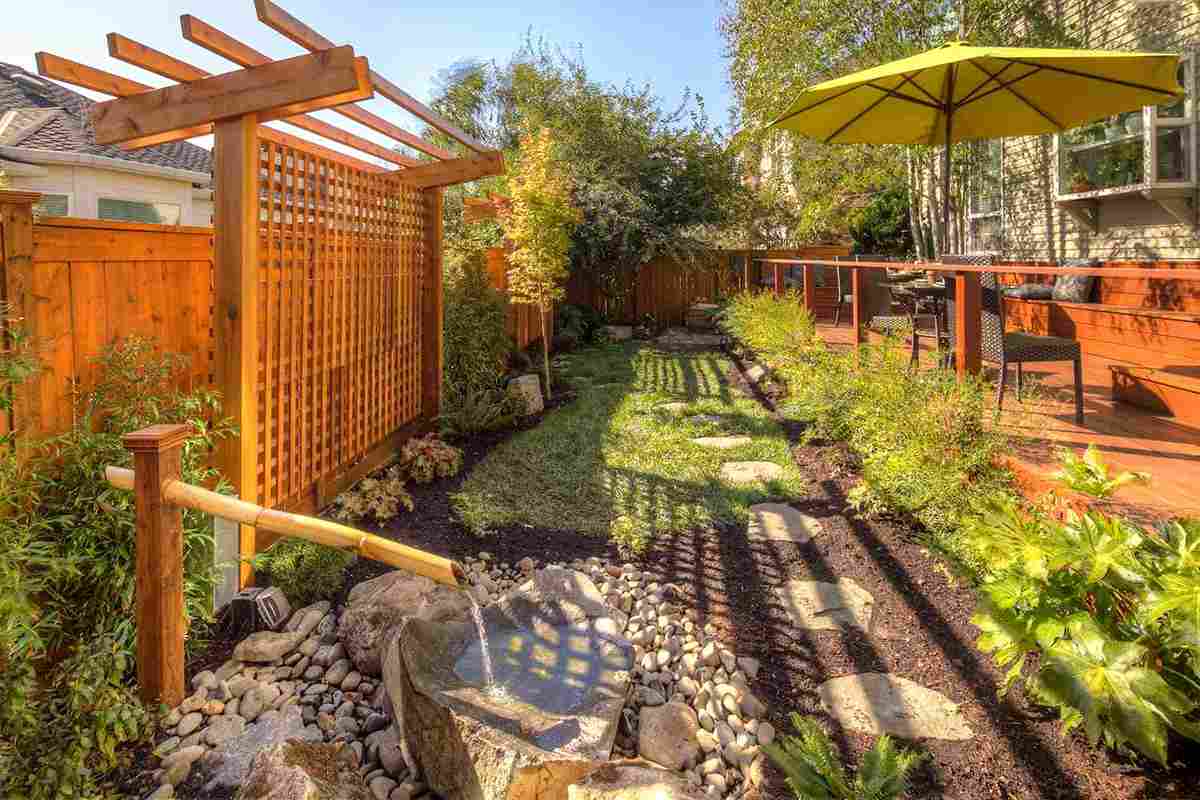
Hedges, tall grasses, trellises with climbing plants, privacy screens on a balcony or patio—these can all block sightlines from neighboring properties or the street without touching your windows at all.
The advantage here is that your windows stay completely clear.
You get full, unfiltered daylight. The privacy comes from thoughtful landscaping or outdoor structures.
Evergreen hedges work year-round. Deciduous plants give you summer privacy and winter light. Bamboo grows fast but can be invasive if not contained.
Lattice panels with vines are a good middle ground.
If you’re in an apartment or rental, large planters with tall shrubs or ornamental grasses on a balcony can do the trick.
Outdoor curtains or retractable screens are another option, though they need to withstand weather.
Just think about maintenance. Plants need trimming.
Screens need cleaning. But if you’re willing to do the upkeep, this approach often looks the most natural.
Rearrange Furniture to Create More Seclusion
This costs nothing and you can do it right now.
Sometimes just shifting a bookshelf, a console table, or even a sofa can change how exposed a room feels.
Tall furniture near windows can act as a partial screen without blocking light from above.
I worked on a project once where the client was convinced they needed new window treatments.
Turned out, just moving a large plant and a narrow bookshelf in front of the lower half of the window solved the problem.
Light still came in from the top, and the view from outside was blocked.
Think about sightlines from outside, not just inside.
Walk around your property or stand where a neighbor or passerby would be.
See what’s actually visible. You might find that privacy is only an issue from one specific angle, which is much easier to address.
Layering helps, too. A chair, a side table, a lamp, and a plant arranged near a window create visual depth that naturally obscures the view without feeling like a barrier.
It’s not always the answer, but it’s worth trying before you spend money on something else.
Conclusion
You really don’t have to choose between light and privacy.
The trick is understanding that privacy isn’t all-or-nothing.
You don’t need blackout conditions to feel comfortable in your own home.
Softening the view, blurring the sightlines, or blocking just part of a window can be enough.
Start with the simplest solutions first. Sheer curtains, a tall plant, rearranging furniture—these take almost no time or money.
If those don’t do it, then consider films, shades, or textured glass.
And remember, different rooms have different needs.
Your bedroom might need more coverage at night, while your living room just needs a bit of daytime screening.
Layering solutions gives you flexibility.
The goal isn’t perfection.
It’s making your space feel like yours—bright, comfortable, and private enough that you can actually relax.