
Alright, let’s talk about air quality in rental properties. And listen, if you own rental units, you’ve probably gotten that call.
Tenant says they’re sneezing all the time, their kid’s got allergies acting up, or they swear there’s something wrong with the air.
And here’s the thing—they’re probably right.
Most landlords, they’re reactive. Something breaks, you fix it. But air quality? That’s different. You can’t see it breaking. You just get complaints, maybe a tenant moves out early, leaves a bad review. And by then, you’re already losing money.
So today i’m breaking down duct cleaning versus filtration. Which one actually moves the needle on air quality? When do you spend money on each? And honestly, when can you skip one entirely?
Because here’s what nobody tells you—sometimes you’re wasting money on the wrong fix.
Understanding Indoor Air Quality in Rental Properties
Okay, first things first. What are we even talking about when we say “air quality”?
It’s basically what your tenants are breathing. And in rental homes, it gets messy fast. You’ve got dust, pet dander if they have animals, mold spores if there’s any moisture issues, sometimes pollen, sometimes just regular dirt tracked in.
Older buildings? Forget about it. They’ve got years of buildup in the ducts. And if the previous tenant smoked or had three cats, that stuff doesn’t just disappear when they leave.
Now here’s where it gets tricky for landlords. You’ve got a legal responsibility in most states to provide habitable housing. And yeah, that includes breathable air. But the standards? They’re vague. Really vague.
So you’re stuck trying to figure out: do i clean the ducts? Do i just upgrade the filter? Do i do both?
Most property managers i’ve talked to, they just throw a cheap filter in there and call it done. And look, i get it. You’re trying to keep costs down. But that approach? It bites you later.
Professionals recommend changing an HVAC filter every 90 days to prevent it from becoming a host for pet dander and mold spores. Besides, poor air quality gets frustrating for tenants.
And frustrated tenants? They move out. They complain. They call code enforcement. Suddenly that $30 filter you skipped is costing you thousands in vacancy.
What Is Proactive Duct Cleaning?
So let’s get into duct cleaning. What is it actually?
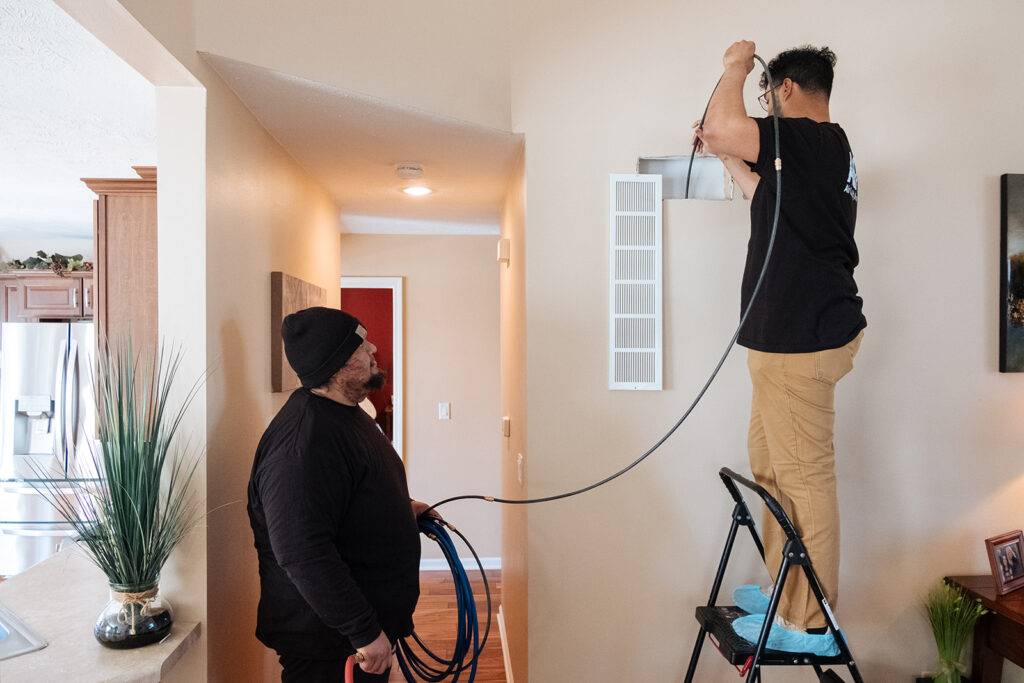
You’re basically vacuuming out your entire duct system. Professionals come in with these big hoses, they go through every vent, every return, the main trunk lines. They’re pulling out dust, debris, sometimes dead bugs. Sometimes worse things, trust me.
Good duct cleaning takes a few hours. They’ll seal off the vents, create negative pressure, and suck everything out. Some companies also do sanitizing after, which is basically spraying an antimicrobial in there.
Now, does it work? Yeah. Absolutely. When it’s needed.
But here’s the catch—it’s not always needed.
I was talking to a guy last week who owns four rental units. He was getting duct cleaning done every single year on all of them. Spending close to $400 per unit. And i asked him, “why? Who told you to do that?”
Turns out nobody told him. He just assumed that’s what you do.
That’s $1,600 a year he didn’t need to spend. Because unless you’ve got specific problems—visible mold, vermin infestation, major renovation dust—annual cleaning is overkill.
Most homes? Every three to five years is plenty. And some homes never need it at all if you’re managing filtration properly.
Understanding Air Filtration Systems
Alright, now filtration. This is where most landlords should actually be spending their attention.
Your HVAC filter is doing the daily work. It’s catching stuff before it even gets into the ducts. And the better your filter game is, the less often you need cleaning.
Filters come in different ratings. You’ve got your basic fiberglass ones, maybe $3 each. They catch big stuff. That’s about it.
Then you’ve got pleated filters, usually MERV 8 to MERV 11. These are catching smaller particles—dust mites, pollen, mold spores. They’re better. Not expensive either, maybe $15 to $25.
Then there’s the high-end stuff. MERV 13 and up, HEPA filters. These catch almost everything. But—and this is important—they can also restrict airflow if your system isn’t designed for them.
I learned this the hard way on one of my properties. Put in a MERV 13 filter thinking i’m doing my tenant a favor. Three months later, the system’s working overtime, efficiency drops, and my utility bill goes up because the tenant’s cranking the thermostat.
So you’ve got to match the filter to your system. Check your HVAC manual. It’ll tell you the max MERV rating it can handle.
And here’s the thing most people miss—the filter only works if you change it.
A clogged filter is worse than a cheap filter. Because now your system is pulling air around the filter through any gap it can find. You’re getting dust blown back into the house, your system’s working harder, and you’re not filtering anything.
Duct Cleaning vs. Air Filtration: Which Has a Greater Impact?
Okay, so which one actually matters more?
Honestly? Filtration wins. And it’s not even close for most situations.
Here’s why. Your filter is working 24/7. Every time the HVAC runs, air is moving through that filter. If it’s a decent filter and you’re changing it regularly, you’re catching problems before they become problems.
Duct cleaning? That’s a one-time thing. You clean it, it’s clean for a while, but then dust starts accumulating again. And if you’re not filtering properly, it just fills back up faster.
Think of it like this. Duct cleaning is like deep-cleaning your house once a year. Filtration is like sweeping every day. Which one keeps your house cleaner?
Now that said, there are times when duct cleaning is absolutely necessary. But we’ll get to that.
The other reason filtration wins? Cost. You’re spending maybe $100 a year on filters if you’re changing them quarterly. Duct cleaning is $300 to $500 every time you do it.
So for regular maintenance, for preventing problems, for keeping tenants happy—filtration is your answer.
But here’s where people mess up. They think it’s either/or. Sometimes you need both. And knowing when is the whole game.
When Duct Cleaning Is the Better Choice
Alright, so when do you actually need to clean those ducts?
First scenario: you just bought the property and you have no idea what the previous owner did. Maybe they had pets. Maybe they never changed a filter. Maybe there was water damage at some point.
Get the ducts inspected. Sometimes you can just pop off a vent cover and shine a flashlight in there. If you see visible dust buildup, like thick layers, or if you see mold, or if it smells funky—yeah, clean it.
Second scenario: you had a major renovation. Anytime you’re doing construction, drywall dust gets everywhere. I mean everywhere. And if the HVAC was running during construction? Your ducts are full of it.
I’ve seen this destroy HVAC systems. That fine drywall dust, it gets in the blower motor, it coats everything, it’s a nightmare.
So after any serious renovation, get those ducts cleaned. Not optional.
Third scenario: vermin. If you’ve had mice or rats in the ductwork, you need professional cleaning. And probably sanitizing. Because it’s not just the droppings, it’s the smell, it’s the bacteria. Tenants will notice.
Fourth scenario: mold. If you’ve had water intrusion, if you’ve got mold growing in the ducts, cleaning is mandatory. But here’s the thing—you’ve also got to fix the moisture problem or it comes right back.
I knew a landlord who kept cleaning mold out of the ducts every year. Finally figured out there was a tiny roof leak dripping into the attic right above the main trunk line. Fixed the leak, mold never came back.
So yeah, duct cleaning has its place. But it’s for specific problems, not routine maintenance.
When Upgraded Filtration Is the Better Choice
Now let’s talk about when filtration is your move.
Basically, for everything else.
If you’ve got tenants with allergies, upgrade the filter. Go to a MERV 11, maybe MERV 13 if your system can handle it. It makes a real difference. And happy tenants stay longer.
If you’re in an area with high pollen or near a busy road with lots of dust, better filtration helps. You’re preventing that stuff from getting into the system.
If your tenants have pets, definitely better filtration. And honestly, you should be changing filters more often. Maybe every 60 days instead of 90.
Here’s something i started doing: i buy filters in bulk and leave two or three in the utility closet with a note on when to change them. Some tenants actually do it themselves if you make it easy.
Saves me a trip. Saves them a service call. Everybody wins.
The other time to upgrade filtration? If your property is older and the ductwork isn’t sealed great. Older systems, they’ve got leaks. You’re never getting perfect filtration. But a better filter at least catches more of what does go through the system.
Also—and this is something i wish i’d known earlier—if you’ve got a rental in a humid area, get filters that have antimicrobial coating. Costs a couple bucks more. Prevents mold growth on the filter itself.
Because yeah, that happens. Filter gets damp, mold grows on it, now you’re blowing mold spores through the house. Tenant calls, complains about smell, you’ve got a problem.
Cost Comparison
Alright, let’s talk money. Because that’s what it comes down to for most landlords.
Duct cleaning: you’re looking at $300 to $500 per property for a standard cleaning. If you need sanitizing, add another $100. If you’ve got a big house with a complex system, could be $600 or more.
And you’re doing this maybe once every three to five years. So annualized, that’s $60 to $165 per year.
Filtration: cheap filters are $3 each. You need four per year. That’s $12. But those barely do anything.
Decent pleated filters, MERV 8 to 11, run $15 to $25 each. Four per year, you’re at $60 to $100.
High-end filters, MERV 13 or specialty ones, maybe $30 to $40 each. Four per year, $120 to $160.
So even with premium filters, you’re spending less annually than if you were doing regular duct cleaning.
But here’s the real math. Tenant turnover costs you way more than either of these. One month of vacancy? That’s $1,500, $2,000, maybe more depending on your market.
If better air quality keeps a tenant in place for an extra year, you’ve paid for a decade of filters.
And here’s the other thing nobody talks about—your HVAC system lasts longer when you filter properly. Those systems are expensive to replace. We’re talking $5,000, $8,000, sometimes $10,000 for a full replacement.
If good filtration adds even one year to your system’s life, you’ve made your money back ten times over.
Also, hiring a local Prince George County property manager can help you stay on schedule for your inspections and maintenance needs.
Because let’s be honest, if you’ve got multiple properties, it’s hard to remember when filters need changing. Property managers track this stuff. They schedule it. It gets done.
Conclusion
Okay, so here’s what you need to remember.
Filtration is your primary defense. Good filters, changed regularly, prevent most air quality problems before they start. This should be your default strategy.
Duct cleaning is for specific situations. After renovations, after you find mold or vermin, when you buy a property with unknown history. It’s not routine maintenance for most homes.
Don’t waste money on annual duct cleaning if you don’t need it. But absolutely do not cheap out on filters.
And if you’re getting tenant complaints about air quality, start with the simple stuff. When was the filter last changed? Is it the right type? Is there moisture anywhere causing mold?
Most air quality problems in rentals? They’re fixable with better filtration and regular maintenance.
The properties i manage now, i’ve got a system. Filters changed every 90 days, i keep spares on site, and i do duct inspections every few years. Problems are rare. Tenants are happy.