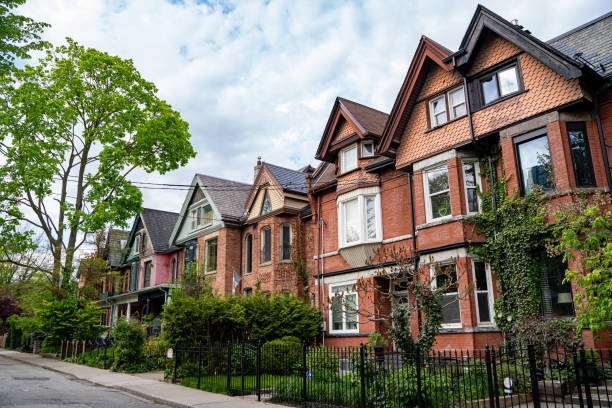
Few property styles capture buyer attention quite like Victorian and Edwardian homes.
Across Melbourne’s established suburbs, these properties continue to command strong interest from buyers seeking character, craftsmanship, and architectural charm.
Decorative facades, ornate ceilings, timber detailing, stained glass windows, and generous proportions create a sense of uniqueness that many modern homes struggle to replicate.
Their appeal is understandable.
These homes have often survived for more than a century.
They occupy some of Melbourne’s most desirable locations and represent an important part of the city’s architectural history.
Yet age introduces complexities that buyers, investors, and homeowners cannot afford to ignore.
The reality is that Victorian and Edwardian homes tend to experience a recurring set of building issues.
Many are manageable. Some are expensive. Most develop gradually over decades rather than appearing suddenly.
Understanding these patterns is often the difference between appreciating a property’s character and underestimating its maintenance requirements.
The Strengths and Weaknesses of Heritage Construction
One of the reasons Victorian and Edwardian homes remain so desirable is the quality of many original building materials.
Old-growth timber, solid brick construction, handcrafted detailing, and traditional construction methods have helped many of these properties endure for generations.
However, longevity should not be confused with immunity.
Every building system has a lifespan.
A useful observation from experienced property professionals is this:
“The fact that a building has survived 100 years does not mean its components are still performing as they did 100 years ago.”
The structure may remain fundamentally sound while individual elements require substantial repair, replacement, or modernisation.
Rising Damp Remains One of the Most Persistent Problems
Among the most common issues found in Victorian and Edwardian homes is rising damp.
Many of these properties were constructed before modern damp-proofing systems became standard practice.
Over time, moisture can migrate upward through masonry walls, carrying salts and causing deterioration.
Common symptoms include:
- Bubbling paint
- Crumbling plaster
- Salt deposits on walls
- Persistent damp odours
- Internal wall staining
The challenge is that rising damp often develops slowly.
Homeowners may adapt to its presence without fully appreciating the long-term impact it can have on internal finishes and structural materials.
For buyers, identifying moisture-related issues early can prevent significant remediation costs later.
Subfloor Ventilation and Moisture Build-Up
Many heritage homes were built with suspended timber floors supported by subfloor spaces.
When ventilation beneath these floors becomes restricted, moisture accumulation can occur.
Over time this may contribute to:
- Timber decay
- Mould growth
- Elevated humidity
- Pest activity
- Flooring movement
Interestingly, subfloor issues are rarely visible during casual property inspections.
Buyers often focus on polished floorboards while overlooking the conditions beneath them.
Yet the health of the subfloor frequently influences the performance of the entire structure.
Foundation Movement and Reactive Soil Conditions
Melbourne’s reactive clay soils present challenges for properties of all ages, but heritage homes are often particularly susceptible.
Seasonal moisture fluctuations can cause soil movement beneath foundations.
Over time, this may result in:
- Cracking in walls
- Uneven flooring
- Door and window alignment issues
- Movement around decorative plasterwork
One of the industry’s recurring misconceptions is that all cracks indicate serious structural failure.
In reality, many older homes experience some level of movement without significant structural risk.
The important question is not whether movement exists.
The important question is whether movement is ongoing, progressive, or indicative of broader foundation concerns.
Roofing Problems Often Develop Gradually
Victorian and Edwardian homes frequently feature complex roof structures that include valleys, chimneys, decorative elements, and older drainage systems.
While visually appealing, these features create additional maintenance requirements.
Common roofing issues include:
- Deteriorated flashing
- Rusted valleys
- Broken roof tiles
- Failing mortar pointing
- Blocked gutters
The difficulty is that roof defects often remain hidden until water intrusion becomes visible inside the property.
By that stage, secondary damage may already have occurred.
A small roof issue can eventually affect insulation, ceilings, timber framing, and internal finishes.
Outdated Electrical Infrastructure
One of the least visible risks within heritage homes is electrical infrastructure.
Many properties have undergone partial upgrades over the decades, creating a patchwork of old and new systems.
Potential concerns include:
- Ageing wiring
- Older switchboards
- Non-compliant modifications
- Insufficient circuit protection
The challenge is that electrical systems often continue functioning despite being outdated.
This can create a false sense of security.
Operationally, electrical infrastructure is similar to plumbing.
Its importance only becomes obvious when something goes wrong.
The Renovation Layer Effect
Victorian and Edwardian homes have often passed through multiple owners and multiple renovation cycles.
This creates what many inspectors informally describe as a renovation layer effect.
Each generation adds its own modifications.
Bathrooms are updated.
Kitchens are renovated.
Walls are removed.
Extensions are added.
The result is that some properties contain a mixture of building standards spanning decades.
One renovation may have been completed exceptionally well.
Another may not.
This creates an interesting contradiction.
The newest part of the property is not always the lowest-risk part of the property.
In many cases, the original construction may prove more reliable than poorly executed modern alterations.
Termite Activity in Timber Structures
Although termites are often associated with warmer climates, heritage homes can still be vulnerable.
The extensive use of timber throughout Victorian and Edwardian construction creates opportunities for pest activity, particularly when moisture issues are present.
Timber framing, flooring systems, roof structures, and decorative elements can all be affected.
Because termite damage frequently develops out of sight, it often remains undetected until substantial deterioration has occurred.
This is one reason many buyers commission a professional building and pest inspection Melbourne property experts recommend before proceeding with a purchase.
The objective is not simply to identify visible damage but to assess hidden risks that may not be apparent during open homes.
Heritage Features Often Require Specialist Maintenance
One of the less discussed realities of heritage home ownership is that repairs are not always straightforward.
Decorative plasterwork, original timber windows, heritage facades, stained glass, and period detailing often require specialised trades and materials.
This creates a practical commercial consideration.
Repairing heritage elements can be more expensive than replacing modern equivalents.
Owners are often balancing preservation with practicality.
The decision is rarely purely financial.
It involves lifestyle preferences, heritage considerations, and long-term property value.
Why Buyers Often Underestimate Ownership Costs
The emotional appeal of heritage homes is powerful.
Buyers imagine restored fireplaces, polished timber floors, and beautifully renovated living spaces.
What they often underestimate is the maintenance ecosystem that supports those features.
A useful insight frequently shared by experienced property investors is:
“Character creates emotional value. Maintenance determines financial value.”
The most successful owners of Victorian and Edwardian homes understand both sides of that equation.
They appreciate the property’s character while budgeting realistically for ongoing upkeep.
Final Thoughts
Victorian and Edwardian homes remain among Melbourne’s most desirable property types for good reason.
Their architectural character, craftsmanship, and location continue to attract buyers who value homes with personality and history.
However, age brings predictable challenges.
Rising damp, subfloor moisture, foundation movement, roofing issues, ageing infrastructure, renovation inconsistencies, and termite activity are recurring themes across Melbourne’s heritage housing stock.
A professional building and pest inspection Melbourne service can help buyers move beyond appearance and better understand the condition of the property before making a commitment.
Because when it comes to heritage homes, the most important question is rarely whether the property has character.
The more important question is how well that character has been maintained over the past century.