
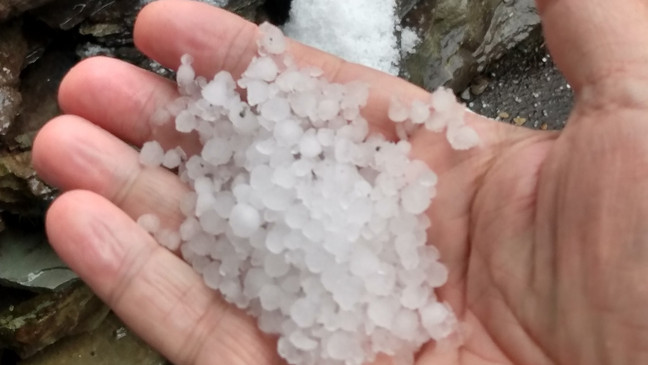
Okay, so spring in most parts of the country means flowers and sunshine and all that nice stuff. But if you live anywhere that gets real weather, you know spring also means hail season. And I’m not talking about those little ice pellets that bounce off your car.
I mean the kind that can punch holes in your siding, crack your windows, and turn your roof into swiss cheese.
I’ve been writing about homes for over 15 years now, and let me tell you, some of the worst damage I’ve seen wasn’t from hurricanes or tornadoes.
It was from hailstorms that people just didn’t see coming. Or worse, they saw it coming and figured, eh, what can I really do about it?
Turns out, quite a bit actually.
So yeah, we’re going to walk through how to actually get your house ready before those storms roll in. Because trust me, the time to figure this stuff out is not when you’re watching golf ball-sized hail bouncing off your driveway.
8 Ways To Prepare for Hailstorms in Spring
Look, I’m not going to tell you that you can make your house hail-proof. That’s not a thing.
But you can definitely make it hail-resistant, and more importantly, you can avoid a lot of the secondary damage that happens when hail finds the weak spots in your property.
Here’s what actually works.
Inspect and Strengthen Your Roof
Your roof is basically the first line of defense, right? So it makes sense to start there.
Walk around your house and look up. I know that sounds too simple, but most people never actually look at their roof until something goes wrong.
What you’re looking for are missing shingles, ones that are curling up at the edges, or spots where the granules are worn down.
Those granules are what protect your shingles from impact, so if they’re gone, you’re in trouble.
If you’ve got an older roof, like 10 or 15 years old, you might want to get someone up there who actually knows what they’re looking at.
Not every roofer is going to give it to you straight, so find someone you trust. Or better yet, someone your neighbor trusts who did good work.
Now, if your roof is showing its age, you might consider upgrading to impact-resistant shingles.
They’re rated for hail, class 4 usually, and yeah they cost more upfront. But depending on where you live, your insurance company might give you a break on your premium. Might. You have to ask.
Some people go with metal roofs thinking they’re bulletproof, and they’re pretty tough, but here’s the thing, they dent.
They’ll keep the water out, sure, but cosmetically? They can look rough after a good storm. Just something to think about.
Clean Gutters and Downspouts Before Storm Season
All right, gutters. Nobody likes cleaning gutters. I get it.
But clogged gutters mean water backs up, and when hail hits and you’ve got water pooling on your roof or overflowing everywhere, you’re asking for problems.
Water damage, ice dams if it’s still cold, foundation issues if it’s all draining wrong.
So get up there, pull out the leaves and the dirt and whatever else is living in there. And while you’re at it, check that your downspouts are actually pointed away from your foundation.
I’ve seen downspouts that drain right next to the house, which is basically the worst thing you can do.
If you really hate the whole gutter cleaning thing, gutter guards might be worth it.
They’re not perfect, but they cut down on how often you have to deal with it.
Protect Windows and Glass Doors
Windows are expensive to replace. Like, really expensive if you’ve got those big picture windows or sliding glass doors.
Hail can crack or shatter glass pretty easily, especially if it’s coming in at an angle with wind behind it. So what do you do?
Storm shutters are the gold standard if you want real protection. But let’s be real, not everyone has storm shutters just sitting around, and installing them isn’t exactly a weekend project for most people.
Impact-resistant window film is a cheaper option.
You can put it on yourself, and it won’t stop every piece of hail, but it does hold the glass together if it breaks.
That means less glass flying around inside your house, which matters if you’ve got kids or pets.
Some folks use plywood boards if they know a storm is coming, but honestly, unless you’ve got them pre-cut and ready to go with a way to mount them fast, you’re probably not going to get them up in time.
Oh, and here’s something people forget: close your curtains or blinds.
I know it sounds silly, but that extra layer does help cushion the impact a bit. Not much, but every little bit counts.
Move Vehicles and Outdoor Equipment to Safety
If you’ve got a garage, use it. I know, I know, your garage is full of stuff.
Everyone’s garage is full of stuff.
But a car repair from hail damage is going to run you way more than whatever you’ve got stored in there is worth. Seriously, hail can total a car if it’s bad enough.
Dents all over the hood, the roof, the trunk, broken windows, it adds up fast.
No garage? See if you can park under a carport, a sturdy tree, an overpass, anything with a roof.
Even a thick tarp over your car can help, though you need to secure it really well or it’s just going to blow away.
And while you’re thinking about your car, grab everything else that’s outside.
Patio furniture, grills, kids’ toys, potted plants, all of it. Hail turns lightweight stuff into projectiles, and projectiles break windows.
Your AC unit and outdoor HVAC equipment, those are sitting ducks.
You can buy hail guards for them, these metal grates that go over the top.
They’re not super expensive and they can save you from replacing damaged coils or fans.
Trim Trees and Remove Hazardous Branches
Trees are great until they’re not.
A healthy tree can usually handle a hailstorm okay, but dead branches or limbs that are already cracked? Those are coming down.
And when they come down, they’re going to hit your roof, your car, your fence, whatever’s in the way.
Walk your property before storm season really kicks in.
Look for branches hanging over your house or your driveway.
Look for dead wood, you can usually tell because it doesn’t have leaves or the bark is falling off.
If you’ve got big trees, like the kind where you’d need a ladder and a chainsaw to deal with them, hire someone.
Tree work is dangerous, and it’s not worth the risk.
A good tree service will come out, look at what you’ve got, and tell you what actually needs to be removed.
Some people want to take down every tree near their house, but that’s overkill.
Mature, healthy trees actually provide some protection from wind and small hail. It’s the problem branches you need to worry about.
Prepare an Emergency Supply Kit
Okay, so this one isn’t about protecting your house from damage, it’s about protecting you and your family during and after the storm.
An emergency kit helps you stay prepared if a hailstorm leads to power loss or limits access to supplies. Because here’s what happens: hail comes through, knocks out power lines, maybe damages part of your roof, and suddenly you’re stuck without electricity and possibly with water coming in.
Your kit should have the basics.
Water, at least a gallon per person per day for three days.
Non-perishable food, same three-day supply.
Flashlights, batteries, a battery-powered radio. First aid kit.
Any medications people in your house need. Important documents in a waterproof container.
I’d also throw in some tools.
Tarp and duct tape in case you need to cover a broken window or a leak. A battery bank to charge your phones.
Some cash, because if the power’s out, credit cards don’t work.
And you know what else? A backup power option.
If you live in an area that gets frequent severe weather, a generator might be worth considering.
Start with a search for “generator installation near me,” and prepare your home for whatever the next storm might bring.
Generators aren’t cheap, but they’re a whole lot better than sitting in a hot, dark house waiting for the power company.
Stay Updated with Weather Alerts
This should be obvious, but you’d be surprised how many people just don’t pay attention to weather warnings.
Get a weather app on your phone that does push notifications.
I like ones that let you set up alerts for your specific area so you’re not getting warnings for storms that are three counties over.
A weather radio is old school, but it works.
They go off automatically when there’s a severe weather alert for your area, and they don’t depend on cell service or Wi-Fi.
If your area has tornado sirens, those usually go off for severe thunderstorms with large hail too. Don’t ignore them.
The key is giving yourself time.
If you know a storm is coming in two hours, you can move your car, bring stuff inside, maybe even put up some protection on your windows.
If you don’t know until it’s already hitting, well, you’re just going to have to ride it out.
Review Your Home and Auto Insurance Coverage
All right, we’ve got to talk about insurance. I know it’s boring, but this matters.
Do you know what your homeowner’s insurance actually covers when it comes to hail? Because they’re not all the same.
Some policies have a separate deductible just for wind and hail, and it’s usually a percentage of your home’s insured value, not a flat amount.
\So if your house is insured for $300,000 and you have a 2% hail deductible, you’re paying $6,000 out of pocket before insurance kicks in. That’s real money.
And then there’s the question of replacement cost coverage.
Does your policy pay to replace your roof with a new one, or does it pay you the depreciated value of your old roof? Because a 15-year-old roof isn’t worth much on paper, even if it costs the same to replace it as a new one would.
You also want to check if there’s any kind of cosmetic damage exclusion, especially if you have a metal roof.
Some policies won’t pay for dents that don’t affect the function of the roof. Which, okay, I get the logic, but it’s still a dented roof.
Your auto insurance, same deal.
Comprehensive coverage is what pays for hail damage to your car, and you want to make sure your deductible is something you can actually afford to pay if you need to file a claim.
The time to find all this out is now, not after the storm when you’re standing there with a claim adjuster trying to figure out why you’re getting less money than you expected.
Conclusion
Look, preparing for hailstorms isn’t the most exciting way to spend a weekend.
I’d rather be doing about a thousand other things.
But it’s one of those things where a little bit of work upfront can save you from a massive headache later. And I mean that literally, a massive headache and probably several thousand dollars.
So take a Saturday, walk around your property, make a list of what needs to be done, and then actually do it.
Check your roof, clean your gutters, trim those sketchy branches, move your car when storms are coming, and for the love of everything, know what your insurance actually covers.
Because spring is coming, and with it, storm season.
You can’t control the weather. But you can control how ready you are for it.