
Look, your home talks to you. Not literally, but it sends signals when something’s wrong.
The thing is, most people miss these signs until it’s too late, until a small crack becomes a major repair bill.
I’ve been writing about homes for over 15 years now, and I’ve seen it all.
The couple who ignored that little roof stain until water damage cost them $15,000.
The family who thought peeling siding was “just cosmetic” until they discovered mold behind it.
Your home’s exterior isn’t just about curb appeal. It’s your first line of defense against weather, pests, and time itself.
When that defense starts failing, you need to act fast.
So today, we’re going to walk through the major warning signs that your home needs immediate attention on the outside. Stay with me here.
8 Signs Your Home Needs Immediate Exterior Attention
Before we jump into specifics, here’s the truth: exterior problems rarely stay exterior problems. Water finds a way in.
Pests find entry points. Small structural issues become big ones.
The signs I’m about to share with you range from obvious to subtle.
Some you can spot from your driveway. Others require you to actually walk around your property and look. Really look.
Visible Structural Damage
So let’s start with the serious stuff. Structural damage.
If you’ve got cracks in your foundation, that’s not something to put off until spring.
Small hairline cracks? Those happen.
Homes settle. But we’re talking about cracks that are growing, cracks you can fit a credit card into, or cracks that run in stair-step patterns up your foundation wall.
Here’s what to watch for.
If you have brick or block foundation walls and you start seeing those stair-step cracks in the mortar joints, that could be settling. Maybe not a crisis yet. But if the brick itself is split down the middle, or if you’ve got serious separation in those joints, you need someone to check that out.
I remember talking to a homeowner who noticed a crack in his foundation but figured it had always been there. Turns out it grew three inches in six months.
By the time he called someone, water was pooling in his basement during every heavy rain.
Chimneys pulling away from the house? That’s another red flag.
Either the chimney’s foundation is failing, or your home’s foundation is shifting. Either way, that’s dangerous.
And if you see bowing or bulging in foundation walls, don’t wait. That wall is under pressure it wasn’t designed to handle.
Roofing Red Flags
Your roof takes a beating. Sun, rain, snow, wind, hail. It’s up there protecting everything underneath, but it doesn’t last forever.
Missing shingles are the obvious one.
After a storm, walk around your property and look at your roof from different angles.
You might spot shingles in your yard or hanging loose. That’s a problem because now water can get under the remaining shingles.
But there are subtler signs too. If your shingles are curling at the edges or you see granules collecting in your gutters, that roof is aging out.
Those granules protect the shingles from UV damage. When they’re gone, deterioration speeds up fast.
Look for dark streaks or spots on the roof.
Sometimes that’s just algae, which is mostly cosmetic. But sometimes it’s water damage showing through.
Inside your attic, check for light coming through the roof boards.
If you can see daylight, water can get in. Also look for water stains on the underside of the roof deck or along the rafters.
Sagging sections are a big deal. If your roofline isn’t straight, if there’s a dip or sag, you might have structural problems with the roof deck or the supports underneath.
For instance, guidance from experienced roofing contractors St Charles IL can conduct a thorough inspection and repair of your roof, ensuring that no underlying problem is overlooked.
One thing people don’t think about: flashing.
That’s the metal around chimneys, vents, and where the roof meets a wall.
If that flashing is loose, rusted, or missing, water’s getting in even if your shingles look fine.
Water Damage and Drainage Issues
Water is the enemy. It’s patient and it always wins if you don’t manage it properly.
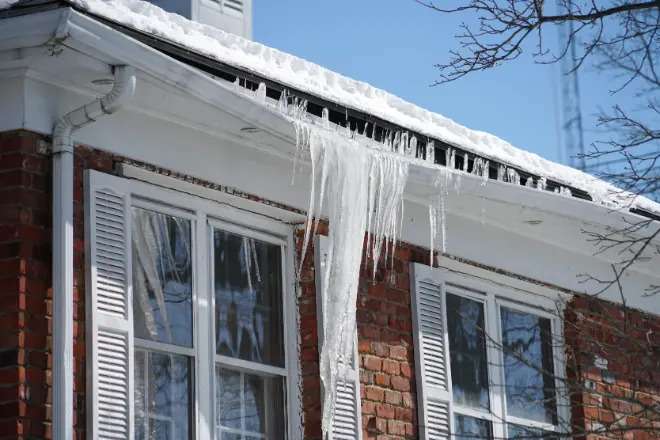
Start with your gutters. If they’re sagging, pulling away from the house, or overflowing during rain, they’re not doing their job.
Water should flow through gutters, down the downspouts, and away from your foundation.
When that system fails, water pools around your foundation and finds its way inside.
Walk your property after a good rain. Do you see puddles right next to your foundation? That’s a drainage problem. The ground should slope away from your house, not toward it.
Check your downspouts. Where does that water go? If it’s just dumping out three feet from your foundation, that’s not far enough. You want it at least five or six feet away, preferably more.
Staining on your siding below the gutters? That means water’s been overflowing there regularly. You might have a clog, or that section of gutter might not be pitched correctly.
And here’s something people miss: window wells. If you have basement windows with wells around them, those wells need to drain properly.
I’ve seen window wells filled with water after rain, and guess where that water goes? Right through the window seal and into your basement.
Efflorescence is another clue. That’s the white, powdery stuff you sometimes see on foundation walls or brick.
It happens when water moves through the masonry and leaves mineral deposits behind.
It’s telling you water is penetrating that wall.
Mold, Mildew, and Algae Growth
This is where moisture problems become visible health problems.
Mold and mildew on your siding means moisture is staying on those surfaces too long.
Could be a drainage issue, could be that your siding is old and absorbing water, or could be that plants and trees are keeping that side of the house too shaded and damp.
Green or black streaks on your roof? That’s usually algae.
It feeds on the limestone in shingles. It’s not immediately dangerous, but it can shorten your roof’s life and it looks terrible.
But if you see mold or mildew near windows, doors, or at the base of your walls, that’s a sign water is getting where it shouldn’t.
Check inside in those same areas. If there’s exterior growth, there might be interior growth too.
One homeowner I interviewed had what she thought was just dirt on her white siding. She tried to wash it off and realized it was actually mold.
Turned out she had a slow leak behind that siding from a poorly sealed window.
The repair cost was significant because the water damage had spread to the wall framing.
Window and Door Deterioration
Windows and doors are designed to seal your home from the outside. When they start failing, you get water intrusion, pest entry, and energy loss.
Look at the caulking around your windows and doors. Is it cracked, missing, or pulling away? That seal needs to be intact. If it’s not, reseal it before water gets behind your siding.
Wood rot around windows is serious.
If you can push a screwdriver into the wood trim around your windows and it goes in easily, you’ve got rot. That wood needs to be replaced, and you need to figure out why it got wet in the first place.
If your windows are fogging up between the panes, the seal has failed.
You’re not just losing energy efficiency. That moisture trapped inside can’t escape, and it’s only going to get worse.
Doors that stick or don’t close properly could mean foundation shifting. But they could also mean the door frame is swelling from moisture. Either way, it needs attention.
And check your thresholds. That piece at the bottom of your exterior door takes a lot of abuse.
If it’s rotted or damaged, water can get under your door and into your home.
Pest Infestations
Pests don’t just show up randomly. They’re there because your home is offering them something: food, water, shelter, or access.
Carpenter ants mean moisture and wood damage.
They don’t eat wood, but they tunnel through it to build nests, and they prefer wood that’s already soft from water damage.
If you see them, you probably have a moisture problem you don’t know about yet.
Termite tubes on your foundation are obvious. Those mud tubes running up your foundation wall mean termites are actively moving between the ground and your home’s wood structure.
You need a pest inspection and treatment immediately.
But also look for less obvious signs.
Small holes in wood siding could be from carpenter bees or other wood-boring insects.
Wasp nests under eaves or in soffit vents mean there are gaps they’re using to access those spaces.
If you’re seeing a lot of pest activity around your foundation, check for cracks or gaps they might be using to get inside.
Mice can fit through a hole the size of a dime. Rats need only slightly more space.
One thing I learned from talking to pest control professionals: if you have both moisture problems and pest problems, fix the moisture first. The pests are there because of the moisture.
Fading, Peeling, or Damaged Siding
Siding is more than cosmetic. It’s a protective layer.
Peeling or blistering paint on wood siding means moisture is getting into the wood from behind. The moisture pushes the paint off as it tries to escape.
You can repaint all you want, but until you fix the moisture source, it’ll keep happening.
Warped or loose siding panels need to be refastened or replaced.
Once siding isn’t flat against your house, water and pests can get behind it.
Cracks or holes in vinyl siding might seem minor, but they’re entry points. And if your vinyl siding is faded unevenly, that might just be age and sun exposure. But if it’s faded only in certain spots, check if water is collecting there.
For wood siding, do the screwdriver test in a few inconspicuous spots.
If the wood is soft or crumbly, you’ve got rot that needs addressing.
Aluminum or steel siding can rust through if the finish is compromised.
Check for rust spots, especially near the ground or around fasteners.
I talked to one homeowner who ignored some loose siding panels because they still “looked fine.” When he finally removed them to replace, he found that squirrels had been using the gap to access his attic. The damage inside was extensive.
Driveway and Pathway Damage
Your driveway and walkways don’t directly affect your home’s structure, but they tell you what’s happening with the ground and water around your property.
Cracks in concrete driveways happen. But if those cracks are growing, or if sections of concrete are settling unevenly, you have soil movement happening. That same soil is under and around your foundation.
Potholes in asphalt driveways usually come from water getting under the asphalt through cracks.
It washes away the base material, and then the asphalt collapses into the void.
Sunken walkways near your foundation could mean water is washing away soil. Your downspouts might be directing water right where you don’t want it.
And here’s something people don’t connect: if your driveway slopes toward your house or your garage, every rain sends water in that direction.
Over time, that water finds ways into your foundation or under your garage slab.
One engineer I spoke with said he always looks at driveways during home inspections.
Not because he cares about the driveway itself, but because driveway damage often predicts foundation problems that haven’t become visible yet.
Conclusion
So here’s the bottom line. Your home’s exterior takes constant abuse from weather, pests, and time.
These eight warning signs I’ve covered today are your home’s way of telling you it needs help.
The key is catching these problems early. A $200 repair now beats a $10,000 repair later. Trust me on that.
Walk around your property at least twice a year.
Really look at your roof, your foundation, your siding, your drainage.
Take photos so you can compare year to year. And when you see something that doesn’t look right, get it checked out.
I’ve talked to too many homeowners who knew something was wrong but convinced themselves it could wait. It can’t always wait.
Water damage spreads. Structural issues get worse. Pest problems multiply.
Your home is probably your biggest investment.
Protect it by paying attention to what it’s trying to tell you. And if something on this list sounds familiar, make that call today.