
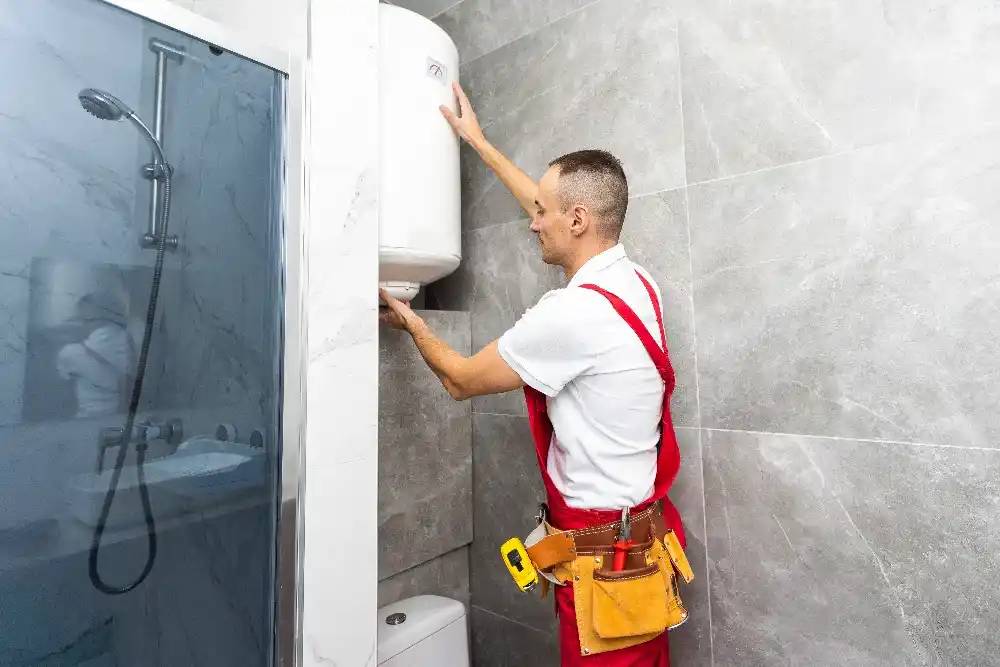
You know what most homeowners forget about? Their water heater.
It just sits there in the basement or garage, doing its job quietly until one day it doesn’t. And that’s usually when the repair bills start stacking up.
Here’s the thing though. Most of those expensive repairs? They’re preventable. We’re talking about something as simple as flushing your water heater once a year.
Sounds almost too easy, right? But it works.
How Flushing Your Water Heater Matters
Let me tell you what happens inside that tank over time.
Water comes in carrying minerals—calcium, magnesium, all that stuff.
Some of it dissolves, some of it doesn’t. The stuff that doesn’t dissolve? It settles at the bottom. Month after month. Year after year.
That layer builds up. And that’s when your problems start.
Improves Energy Efficiency
So here’s what sediment does to your energy bills. That layer at the bottom of your tank acts like a blanket between the heating element (or burner) and the water.
Your heater has to work harder. Longer. Just to get the water up to temperature.
Think about trying to heat a pot of water with a towel wrapped around the bottom. Doesn’t make sense, right?
Ask any experienced plumber in Raleigh, and they’ll tell you the same thing: sediment buildup is the silent enemy of water heaters.
It can increase your energy costs by 20-30% without you even realizing it. You’re basically paying to heat sediment instead of water.
Flush that sediment out? Your heater gets back to working the way it should. Less time heating. Less gas or electricity used. Lower bills.
Extends the Lifespan of the Unit
Water heaters aren’t cheap to replace. A tank unit runs you anywhere from $800 to $1,500 installed. Tankless? You’re looking at $2,000 to $4,500.
But here’s the kicker. That sediment sitting at the bottom doesn’t just waste energy.
It causes the tank to overheat at the bottom. Metal expands. Contracts. Over and over. Eventually, it cracks or rusts through.
Most tank water heaters are designed to last 8-12 years. But if you’re not flushing them? You might be replacing yours in year 6 or 7. Sometimes earlier.
Regular flushing removes that sediment before it does damage.
I’ve seen well-maintained heaters push for 15 years. That’s real money saved.
Ensures Consistent Hot Water Supply
Ever notice your showers getting shorter? Not because you’re showering faster. Because the hot water runs out sooner.
Sediment takes up space. A 50-gallon tank with 5 gallons of sediment? That’s really a 45-gallon tank now. You’ve lost capacity without changing anything else.
Plus, that sediment layer disrupts how heat moves through the water.
You get hot spots and cold spots. Uneven heating. One shower might feel perfect, the next one lukewarm.
Flush it out and you get back to having reliable hot water. The full capacity you paid for.
Prevents Costly Repairs
Sediment doesn’t just sit there peacefully. It hardens. Corrodes. Gets into places it shouldn’t.
For tank heaters, it can damage the anode rod—that’s the part that protects your tank from rusting.
It can clog the drain valve, making future flushes harder or impossible.
It can even cause the tank to make rumbling or popping sounds as steam bubbles form under the sediment layer.
Tankless units? They’re even more sensitive.
Sediment can clog the heat exchanger, reduce water flow, trigger error codes.
Those repairs aren’t cheap. We’re talking $300-600 just for a service call and descaling.
A yearly flush costs you maybe an hour of time and zero dollars if you do it yourself. Or $100-150 if you hire someone. Compare that to a $500 repair bill.
Enhances Water Quality
Nobody wants to talk about what’s coming out of their faucets, but let’s be real for a second.
That sediment in your water heater? Sometimes it breaks loose.
Gets carried through your pipe maintenance. Ends up in your glass of water or your morning coffee.
You might see rust-colored water. Or notice a metallic taste. Or find gritty particles in the bottom of your sink.
It’s not necessarily dangerous. But it’s not pleasant either.
Flushing removes that buildup before it has a chance to get into your water supply. You get cleaner, clearer hot water throughout your home.
Tank And Tankless Guide From A Plumber In Raleigh
Now let’s talk about the two main types of water heaters you’ll find in homes around Raleigh. Each one works differently. Each one has its own maintenance needs.
How Tank Water Heaters Work
These are the traditional units most people know. Big cylinder sitting in your basement or closet.
Cold water enters through a pipe at the top, travels down through a dip tube to the bottom of the tank.
The heating element (electric) or gas burner (gas models) heats the water at the bottom. Hot water rises naturally to the top where it gets pulled out when you turn on a faucet.
Pretty straightforward. The thermostat tells the heater when to fire up, usually keeping water between 120-140°F.
That anode rod I mentioned earlier? It’s a metal rod that corrodes instead of the tank corroding. Sacrificial protection. Smart design, actually.
Pros of Tank Water Heaters
Lower upfront cost. That’s the big one. You can get a decent 40-50 gallon tank heater installed for under $1,200 in most cases.
They’re simple to repair. Parts are common. Most professional plumbers can fix them without special training. That keeps repair costs down too.
They work during power outages if you have a gas model.
No electricity needed for the basic function.
And they can handle multiple demands at once pretty well.
Two showers going? Dishwasher running? As long as you sized the tank right, you’re good.
Cons of Tank Water Heaters
They take up space. A 50-gallon tank is about 60 inches tall and 24 inches in diameter. That’s real estate in your home.
They run out of hot water. Once you drain that tank, you’re waiting 30-60 minutes for it to heat back up.
Standby heat loss is a real issue. The tank keeps water hot 24/7 even when you’re not using it.
You’re paying to heat water while you sleep, while you’re at work, all the time.
And they have that limited lifespan we talked about. 8-12 years on average, then you’re shopping for a new one.
How Tankless Water Heaters Work
These units don’t store water at all. They heat it on demand as it flows through.
Cold water enters the unit. Sensors detect the flow. The heating element or gas burner fires up instantly.
Water passes through a heat exchanger, gets heated to your set temperature, and comes out your faucet hot.
Stop using hot water? The unit shuts off. No storage. No standby heating.
They’re compact too. About the size of a small suitcase mounted on your wall.
Installation and Operating Costs
Here’s where it gets interesting. Tankless units cost more upfront. The unit itself might be $1,000-2,500. Installation? That’s another $1,000-2,000 depending on your setup.
Why so much for installation? Sometimes you need electrical upgrades. Or new gas lines with higher flow capacity.
Venting requirements are different. It’s more complex than swapping out a tank.
But operating costs? That’s where tankless units win.
They’re 24-34% more efficient for homes that use 41 gallons or less of hot water daily. For homes that use more, they’re still 8-14% more efficient.
Over the 20+ year lifespan of a tankless unit, those savings add up.
We’re talking hundreds of dollars.
Tank heaters are cheaper to install but cost more to run. Tankless is expensive upfront but cheaper long-term.
Factors to Consider Before Choosing
How much hot water do you actually use? Family of five taking back-to-back morning showers? A tank might make more sense. Live alone or with one other person? Tankless could be perfect.
What’s your budget right now? If you can’t afford $3,000-4,000 upfront, a tank heater gets you hot water for a third of that.
How long are you staying in this house? Planning to move in 3-4 years? The efficiency savings from tankless might not pay off before you leave.
Staying for 10-15 years? Different story.
Space matters too. Tiny mechanical closet? Tankless fits where a tank won’t.
And maintenance. Both need it, but tankless units in areas with hard water (that’s most of Raleigh) need annual descaling.
Tank heaters need annual flushing. Pick your maintenance preference.
Wrapping This Up
Look, your water heater is probably not something you think about every day. That’s fine. It shouldn’t be.
But once a year? Take an hour. Flush it out. Or pay someone to do it. Whether you’ve got a tank or a tankless unit, that sediment and mineral buildup is happening.
It’s just chemistry and time.
The difference between a water heater that dies at year 7 and one that makes it to year 14? Usually it’s just maintenance. That’s it. Same model, same installation, different owner habits.
And with what water heaters cost these days? Getting those extra years matters. Every year you push off that replacement is another year of savings in your pocket.
Plus, there’s something to be said for reliable hot water.
No surprises. No cold showers. No emergency calls to plumbers on Saturday morning.
Just consistent, clean hot water when you need it.
That’s worth an hour a year.