
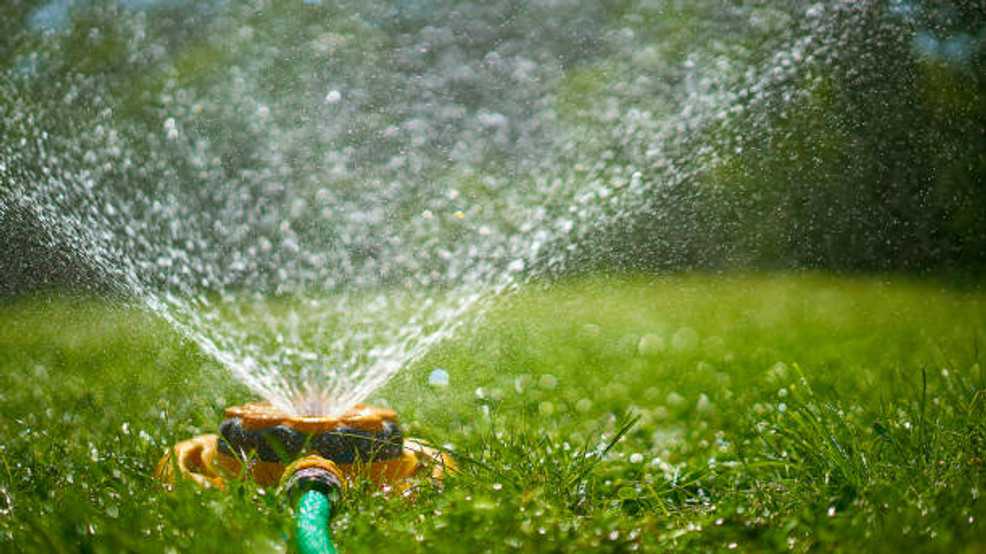
You turn the sprinklers on, the heads pop up, water sprays where it’s supposed to, and still your lawn starts sending water toward the sidewalk like it has somewhere better to be. That’s the annoying part about lawn runoff.
The system can look like it’s working fine on the surface, but the yard is still losing water, still wasting coverage, still making a mess in all the wrong places.
And this is where a lot of homeowners get stuck.
They assume runoff only happens when something is broken. Not really.
Sometimes the sprinkler system is technically functioning, every zone running, every head spraying, controller doing its thing, but the water is being applied faster than the soil or slope can handle. That’s when the lawn starts shedding water instead of absorbing it.
Runoff Does Not Always Mean the Sprinkler System Is Broken
A sprinkler system can be fully operational and still create runoff because irrigation performance is not just about whether the heads turn on.
It’s also about how fast water is applied, how long each zone runs, and whether the yard can actually absorb that much water in that amount of time.
A working sprinkler system and an efficient watering pattern are not automatically the same thing.
That mismatch happens more often than people expect.
You can have decent pressure, no obvious broken heads, no major leak, and still end up with water sliding across the grass and heading straight for concrete.
It feels backwards, but runoff usually points to a watering imbalance, not always a broken part.
Clay Heavy Soil Absorbs Water Slowly
A lot of North Texas lawns deal with dense clay soil, and clay doesn’t absorb water quickly.
It takes its time, then takes even more time, then suddenly you’ve got water pooling near the curb while the deeper soil still hasn’t absorbed much.
So even when the sprinklers are spraying normally, the yard may be rejecting the extra water simply because the soil intake rate is too slow.
This is one of those problems that tricks people.
The lawn looks thirsty, so they water longer, but the issue isn’t always lack of water.
Sometimes the issue is that the soil can’t accept the volume being delivered all at once.
The result is runoff, soggy patches, and often a false impression that the lawn needs even more irrigation.
Slope and Yard Grading Push Water Away
Even a mild slope can create runoff if the system is throwing down water faster than the grade can hold it.
Water always follows gravity, not your irrigation plan, and once it starts moving downhill it doesn’t care whether that lower area needs more moisture or not. It just keeps going.
This is especially common in front yards, side strips, and lawns that slope toward the street or driveway.
The sprinklers may be covering the area correctly, but the grade is working against the watering cycle.
So the system appears to be doing its job while the landscape keeps sending water away before the root zone really gets a chance to drink it.
Sprinkler Heads May Be Applying Water Too Fast
Not all sprinkler heads apply water at the same rate.
Some nozzles put down water much faster than the soil can handle, especially if the pressure is a bit high or the wrong nozzle has been installed in the wrong section.
So yes, the sprinklers work, but they may be working too aggressively for the yard conditions.
That’s why two lawns can have similar systems and totally different results.
One absorbs water just fine, the other starts producing runoff after a few minutes.
The difference often comes down to precipitation rate, nozzle type, and whether the irrigation layout actually matches the soil and slope it’s watering.
Watering Too Long in One Cycle Creates Overflow
A long irrigation cycle sounds efficient in theory, but in practice it often causes runoff before the soil has had enough time to absorb what it already received.
Once the upper layer gets saturated, any extra water starts moving sideways instead of downward.
At that point, the sprinklers are still running, but the lawn stopped benefiting from them several minutes ago.
This is why cycle timing matters so much.
A yard may do much better with shorter runs spaced apart than one long uninterrupted session.
It feels less satisfying somehow, because people like the idea of one complete watering block, but the soil usually responds better when it gets a chance to pause and absorb.
Compacted Soil Makes the Problem Worse
Compacted soil is another quiet troublemaker.
When the ground is packed down from foot traffic, construction, mowing patterns, or just years of wear, water has a harder time penetrating the surface.
Instead of soaking in, it sits, then shifts, then starts moving across the lawn.
And this makes runoff more confusing because the grass may still look dry in places.
So the homeowner thinks the yard needs more water, while the actual problem is that the soil structure is resisting infiltration.
It’s not always about watering more. Sometimes the lawn needs the ground loosened up more than it needs another irrigation cycle.
Misdirected Spray Patterns Can Send Water Onto Hard Surfaces
A sprinkler head can pop up, rotate, and spray exactly as designed, but if the arc is slightly off or the nozzle is overspraying, some of that water ends up on driveways, sidewalks, and curbs.
Once water hits those hard surfaces, runoff becomes almost inevitable because there’s nothing there to absorb it.
This is one of the more frustrating issues because the system still looks operational.
Nothing appears obviously broken. But a slightly tilted head, a poor angle, or overspray near pavement can quietly waste a lot of water and create the impression that the whole yard has a drainage issue when part of it is really just spray placement.
Different Lawn Areas Need Different Watering Rates
Not every part of your yard behaves the same way, which is where a lot of irrigation setups fall short.
Sunny areas dry out faster, shaded areas stay damp longer, narrow strips near concrete heat up more, and lower sections collect water differently.
If one zone is trying to treat all those conditions the same, runoff tends to show up somewhere.
That’s why a system can look properly zoned and still perform poorly in real life.
The sprinklers may run, the schedule may be active, but the water demand in one section doesn’t match the rest.
A yard that needs more tailored timing or nozzle selection often ends up showing runoff in the weaker areas first.
Runoff Can Also Point to Hidden Efficiency Problems
Sometimes runoff is the first visible sign that the system needs adjustment in ways that aren’t obvious yet. Pressure could be a little too high.
Coverage may overlap too heavily.
The controller timing may not match current seasonal conditions.
None of those issues necessarily stop the system from operating, but they reduce efficiency enough that water starts escaping before the lawn can use it.
Elite Sprinkler Repair & Installation notes on its DeSoto service page that when something feels off, they check the slope, the coverage, and the schedule to make sure water goes where it’s supposed to.
That pretty much gets to the core of the issue, because runoff is often less about total failure and more about water going to the wrong place for the wrong amount of time.
Why This Happens So Often in Dallas and DeSoto Yards
Yards in Dallas and DeSoto often deal with a rough mix of clay soil, hot weather, uneven grades, and irrigation patterns that were never fine tuned after installation.
So runoff becomes one of those recurring issues that keeps showing up even when homeowners feel like the system is “working.”
And that’s really the point.
A working sprinkler system is not always a well tuned sprinkler system.
If your lawn has runoff, the problem may not be that the sprinklers failed.
It may be that the soil, slope, timing, and spray pattern are all slightly out of sync, and once those small things pile up, the yard starts pushing water away instead of holding onto it.