Let’s be honest. Nobody wants to cut down a tree.
Trees add character to your property. They provide shade in the summer and look gorgeous in the fall.
But here’s the thing most homeowners don’t want to admit.
Sometimes keeping a tree around is doing more harm than good. And putting off the decision to remove it? That can cost you thousands of dollars down the road.
I’m going to walk you through the signs that it’s time to say goodbye to a tree, what to expect from the removal process, and how getting rid of the right tree can actually transform your outdoor space.
Why Tree Removal Gets Put Off
Most people avoid tree removal because it feels permanent.
Once that tree is gone, it’s gone. No take-backs.
There’s also the cost factor. Professional tree removal isn’t cheap, so homeowners convince themselves the tree “isn’t that bad” and push the decision down the road.
Sound familiar?
The problem is that waiting usually makes things worse.
A tree that’s dying slowly becomes a hazard. One bad storm and you’re dealing with property damage, insurance claims, and emergency removal costs that dwarf what planned removal would have been.
The lesson? Being proactive about problem trees saves money and headaches.
Clear Signs a Tree Needs to Go
Not every struggling tree needs to be removed. But some warning signs shouldn’t be ignored.
Here’s what to watch for:
- Dead branches in the upper canopy. A few dead twigs are normal. Large dead branches up top signal serious problems.
- Trunk damage or cavities. Cracks, holes, or missing bark on the trunk often indicate internal decay you can’t see.
- Fungal growth at the base. Mushrooms growing around the root zone usually mean rot underneath.
- Leaning that’s getting worse. Trees can naturally lean, but if the angle is increasing, root failure may be happening.
- Root heaving. Soil pushing up around the base or exposed roots lifting out of the ground are red flags.
- Storm damage that won’t recover. Major limb loss or a split trunk typically can’t be fixed.
If you’re seeing multiple signs on this list, it’s time to get a professional assessment.
A trusted tree removal company can evaluate whether the tree can be saved or if removal is the safer choice. Getting an expert opinion beats guessing and hoping for the best.
Trees That Create Ongoing Problems
Sometimes a tree is perfectly healthy but still causing issues.
Problem trees include:
- Trees too close to the house. Roots can damage foundations, branches scrape siding, and falling limbs become a constant worry.
- Trees blocking major sightlines. That oak blocking your beautiful view isn’t doing you any favors when you go to sell.
- Messy species in the wrong spot. Some trees drop fruit, seeds, or sap constantly. Great in a back corner, terrible next to your driveway or deck.
- Trees crowding each other. When multiple trees compete for the same space, none of them thrive. Removing one often helps the others.
- Invasive species. Some trees spread aggressively and crowd out better options. Getting rid of them improves your whole landscape.
Healthy trees can still be the wrong trees for your property. There’s nothing wrong with making a strategic removal to improve your outdoor space.
What Professional Tree Removal Actually Looks Like
If you’ve never had a tree removed, the process might seem mysterious.
Here’s what typically happens:
Assessment. A certified arborist evaluates the tree, the surrounding area, and any obstacles like power lines or structures. They’ll give you a plan and a quote.
Preparation. The crew sets up equipment and clears the work zone. If the tree is near structures, they’ll use ropes and rigging to control exactly where each section falls.
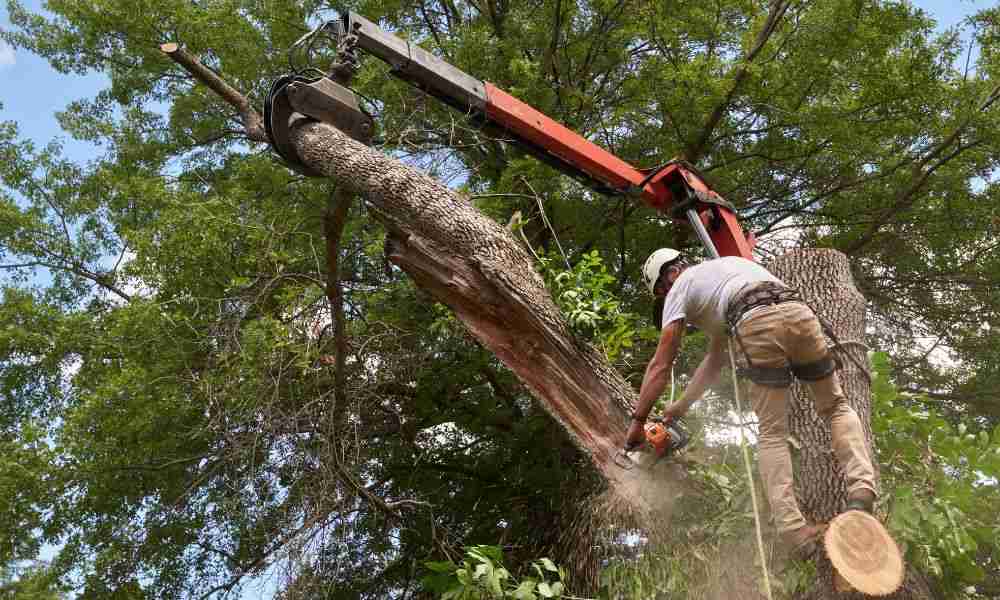
Sectional removal. Most trees come down piece by piece rather than being felled whole. Climbers cut sections from the top down, lowering them safely with ropes.
Cleanup. Branches get chipped on-site. The trunk gets cut into manageable sections. You can usually choose whether to keep the wood or have it hauled away.
Stump options. You can leave the stump, have it ground down below grade, or have it completely removed. Grinding is the most common choice.
The whole process for a medium-sized tree usually takes a few hours. Larger or more complicated removals might take a full day.
Stump Grinding: Don’t Skip This Step
Here’s a mistake a lot of homeowners make.
They pay for tree removal but leave the stump behind to save a few bucks.
Bad idea.
Why stump grinding matters:
- Stumps are eyesores that drag down your curb appeal
- They attract pests like termites and carpenter ants
- They can sprout new growth you’ll constantly fight
- They make mowing and landscaping a pain
- They take up valuable yard space
Stump grinding removes the stump several inches below ground level. The area gets filled with wood chips that decompose over time.
Within a season or two, you’d never know a tree was there.
If you’re removing a tree anyway, just include stump grinding in the job. Doing it separately later costs more and extends the project.
Transforming Your Yard After Removal
Here’s the exciting part.
Once that problem tree is gone, you’ve got options.
What you can do with the space:
- Plant something better. Replace a problem species with a tree that actually works for your property.
- Create a new garden bed. The disturbed soil from stump grinding is perfect for planting shrubs, perennials, or flowers.
- Expand your lawn. Sometimes more open grass is exactly what your yard needs.
- Add hardscaping. A patio, fire pit, or outdoor seating area might fit perfectly in that newly opened space.
- Let existing plants thrive. Removing a dominant tree often allows nearby plants to flourish with increased sunlight.
Think about what your yard needs before the tree comes down. That way you can move forward with your plan right away.
The Cost Question Everyone Asks
Let’s talk money.
Tree removal costs vary wildly depending on size, location, and complexity.
General ballpark ranges:
- Small trees (under 30 feet): $200-$500
- Medium trees (30-60 feet): $500-$1,000
- Large trees (60-80 feet): $1,000-$2,000
- Very large or hazardous trees: $2,000+
Stump grinding typically adds $100-$400 depending on stump size.
Factors that increase cost:
- Proximity to structures or power lines
- Limited access for equipment
- Emergency or storm damage situations
- Multiple trees at once (though you often get a discount)
Get multiple quotes, but don’t automatically go with the cheapest option.
Check that the company is licensed, insured, and has good reviews.
Cheap tree work often means corners get cut. And when chainsaws and heavy equipment are involved, you don’t want corners cut.
DIY Tree Removal: Just Don’t
I know some of you are thinking about handling this yourself.
Please don’t.
Tree removal is one of the most dangerous jobs out there. Professional arborists train for years and still get injured. Homeowners with chainsaws and ladders are a recipe for disaster.
What can go wrong:
- Trees fall in unexpected directions
- Chainsaw kickback causes severe injuries
- Ladder falls while cutting overhead
- Electrical contact with power lines
- Property damage from misjudged drops
Even small trees can be surprisingly dangerous. The money you’d save isn’t worth the risk.
Leave this one to the professionals.
When to Schedule Tree Removal
Timing matters for tree removal, though maybe not as much as you’d think.
Best times to remove trees:
- Late fall through early spring. Trees are dormant, there’s less foliage to deal with, and the ground is often firmer for equipment.
- Before storm season. Don’t wait until hurricane season or winter storms to deal with a hazardous tree.
- Before major landscaping projects. Get removals done before you install new plants, patios, or other improvements.
When to avoid if possible:
- Active bird nesting season. Spring through early summer often means active nests. Check before scheduling.
- Immediately after major storms. Demand surges and prices spike. If your tree can wait, it might be worth it.
That said, genuinely hazardous trees should come down regardless of timing. Safety trumps scheduling convenience.
Wrapping It All Up
Nobody loves removing a tree. But sometimes it’s the right call.
A dying tree is a liability. A problem tree holds your yard back. And waiting until something goes wrong always costs more than dealing with it proactively.
Here’s the bottom line:
- Know the warning signs of a tree in trouble
- Get professional assessments rather than guessing
- Include stump grinding when you remove a tree
- Have a plan for the space before removal day
- Never attempt DIY tree removal
Your yard has potential. Sometimes unlocking that potential means making the tough decision to let a tree go.
Once you do, you might be surprised how much better your outdoor space feels.