Around 1 in 20 English homes has a damp problem according to the latest English Housing Survey, and far more deal with condensation at some point.
Knowing whether you’re looking at harmless condensation or a real structural issue is the tricky part.
Get it wrong and you’ll either panic over nothing or ignore something that quietly eats into your walls.
Let’s take a closer look at how to spot the difference before it costs you.
Three Types of Damp You Might Be Dealing With
There are three main kinds of damp, and they don’t behave the same way.
- Condensation is by far the most common. It shows up when warm, moist air hits a cold surface, usually around windows, in bathrooms or behind furniture pushed against an outside wall.
- Penetrating damp comes from water getting in from outside. Think cracked render, a leaking gutter, or a dodgy bit of pointing. It tends to appear as a patch that gets worse after heavy rain and is often higher up the wall.
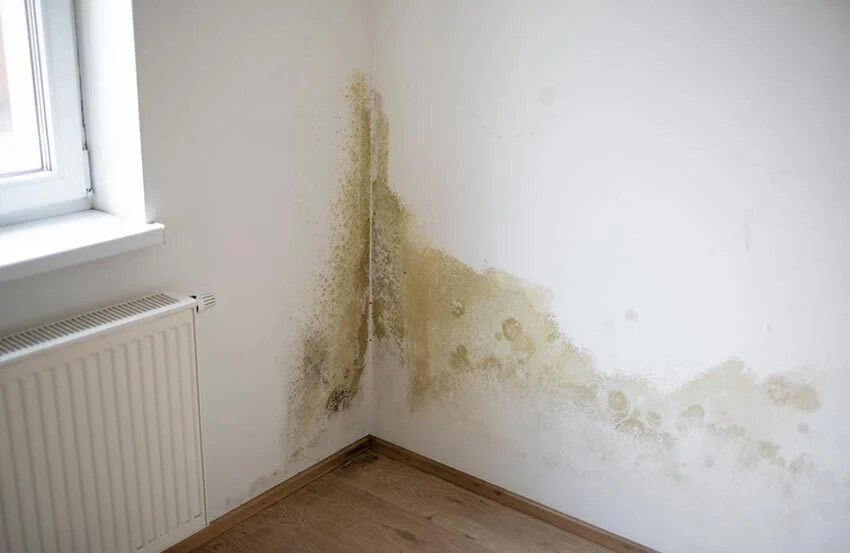
- Rising damp is water moving up from the ground through the wall. It’s real, but it’s far rarer than people are led to believe. It usually stops around 1 to 1.2 metres above floor level, leaving a distinct tide mark where moisture finally evaporates faster than it can rise.
What the Warning Signs Actually Look Like
Your eyes and nose will tell you a lot before anyone gets a meter out. Here’s what to keep an eye on:
- Black spots clustered around windows or in corners usually point to condensation and mould.
- Tide marks low on the wall, often with a yellowish or brown stain, suggest rising damp.
- Salt deposits, a white powdery residue near skirting level, are one of the more reliable markers of rising damp specifically, since hygroscopic salts get drawn up from the ground.
- A musty smell that won’t shift, even after airing the room, means moisture is sitting somewhere it shouldn’t.
One patch on its own isn’t always cause for alarm. It’s when these signs keep coming back after you’ve cleaned and dried the area that you’re likely dealing with something more serious.
Why Rising Damp Gets Misdiagnosed So Often
Here’s the part that catches people out.
Rising damp is hugely over-diagnosed, often by firms who happen to sell chemical damp-proof courses.
A salesperson runs a handheld meter along your skirting, it beeps, and suddenly you’re quoted thousands for an injected DPC you may not need.
The trouble is those meters read electrical conductivity, which spikes on surface moisture and salts and throws up false positives even in a dry wall.
Plenty of what gets labelled rising damp turns out to be condensation or a simple leak. Before you agree to invasive work, it’s worth getting an independent opinion from someone who isn’t selling you the cure.
When a Professional Survey Makes Sense
If you’ve cleaned up the same patch twice and it keeps returning, that’s your cue to call in help.
A proper damp and mould survey from an independent specialist, such as ICE Cleaning, looks for the root cause rather than just treating the symptom.
A thorough survey uses moisture meters, thermal imaging to find cold spots and hidden leaks, and air sampling to check what you’re actually breathing in.
The point of a survey is to tell you what kind of damp you’ve got and where it’s coming from.
Once you know that, you can spend your money on the right fix instead of guessing.
A good surveyor will happily tell you when you don’t need expensive remedial work at all.
What an Investigation and Repair Might Cost
A standalone damp survey usually runs somewhere between £150 and £500, depending on the size of the property, the region and whether the surveyor uses thermal imaging or salt analysis.
Many firms will knock the fee off if you go ahead with the work.
Repairs vary wildly. Sorting out condensation might just mean better ventilation and a dehumidifier for a couple of hundred pounds.
Fixing penetrating damp depends on the source, while genuine rising damp work can stretch into the low thousands once you factor in replastering.
The honest answer is that you won’t know until the cause is confirmed.
Stop Guessing and Get a Straight Answer
Damp is easy to misread, and that’s exactly why so many people overpay for treatments they never needed.
If you can match the signs to the type, ventilate properly and act early, you’ll handle most issues yourself.
When the same patch keeps coming back, though, a specialist survey will give you the facts you need instead of a sales pitch dressed up as a diagnosis.