Need a home decor and design hack that makes a room go from meh to wow?
The best-kept secret is already underfoot in your home: Rugs.
Whether you’re placing a rug for the first time or re-arranging an old rug, the effect on a room can be profound. Place a rug wrong and everything in the room seems off.
Place a rug right and suddenly the room comes together.
Best of all:
Rug placement rules are simple and have been followed by interior designers for decades to create beautiful and cohesive spaces. Master these guidelines and your rooms will transform.
Here’s what you’re going to learn:
- Why Rug Placement is More Important Than You Realize
- The Best Rug Placement Rules for Living Rooms
- Bedroom Rug Placement Ideas
- Rug Placement Tips for Dining Rooms
Why Rug Placement is More Important Than You Realize
Rugs are definitely in right now.
In fact, carpets and rugs lead the home decor market and are projected to capture over 52% of total market share in 2024. That’s larger than candles, curtains, and decorations combined.
No surprise there:
The rug is the cornerstone of any interior design scheme. It anchors a space, ties furniture together, and creates a warm, comfortable feeling underfoot. Nothing else defines a room the way a well-chosen and correctly-positioned rug does.
What’s not to love?
Here’s the catch:
Most people choose a rug they love and then simply throw it down in the room without much thought. Huge mistake. An otherwise beautiful rug placed haphazardly can make an entire room look awkward and ill-considered.
Plus, with natural materials and sustainable fabrics in vogue right now, eco-friendly jute rugs are the must-have choice for designers looking to combine style with eco-consciousness.
The Best Rug Placement Rules for Living Rooms
Your living room is the home decor and design statement room. This is where your family relaxes and where you create the first impression for guests.
It’s important to get the rug placement right.
Rule #1: Size up the Rug
The number one decor and design mistake for living room rugs? Getting the size wrong. A rug that’s too small looks stingy and can make a space feel chaotic.
Get it too big and your rug will swallow your furniture. Finding the sweet spot is key.
For most living rooms the best rug sizes are:
- 8×10 feet for medium rooms
- 9×12 feet for larger rooms
- 5×8 feet for small seating areas
Rule #2: Leave 18 Inches Around the Rug
Don’t let your rug touch the walls. 18 to 24 inches of bare floor around all sides of a rug creates a breathing room that frames the space and lets the room open up. A rug up against the wall looks cramped and off-balanced.
Rule #3: Centre on the Right Spot
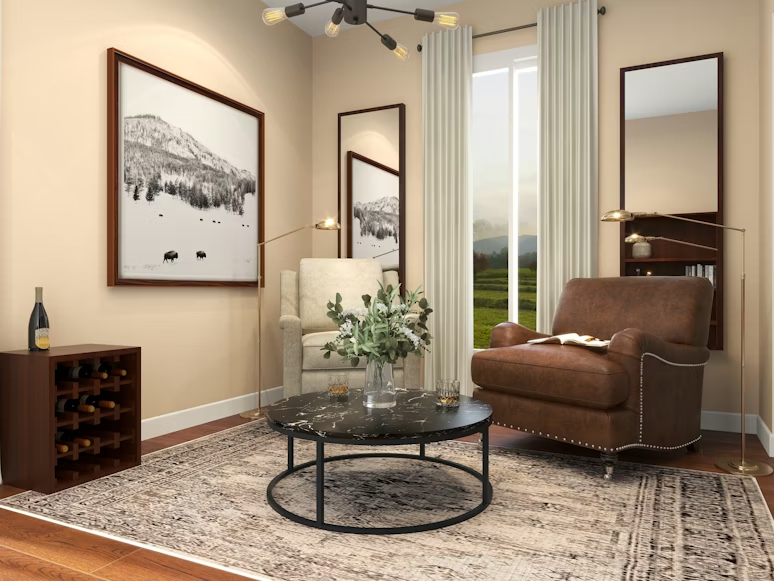
Place your rug centred on the room’s main focal point. This may be a fireplace, large window, or primary seating arrangement. It may not be the physical centre of the room. But it should be balanced within the furniture grouping.
Simple, right?
Bedroom Rug Placement Ideas
Bedroom rug placement is all about that cozy feel when your feet hit the floor in the morning.
Get it right with these ideas:
Option 1: Partial Placement
Position a large rug under the bottom two-thirds of your bed. The rug should extend about 2 feet on either side of the bed and at the foot of the bed. This is the most popular approach and looks luxe.
Option 2: Runner Placement
Place two matching runner rugs on either side of the bed. This works great in smaller bedrooms where a larger rug would crowd the space.
Option 3: Full Coverage
Place the entire bed and nightstands on one large rug. This creates a cohesive and pulled-together look but requires a very large rug, usually 9×12 or bigger for queen and king sized beds.
Tip: Don’t place the nightstands with legs partially on and off the rug. It will look messy and the furniture won’t sit level. Nightstands all legs on or all legs off.
Rug Placement Tips for Dining Rooms
The #1 thing people get wrong with dining room rug placement will drive you crazy every day.
The rug needs to be big enough that even when your chairs are pulled out they stay on the rug. This usually means extending 24 to 36 inches beyond the table on all sides.
For a standard 6-seater dining table, an 8×10 rug is the minimum size.
Bear in mind:
High-traffic zones need hard-wearing materials. Flatweave rugs under dining tables are easy to clean. Darker rugs are more forgiving of spills.
The global area rug market hit $36.5 billion in 2024. A big reason for growth: Homeowners finally getting rug placement right to enhance their spaces.
Common Mistakes That Ruin a Room’s Aesthetic
A rug can make or break a room’s decor and design if not placed correctly.
Avoid these common errors:
Mistake #1: Too Small
This is the number one mistake people make with rug placement. A tiny rug in the middle of a room looks like you gave up and tried to pinch pennies. Size up, always.
Mistake #2: Furniture Relationship Ignored
Your rug should create a dialogue between furniture pieces. If your sofa and chairs feel like they’re on separate islands in the room, your rug is too small or misplaced.
Mistake #3: Doorway Forgotten
Make sure any doors in the room can open fully without catching on the rug. Measure twice.
Mistake #4: Rug Shape Mismatch
Round rugs are best in square rooms or under round tables. Rectangular rugs suit rectangular rooms and furniture layouts. Resist mixing randomly.
Mistake #5: Skipping the Rug Pad
A rug pad prevents slipping, protects floors, and extends rug life. Never skip this.
Layering Rugs Like a Pro
Want to add depth and interest to your home decor and design?
Try rug layering. Lay a larger neutral rug down as the base. Add a smaller, bolder rug on top to create visual interest and dimension.
This works best with natural fibre rugs as the base layer. The texture contrast adds a lived-in, sophisticated feel that designers love.
Keep this in mind:
Match colour tones between rugs. Play with textures for maximum impact.
Bringing It All Together
Rug placement is not rocket science. It does however need a bit of attention to detail.
Remember these key points:
- Size up, not down.
- Leave breathing space around rugs, no walls.
- Centre rug on the room’s focal point, not necessarily the centre of the room.
- Maintain furniture relationships.
The right rug in the right position is magic. It zones a space, adds warmth, and pulls together the whole design scheme.
Start with one room, measure carefully, follow these tips, and watch one simple change make your entire home feel elevated.