
During the hottest afternoons of the year, every air conditioner on the block runs at full blast.
The hum is constant, and the demand is climbing.
When temperatures spike, local power grids face real strain.
Understanding why extreme heat pushes the system to its limits and which cooling choices can help homeowners stay comfortable starts with knowing how demand actually works.
Why Summer Heat Waves Are Pushing the Grid to Its Limits
When a heat wave settles in, electricity demand surges.
Air conditioners run longer and cycle on more frequently, both because more households are using them and because each unit has to work harder to maintain a comfortable temperature. That compounding effect creates a surge bigger than one might expect from simply adding a few more ACs to the mix.
The hottest hours of the day take place in the afternoon and early evening, leaving grid operators to handle a sharp and concentrated peak.
During a recent heat wave-driven demand spike, the Eastern Interconnection saw electricity demand peak at 502,670 megawatts in a single hour on June 21, 2024. That’s up from 467,609 megawatts in the prior June.
The PJM region alone saw a 19% year-over-year jump during that same stretch.
When demand pushes toward operating limits, the consequences reach individual homes.
Homeowners might see voluntary conservation requests on especially hot days or, in more severe cases, rolling blackouts to prevent broader outages.
How Older Air Conditioners Add to the Strain
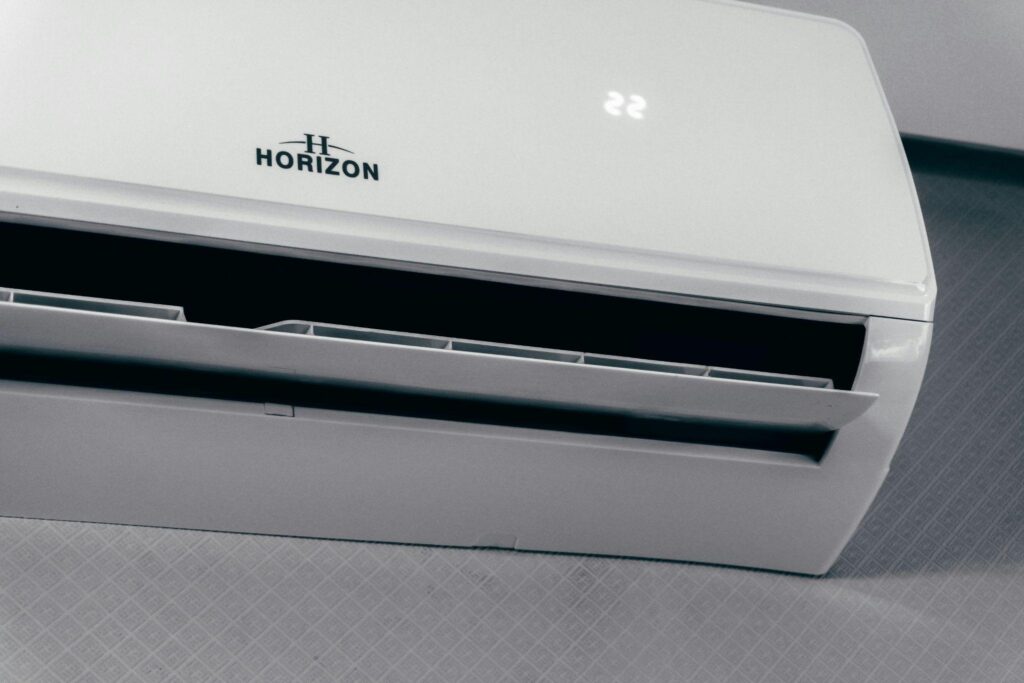
A fixed-speed air conditioner has essentially two settings. It’s either fully on or fully off.
Every time it kicks back on during a heat wave, it draws a large burst of power all at once rather than ramping up gradually, as a variable-speed system does. That cycling pattern is how most older units operate.
Multiplying that behavior across a neighborhood full of similar units, all switching on around the same time on a hot afternoon, reveals how those sharp demand spikes described earlier take shape.
No single household’s older AC is meaningfully responsible on its own, but the collective pattern contributes to the peaks that stress the grid.
If the system can’t keep up and a home loses power, knowing heat safety guidance becomes critical.
Seeking an air-conditioned public space, such as a mall or library, even for a few hours, can provide necessary relief.
Cool showers or baths help bring body temperature down when air conditioning isn’t available.
Body temperature can spike to 106° Fahrenheit or higher within 10 to 15 minutes, so recognizing the warning signs early can make a big difference.
Mini-Splits for Selective Cooling and Energy Efficiency
The grid-wide problem is largely out of individual control, but how people cool their own spaces isn’t. One approach gaining traction is the mini-split.
Instead of forcing a central system to cool an entire home during peak hours, Ingrams Water & Air provides systems that cool individual rooms, allowing homeowners to direct cooling only where it’s needed and avoid wasting energy in unoccupied spaces.
These systems work with wall-mounted units that connect to an outdoor compressor.
The models below represent three common installation routes, depending on whether homeowners are comfortable with a DIY project or prefer to bring in a professional.
Shoppers can also weigh buyer-friendly perks, such as price matching, financing and rebate help.
MrCool DIY 5th Gen for Hands-On Installers
The MrCool DIY 5th Gen 2-zone system is built for homeowners who want a ductless AC and heat pump system with a DIY-focused setup.
It includes installation-friendly Quick Connect lines and DIYPro armored electrical cables, along with app-based controls and the Follow Me function on the included remote. It also uses R454B refrigerant and features a gold-fin condenser for added corrosion resistance.
Key Features
- DIY-focused setup with Quick Connect lines and DIYPro armored electrical cables
- Ductless AC and heat pump design for targeted comfort
- Smartphone app controls and Follow Me remote functionality
MrCool Easy Pro 5th Gen for Budget-Minded DIYers
The MrCool Easy Pro 5th Gen is a ductless heat pump split system designed for homeowners who want a DIY mini-split package.
It includes a line set to connect the indoor and outdoor components and supports smart comfort control via a smartphone app, Google Assistant and Amazon Alexa.
It also uses R454B refrigerant and includes comfort-focused features such as Follow Me and leak detection.
Key Features
- Dependable efficiency at a lower price point
- Single-zone installation, ideal for one room at a time
- Straightforward setup
MrCool Advantage 5th Gen for Professional Installation
The MrCool Advantage 5th Gen is a ductless heat pump split system for homeowners looking to upgrade targeted room or zone comfort.
It uses R454B refrigerant and includes a DC inverter, which supports energy efficiency, steadier temperature control and quieter operation compared to more traditional fixed-speed models.
The system also includes a Wi-Fi Smart Kit, smartphone app control, Amazon Alexa and Google Assistant compatibility, programmable timers and Follow Me functionality.
Key Features
- Ductless heat pump split system for targeted comfort
- DC inverter for efficient, precise and quieter operation
- App integrations and programmable timers
Small Shifts That Keep You Cool and Ease the Load
Heat waves will keep testing the grid, but smart and selective cooling choices help homeowners stay comfortable without over-relying on one strained system.
Whether exploring a DIY mini-split install or working with a professional, the goals are to direct cooling where it matters most and make thoughtful decisions that serve households during the hottest days of the year.