
A home often loses conditioned air through places you rarely notice.
Small gaps around wall cavities, rooflines, plumbing penetrations, and attic spaces allow air to move between indoor and outdoor areas.
Your heating and cooling system then works harder to maintain a comfortable temperature.
Insulation helps control this movement.
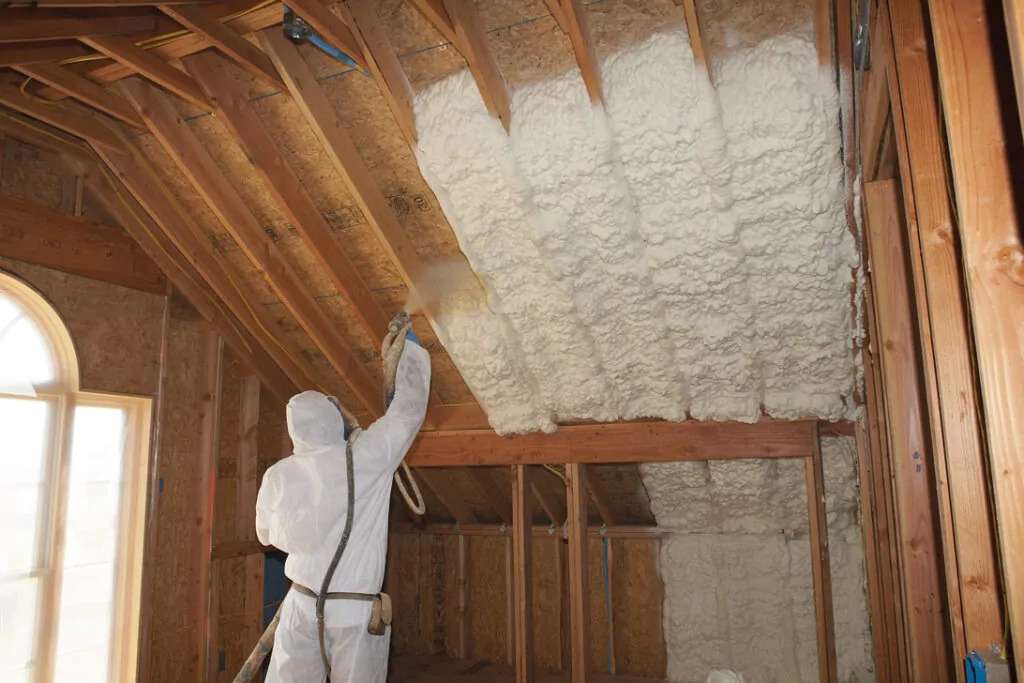
Spray foam insulation takes the process further by expanding after application and filling spaces where traditional insulation materials often leave gaps.
So, how does spray foam insulation work, and what should you know before choosing this option for your home? Understanding the material, installation process, and different foam types helps you make a more informed decision.
What Is Spray Foam Insulation?
Spray foam insulation is a material applied as a liquid mixture.
After application, the mixture reacts and expands into foam.
The expanded material adheres to surfaces and fills gaps within the treated area.
Once cured, the foam forms a continuous insulation layer.
Contractors commonly apply spray foam in attics, walls, crawl spaces, ceilings, and other areas where controlling heat and air movement matters.
What Is Spray Foam Insulation Made Of?
Spray polyurethane foam forms when two liquid components mix during application.
The chemical reaction creates expanding foam, which hardens after reaching its intended area.
Professional equipment controls the mixture, temperature, and application rate.
Proper conditions matter because these factors influence expansion, adhesion, and the final insulation layer.
Why Spray Foam Is Different From Traditional Insulation
Fiberglass batts and other conventional materials usually fit between framing members.
Small openings around pipes, wiring, joints, and irregular surfaces sometimes remain.
Spray foam expands into these spaces.
This characteristic allows insulation and air sealing to occur within the same application.
How Does Spray Foam Insulation Work?
Understanding how spray foam insulation works starts with expansion.
Installers spray the liquid mixture onto a prepared surface.
The material expands soon after contact and fills the available cavity.
After curing, the foam creates a barrier designed to limit unwanted air movement and heat transfer.
How Spray Foam Expands and Creates an Air Seal
Air leakage often occurs through small openings throughout a building envelope.
Spray foam flows into these openings before expanding.
The resulting air seal reduces uncontrolled airflow through treated areas.
This approach works well around roof decks, wall cavities, rim joists, and other irregular spaces.
Project size and building use also influence material selection.
For example, property owners upgrading warehouses, offices, or other large facilities often consult a commercial insulation contractor in Central Georgia to identify air leakage points and select a suitable foam system for the structure.
How Spray Foam Helps Reduce Heat Transfer
Heat naturally moves from warmer areas toward cooler areas. Insulation slows this transfer.
Spray foam adds thermal resistance to walls, roofs, and other parts of the building envelope.
Less heat entering or escaping means heating and cooling equipment faces a lower workload when the insulation system performs as intended.
What Are the Main Types of Spray Foam Insulation?
The two primary types of spray foam insulation are open cell and closed cell foam. Each has different density, structure, and performance characteristics.
Open Cell Spray Foam Insulation
Open cell spray foam insulation has a softer structure with cells left partially open.
The material expands significantly during application, which makes filling larger cavities easier.
Contractors often use open cell foam in interior applications such as walls and roof assemblies.
Its lower density also affects its thermal resistance and moisture behavior.
Closed Cell Spray Foam Insulation
Closed cell spray foam insulation has a denser structure. Its cells remain tightly packed, creating a firmer finished material.
Closed cell products generally provide higher thermal resistance per inch than open cell products.
Their density also makes them suitable for applications where space, moisture resistance, or added rigidity influences material selection.
What Is the Spray Foam Insulation Process?
A successful spray foam insulation process involves more than spraying material onto a surface.
Preparation and application conditions influence the finished result.
Inspecting and Preparing the Installation Area
Installers first inspect the intended area.
Surfaces should meet product requirements and remain free from conditions likely to interfere with adhesion.
Existing insulation, debris, or other materials sometimes require removal.
Contractors also identify openings, mechanical equipment, and areas needing protection before spraying begins.
Applying and Expanding the Spray Foam
This stage requires training and appropriate safety procedures.
Professional installation from an experienced provider such as Elite Coatings and Insulation also involves following product specifications for temperature, ventilation, application thickness, and curing.
Curing, Trimming, and Inspecting the Insulation
After application, the foam needs time to cure according to manufacturer specifications. Installers inspect coverage and trim excess material where necessary.
A final inspection helps identify missed spaces or areas requiring correction before walls or other finishes cover the insulation.
How Is Spray Foam Insulation Installed?
Homeowners often ask, how is spray foam insulation installed in an existing property? The exact approach depends on the structure and target area.
Attics and crawl spaces often provide direct access.
Wall applications vary depending on whether construction is new, unfinished, or part of a renovation.
Common Areas Where Spray Foam Is Installed
Spray foam insulation for homes often appears in attics, exterior walls, crawl spaces, basement rim joists, roof decks, and areas around building penetrations.
The right location depends on the building envelope.
Adding foam without understanding airflow, ventilation, and moisture management risks creating performance problems elsewhere.
Why Professional Spray Foam Insulation Installation Matters
Spray foam insulation installation requires specialized equipment and knowledge.
Mixing ratios, surface conditions, foam thickness, and ventilation all influence the finished product.
Experienced installers also understand building assemblies.
This knowledge helps them choose suitable materials and avoid applying foam where another insulation strategy makes more sense.
What Are the Benefits of Spray Foam Insulation?
Spray foam insulation benefits often center on thermal performance and air sealing.
When properly specified and installed, the material addresses small openings while adding insulation.
Reduced air leakage supports more stable indoor temperatures.
Rooms near attics or exterior walls often experience fewer temperature differences when the entire building envelope receives proper attention.
Spray foam also reaches irregular spaces where rigid or batt materials become difficult to fit.
Its long service life makes maintenance relatively limited after correct installation.
Is Spray Foam Insulation Good for Homes?
Spray foam suits many homes, but material selection should follow an assessment of the building.
Consider your existing insulation, ventilation, moisture conditions, climate, project budget, and the area requiring improvement.
Open cell and closed cell products serve different purposes, so choosing between them should reflect the building assembly rather than preference alone.
Homeowners should also request clear information about the proposed foam type, installation depth, target areas, ventilation procedures, and curing requirements before work starts.
How Long Does Spray Foam Insulation Last?
Properly installed spray foam is designed for long-term use.
Since cured foam adheres directly to the treated surface, routine replacement is uncommon under normal conditions.
Building changes still deserve attention.
Roof leaks, structural work, renovations, or damaged surfaces might affect sections of the insulation.
Inspect treated areas whenever major building work exposes the foam.
How Does Spray Foam Insulation Work to Improve Home Comfort and Efficiency?
Spray foam insulation works by expanding into gaps and forming an insulating layer across treated surfaces.
This combination limits unwanted airflow and slows heat transfer through the building envelope.
Start by identifying where your home loses energy. Attics, crawl spaces, exterior walls, and rim joists often deserve attention.
Then compare open cell and closed cell options based on your building’s needs.
Before scheduling installation, ask a qualified insulation professional to inspect the property.
A proper assessment helps determine where spray foam makes sense, which product fits the application, and how much insulation the structure needs.